
Nine foods that taste better with sous vide cooking include steak, chicken breast, pork chops, salmon, and eggs, which all benefit from the method's precise temperature control. This technique guarantees edge-to-edge even cooking and superior moisture retention, particularly for proteins that are prone to drying out. The primary advantage is achieving restaurant-quality consistency and perfectly tender results at home every time.
Thinking about trying sous vide cooking for the first time? It might seem a little tricky, but don’t worry! Many people find that certain foods just come out way better when cooked this way.
We’re going to show you exactly how to get amazing results with 9 Foods That Taste Better with Sous Vide Cooking. Get ready for simple steps and delicious food!
Key Takeaways
- Sous vide cooking offers precise temperature control for consistent results.
- Certain foods like steak, chicken, and eggs benefit greatly from sous vide.
- This method helps tenderize tougher cuts of meat and preserve moisture.
- Sous vide is simpler than it looks and can elevate everyday meals.
- You will learn which specific foods shine with sous vide preparation.
- This guide provides clear steps to get you started with these dishes.
What is Sous Vide Cooking?
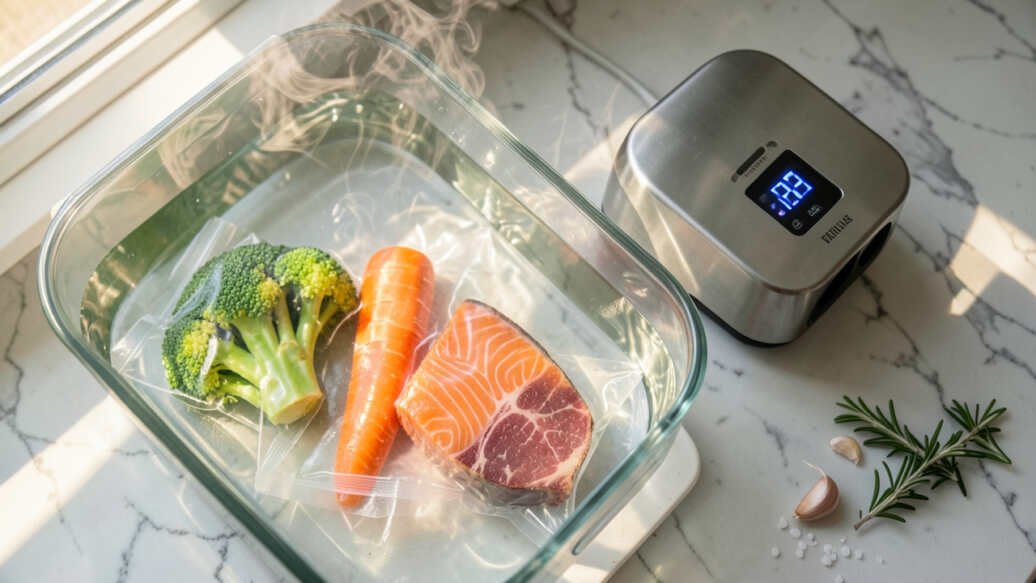
Sous vide is a cooking method where food is placed in a sealed bag and then submerged in a water bath. This water bath is kept at a very precise temperature. The food cooks slowly and evenly.
This is different from how we usually cook, like in an oven or on the stovetop, where the heat can be uneven.
Why is Sous Vide Special?
The magic of sous vide lies in its exact temperature control. Imagine cooking a steak to the perfect medium-rare from edge to edge, with no gray band. That’s what sous vide does.
It takes the guesswork out of cooking. This means you get reliably perfect results every single time.
9 Foods That Taste Better with Sous Vide Cooking
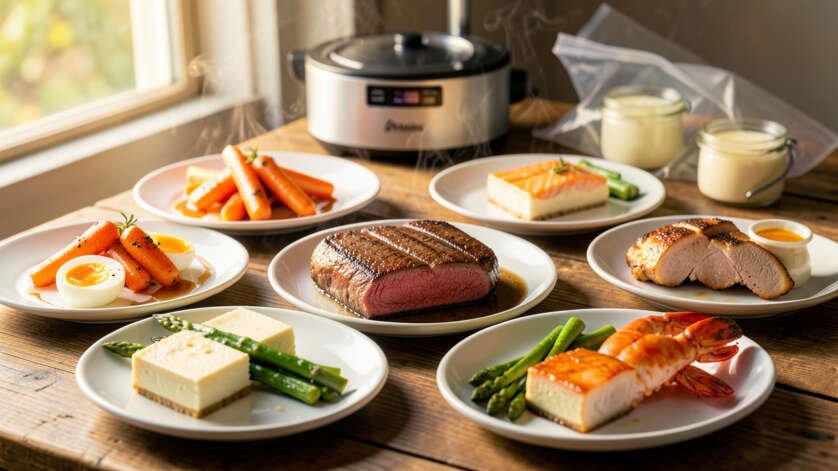
Some foods just transform when cooked using the sous vide method. They become more tender, more flavorful, and have a better texture than traditional cooking. Here are nine examples that really shine.
1. Steak
Steak is probably the most popular food for sous vide. You can cook a thick steak to your exact preference, like medium-rare, and it will be perfect all the way through. No more guessing if the center is cooked right.
Just set the temperature, wait, and then give it a quick sear in a hot pan for that delicious crust.
Why it’s better:
- Perfect doneness from edge to edge.
- Incredibly tender and juicy.
- No overcooked edges.
2. Chicken Breast
Chicken breast can sometimes be dry and bland. Sous vide changes that. It keeps the chicken incredibly moist and tender.
You can cook it to a safe temperature without drying it out. After the water bath, a quick pan-sear or grill adds a nice finish.
Why it’s better:
- Always moist and tender.
- Prevents dryness and rubbery texture.
- Safe to eat at lower temperatures than expected due to precise cooking.
3. Pork Chops
Pork chops can be tough if overcooked. Sous vide makes them wonderfully tender and juicy. You can achieve a perfect internal temperature without drying them out.
This method ensures they are moist and flavorful every time you cook them.
Why it’s better:
- Unbelievably tender and juicy.
- Eliminates the risk of dry pork.
- Consistent results are guaranteed.
4. Salmon
Fish can be tricky to cook just right. Sous vide salmon is a revelation. It cooks to a beautiful, flaky texture without becoming mushy or dry.
The gentle cooking process preserves the delicate flavors and moisture of the fish.
Why it’s better:
- Perfect flaky texture.
- Retains moisture and natural oils.
- Delicate flavor is enhanced.
5. Eggs
Sous vide eggs are amazing for breakfast. You can cook them to specific textures, like a perfectly soft-boiled egg or even custardy scrambled eggs. The temperature control allows for unique egg preparations that are hard to achieve otherwise.
Why it’s better:
- Precise control over egg texture.
- Silky smooth and creamy results.
- Ideal for breakfast and beyond.
6. Lamb Chops
Lamb chops can be luxurious when cooked sous vide. This method ensures they are tender and cooked to your exact liking. The slow, even cooking helps break down any tough fibers, resulting in a melt-in-your-mouth experience.
Why it’s better:
- Exceptional tenderness.
- Consistent medium-rare or desired doneness.
- Rich flavor is preserved.
7. Duck Breast
Duck breast often has a thick layer of fat that can be hard to render properly. Sous vide cooks the duck meat to perfection while also helping to render that fat beautifully. The result is tender meat with a crispy skin after a quick sear.
Why it’s better:
- Tender and succulent meat.
- Fat is rendered for a crispier finish.
- Enhanced duck flavor.
8. Vegetables
While not as commonly known, vegetables also benefit from sous vide. You can cook vegetables like carrots, asparagus, or potatoes to a perfect tender-crisp texture. They retain their vibrant color and nutrients better than when boiled or steamed.
Why it’s better:
- Perfect texture, not mushy.
- Bright colors and full flavor.
- Nutrients are preserved.
9. Pork Belly
Pork belly is a cut that needs slow, gentle cooking to become incredibly tender. Sous vide is perfect for this. It breaks down the connective tissues, making the pork belly soft and succulent.
It’s then easy to crisp up for a truly decadent dish.
Why it’s better:
- Melt-in-your-mouth tenderness.
- Rich and deep flavor.
- Ideal base for many dishes.
Getting Started with Sous Vide
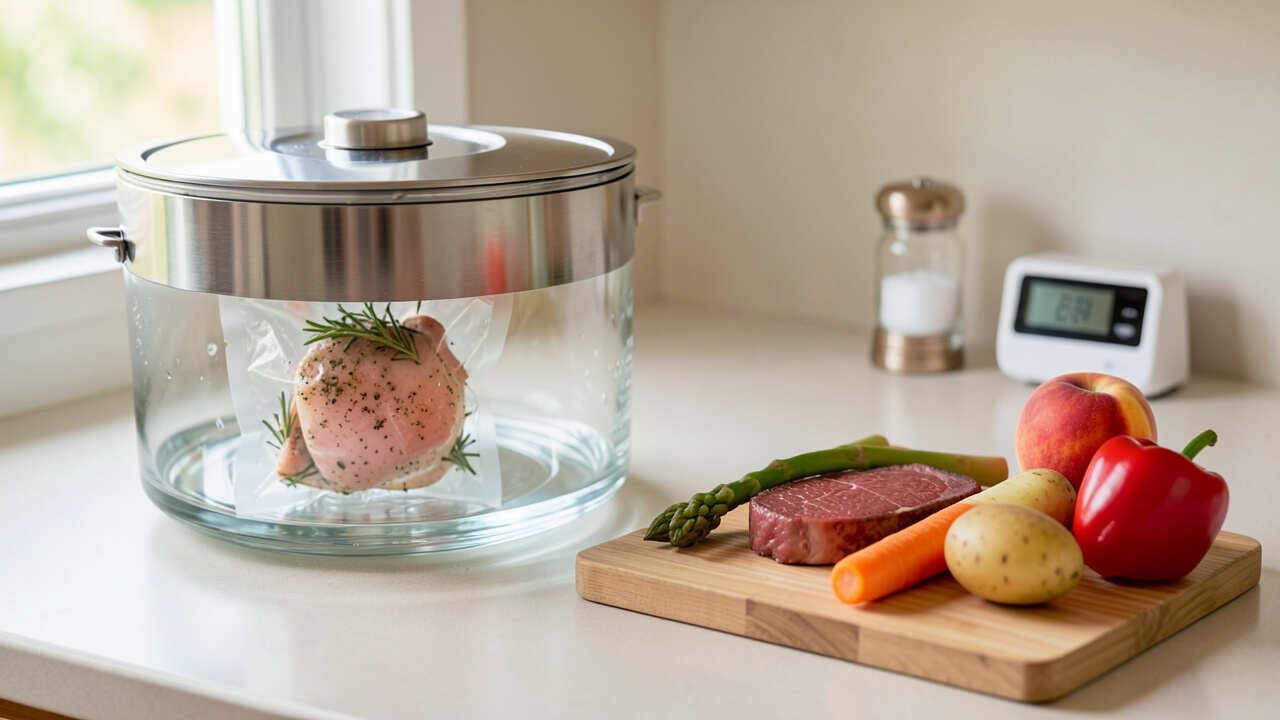
You don’t need a lot of fancy equipment to start. A basic sous vide immersion circulator is all you need. You’ll also need a container for the water, like a large pot or a plastic tub, and some resealable bags or a vacuum sealer.
Once you have these, you’re ready to go.
The Basic Steps
The process is quite simple:
- Set the temperature: Adjust your immersion circulator to the desired temperature for your food.
- Prepare the food: Season your food and place it in a vacuum-seal bag or a heavy-duty resealable bag. Remove as much air as possible.
- Cook: Submerge the bag in the water bath. Let it cook for the recommended time.
- Finish: Remove the food from the bag. For meats, a quick sear in a hot pan or on a grill adds a great texture and flavor.
Frequently Asked Questions
Question: Is sous vide cooking safe?
Answer: Yes, sous vide cooking is very safe when done correctly. The precise temperature control ensures that food is cooked to safe internal temperatures, eliminating the risk of undercooking. Always follow recommended cooking times and temperatures.
Question: Do I need a special bag for sous vide?
Answer: You can use high-quality, BPA-free resealable bags, like Ziploc bags, especially for foods that don’t require a very long cooking time. For longer cooks or foods that might float, a vacuum sealer is recommended to remove all air and keep the bag submerged.
Question: Can I cook multiple items at once?
Answer: Yes, as long as they are in separate, well-sealed bags and the water can circulate freely around them. Make sure the items have similar cooking temperatures and times if possible.
Question: What if I don’t have a vacuum sealer?
Answer: You can use the water displacement method with resealable bags. Place your food in the bag, seal it almost all the way, and then slowly lower it into the water. The water pressure will push the air out.
Seal it completely before it gets wet.
Question: How long does it take to sous vide?
Answer: Cooking times vary greatly depending on the food. Some items, like fish, might only take an hour. Steaks and chicken can take 1-3 hours.
Tougher cuts of meat or foods like pork belly might need 24-72 hours to become perfectly tender.
Final Thoughts
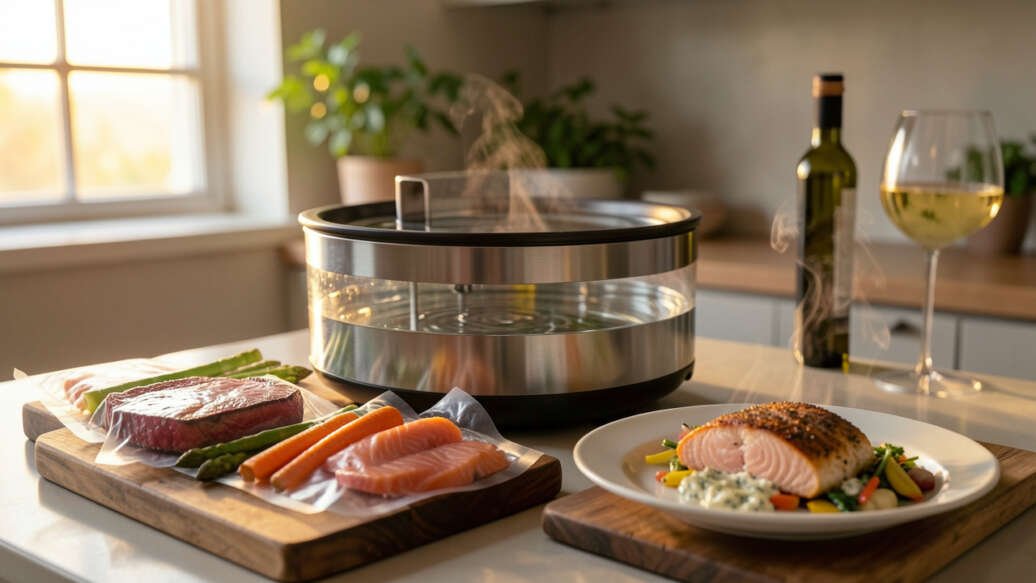
Exploring sous vide cooking opens up a new world of delicious possibilities. You’ve seen how 9 Foods That Taste Better with Sous Vide Cooking can transform your meals from ordinary to extraordinary. From perfectly cooked steaks to incredibly moist chicken, this method offers consistent and amazing results.
The simple steps we’ve shared will help you get started easily. Don’t be afraid to try it out; you’ll be amazed at how much better your food can taste with this precise cooking technique. Happy cooking!

![Are Induction Cooktops Energy Efficient[1]](https://creativehouseblog.com/wp-content/uploads/2026/03/Are_Induction_Cooktops_Energy_Efficient1-768x448.jpg)
![How to Fix a Leaking Gutter Joint Without Replacing It[1]](https://creativehouseblog.com/wp-content/uploads/2026/05/How_to_Fix_a_Leaking_Gutter_Joint_Without_Replacing_It1-768x403.jpg)
![Manual Versus Automatic Espresso Machines[1]](https://creativehouseblog.com/wp-content/uploads/2026/03/Manual_Versus_Automatic_Espresso_Machines1-768x448.jpg)
![Air Fryer Digital Vs Manual Controls A Simple Guide[1]](https://creativehouseblog.com/wp-content/uploads/2026/03/Air_Fryer_Digital_Vs_Manual_Controls_A_Simple_Guide1-768x448.jpg)
![Common Blender Problems and Fixes For Beginners[1]](https://creativehouseblog.com/wp-content/uploads/2026/03/Common_Blender_Problems_and_Fixes_For_Beginners1-768x448.jpg)
![7 Juicing Mistakes That Waste Ingredients[1]](https://creativehouseblog.com/wp-content/uploads/2026/04/7_Juicing_Mistakes_That_Waste_Ingredients1-768x448.jpg)