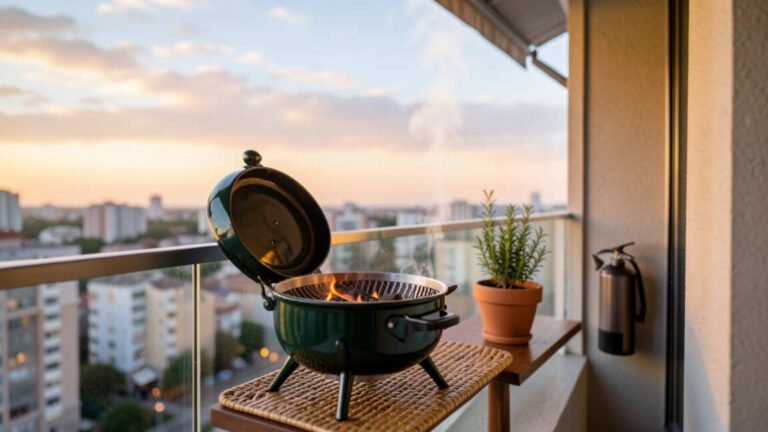
An electric grill is wrong for your small patio if it lacks searing power, creates excessive smoke in an enclosed space, consumes too much prep area, or produces weak uneven heat that turns efficient grilling into a frustrating chore. According to national fire data, over half of the 10,600 annual home grill fires occur on balconies or small patios, making size, heat zone control, and ventilation critical factors for safe and effective cooking. The key takeaway is that not every electric model fits tight spaces, so matching your grill’s footprint, heat output, and cleanup requirements to your actual patio dimensions and cooking habits determines whether it will serve you or sabotage your outdoor meals.
Small patios come with big grilling limits – and your electric model could be the culprit. This guide shows you the specific signs that your electric grill is wrong for your small patio and what to do about it.
Quick Verdict: Simply put, an electric grill is wrong for your small patio if it lacks searing power, creates excessive smoke in an enclosed space, takes up too much prep area, or produces weak heat that leads to longer, uneven cooks. These issues turn convenient grilling into a frustrating chore instead of the efficient outdoor cooking you need.
Many homeowners start with an electric grill because of apartment rules or safety concerns. But not every electric grill works well in tight spaces. Some models need more room than you expect. Others produce heat patterns that leave food half-cooked. Your patio setup and cooking habits decide the final result.
Important: According to the, 10,600 home grill fires occur each year. Over half of those happen on balconies or small patios. Knowing if your grill fits your space safely is not just about convenience – it is about preventing a serious hazard.
Key Takeaways
- An electric grill with less than 1,500 watts typically steams food rather than searing it on a small patio.
- Limited counter space makes electric grills with tiny side tables or fold-down shelves a poor choice for tight balconies.
- Smoke management is critical because electric grills without proper grease traps can create fire hazards under low eaves.
- A mismatched electric grill occupies at least 25 percent of your usable patio space, making the area feel cramped and unusable.
- The best electric grills for small patios are compact models with at least 1,500 watts and removable drip trays for easy cleaning.
Sign 1 – Your Patio Is Smaller Than the Grill
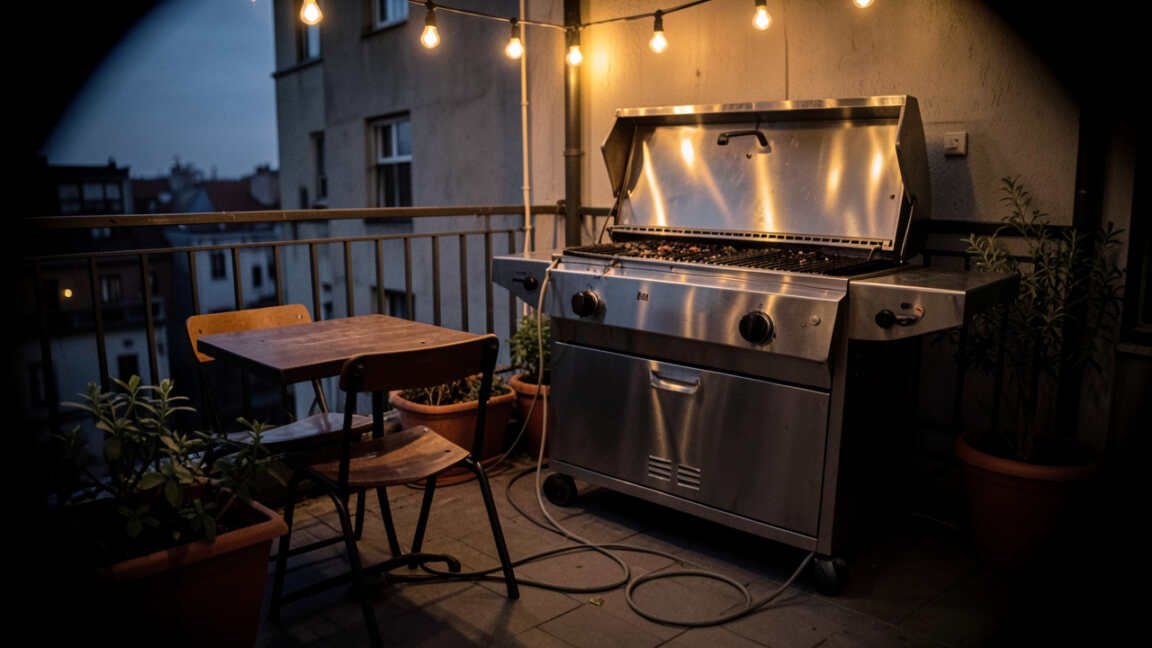
You need at least 36 inches of clearance around your grill on all sides. According to the, 64 percent of U.S. adults own a grill or smoker. But most people do not measure their patio before buying one.
Electric grills come in many sizes. A Weber Q 1400 electric grill measures roughly 21 inches wide by 27 inches deep. This sounds small, but you need the lid to open fully. You also need space to stand and work. A tiny 4×6 foot balcony cannot fit a grill this size safely. You need to walk around it. You need a prep table. You need storage for tools.
Check your patio dimensions before you blame the grill. Measure the floor space. Subtract walkways and door swings. If the grill takes up more than 30 percent of the free floor area, your electric grill is wrong for your small patio.
Warning: The Consumer Product Safety Commission (CPSC) warns that grills placed too close to walls or railings cause over 80 percent of balcony fires. You need at least 10 feet of clearance from windows and doors.
Sign 2 – You Cannot Build a Proper Heat Zone
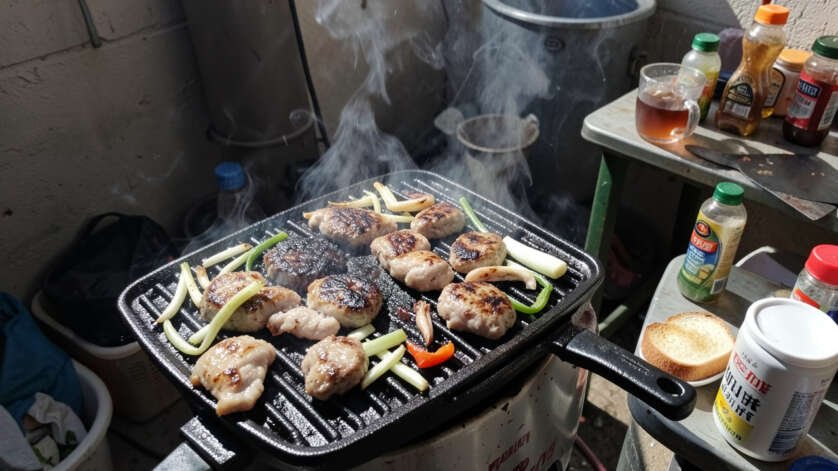
Electric grills heat differently than gas or charcoal. They rely on a single heating element. This creates hot spots directly above the element and cool spots everywhere else. On a small patio, you cannot always move the grill to find shade from wind. Wind blows the heat away. Your food cooks slowly and unevenly.
Many electric grills produce only 1,300 to 1,500 watts. For reference, a standard gas grill delivers 12,000 to 40,000 BTUs. A 1,500-watt electric grill equals roughly 5,100 BTUs. This is fine for hot dogs and burgers. But thick steaks or chicken breasts take much longer. The longer the cook time, the more heat escapes into your small patio. You end up sweating while you wait.
You need a grill that reaches at least 500 degrees Fahrenheit for proper searing. If your electric grill struggles to hit 400 degrees on a warm day, it is not powerful enough for your needs. This is a clear sign your electric grill is wrong for your small patio.
| Grill Type | Average Wattage | Max Temperature | Good for Small Patio? |
|---|---|---|---|
| Basic electric tabletop | 1,200 – 1,500 watts | 350 – 400 F | Only for hot dogs |
| Premium electric cart | 1,500 – 1,800 watts | 450 – 550 F | Yes, with wind guard |
| Propane portable | 10,000 – 15,000 BTUs | 500 – 650 F | Often better output |
| Charcoal kettle | N/A (charcoal) | 600 – 800 F | Requires more safety |
Sign 3 – You Have No Room for Prep and Plating
Grilling on a small patio is not just about the grill itself. You need space for raw food, tools, plates, and condiments. If your electric grill has tiny side shelves or no shelves at all, you constantly run inside for supplies. This breaks your cooking flow and makes grilling stressful.
Some electric grills come with fold-down shelves. These help, but they often hold only a few items. If you grill for more than two people at once, you need a separate prep table. This takes even more floor space. A grill that forces you to buy extra furniture is mismatched for your patio.
Look for electric grills with at least one fixed shelf and a flat top surface. The George Foreman GFO240S offers a 240-square-inch cooking area with a removable stand. This saves space because you can store it upright. But it lacks prep space. You still need a small side table. If you cannot find room for a 2 by 2 foot table near your grill, the grill itself is likely too large for your setup.
Sign 4 – Smoke Becomes a Problem
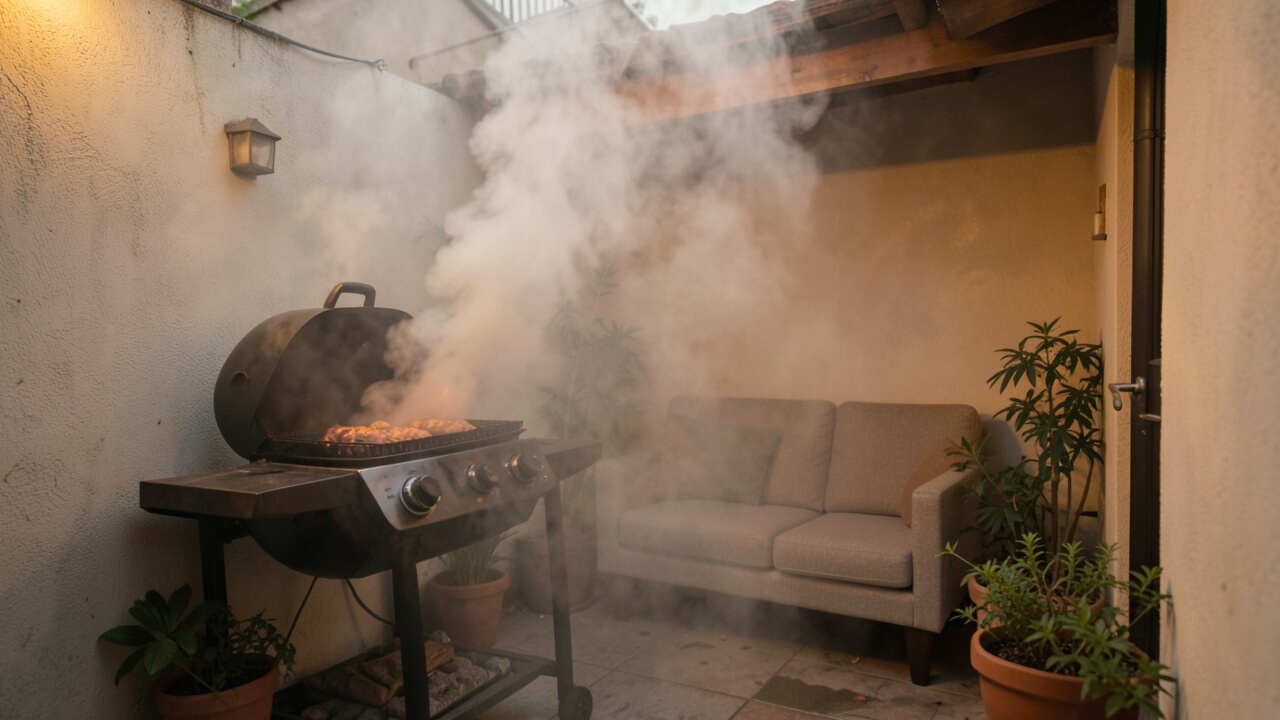
Electric grills produce less smoke than charcoal grills. But they still produce smoke, especially when fat drips onto the heating element. On a small patio that is enclosed or has low eaves, smoke does not dissipate. It builds up. It enters your windows. It stains your ceiling. It triggers smoke detectors.
The notes that electric grills operate at 80 to 90 percent efficiency. This is higher than gas grills. But efficiency does not mean smoke-free. Grease management is the key factor. If your electric grill lacks a drip tray that slides out easily, grease accumulates. This causes flare-ups and heavy smoke on small patios where there is little air movement.
You can reduce smoke by trimming fat and using a drip tray with water. But if you still get smoke every time you cook, the design of your grill is wrong for your small space. Consider a grill with a porcelain-enameled cooking box that catches drips before they burn.
Sign 5 – Cleaning Is a Chore
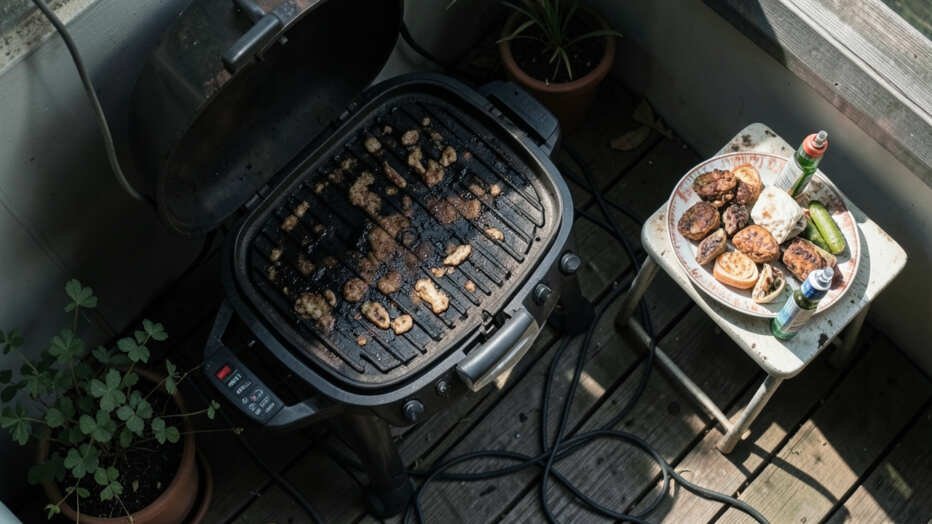
Small patios need frequent cleaning because everything is close together. Grease splatters onto walls, furniture, and floors. If your electric grill has a non-removable drip tray or a complex interior, cleaning takes too long. You skip it. Then the grill performs worse and produces more smoke.
Look for electric grills with removable cooking grates and a dishwasher-safe drip tray. Some models, like the Char-Broil TRU-Infrared, use infrared technology to reduce flare-ups. This cuts down on cleaning time. But these models cost more. If you are constantly scrubbing your current grill, it is a sign that the design is not suited to your small patio lifestyle.
According to, grills with exposed heating elements are harder to clean. Look for models where the element is shielded behind a metal plate. This prevents food from falling directly onto the heat source.
How to Evaluate Your Electric Grill Right Now
You do not need to guess if your grill is wrong for your patio. Use this step-by-step checklist to find out.
- Measure your patio floor space. Subtract 2 feet from each wall for clearance. This is your usable area.
- Place your grill in its normal spot. Measure the space between the grill and the nearest wall, railing, or furniture.
- Open the lid fully. Check if it hits anything above it. If it touches an eave or awning, the grill is too tall.
- Cook a thick chicken breast. Time how long it takes to reach 165 degrees internally. If it takes more than 25 minutes, your grill lacks power.
- Check your drip tray after three cooks. If it is full of grease, you need a better cleaning routine or a grill with a larger tray.
Tip: If you cannot move your grill 2 feet away from the wall when cooking, consider a tabletop electric grill that you place on a cart. You can roll it out when you cook and store it when you are done.
Common Myths About Electric Grills on Small Patios
Many people believe electric grills are perfect for small patios. The truth is more complicated. Here are three common myths and the facts you need.
Myth 1 – Electric grills are safer for small patios than gas grills.
Electric grills do not use fuel, so they eliminate gas leaks. But they still get hot and produce grease fires. According to the, electric grills cause nearly 30 percent of all grill-related fires. The risk depends on placement and maintenance, not just fuel type.
Myth 2 – All electric grills are compact enough for small patios.
Many electric grills are large. Full-size electric grills often measure 40 inches wide. They need the same clearance as gas grills. Always check the total footprint, including the lid swing and handle protrusion. Tabletop models are the only truly space-saving option.
Myth 3 – Electric grills produce the same flavor as charcoal or gas.
Electric grills do not produce smoke from burning wood or charcoal. They rely on indirect heat. You get a clean, mild flavor. If you want smoky flavor, you need a smoker box or wood chips. This adds complexity and cost to your setup.
What to Look For Instead
If you decide your current electric grill does not work for your small patio, do not give up on outdoor cooking. Look for these specific features in a replacement.
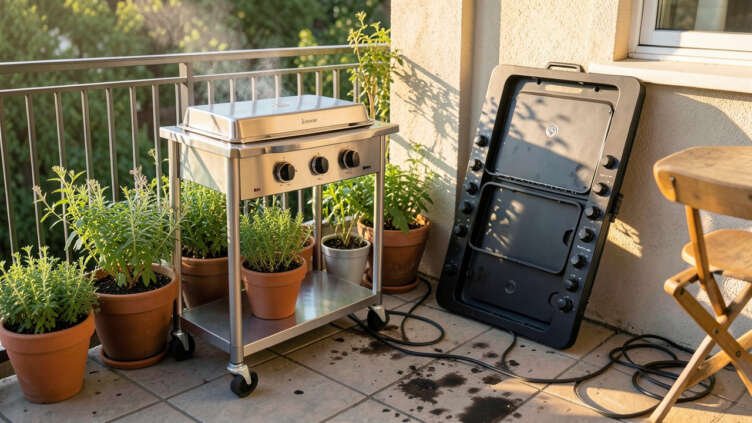
- Compact footprint: Look for grills under 20 inches wide. The Zojirushi EB-CC15 is a popular 1,500-watt tabletop model that measures just 16 inches wide.
- High wattage: Choose at least 1,500 watts. Higher wattage means faster preheating and better searing.
- Removable drip tray: This makes cleaning easy. You can wash it in the sink without moving the entire grill.
- Lid lock: Some models have a lid that locks shut for vertical storage. This saves floor space when the grill is not in use.
- Built-in thermostat: Precise temperature control helps you avoid overheating and reduces smoke.
Pro Tips for Small Patio Grilling
- Use a grill mat underneath. This protects your patio floor from grease drips and heat marks. Rubber or vinyl mats work well.
- Create a wind guard. A simple piece of aluminum foil folded around the back of the grill helps maintain even heat. It also directs smoke away from your seating area.
- Preheat for 15 minutes. Electric grills need time to reach full temperature. Opening the lid early lets heat escape and extends cook time.
- Use a meat thermometer. Since electric grills have hot spots, a thermometer ensures your food is cooked through without you having to guess.
- Grill with the lid down as much as possible. This traps heat and reduces cooking time. It also cuts down on smoke escaping into your patio.
Resources and Tools
Hearth, Patio and Barbecue Association (HPBA) – The official trade association provides buying guides for grills and fire pits.
Consumer Reports Grill Buying Guide – Independent testing lab offers reviews on specific electric grill models.
National Fire Protection Association (NFPA) Grill Safety Tips – Official safety recommendations for grill placement and usage on balconies.
Amazon Grill Mat – A heat-resistant mat designed to protect patio surfaces from grease and heat.
Frequently Asked Questions
Can you use an electric grill on a wooden balcony?
Yes, but you need a grill mat to protect the wood. Many apartment buildings allow electric grills because they do not use open flames. Always check your lease first. Some buildings restrict any outdoor cooking device.
What size electric grill is best for 2 people on a small patio?
A tabletop electric grill with 150 to 200 square inches of cooking space is ideal. This fits 4 to 6 burgers at once. It also stores easily in a cabinet or closet. Models like the George Foreman GFO240S offer 240 square inches in a compact design.
Is an electric grill better than a propane grill for a small patio?
Electric grills are better for small patios because they do not require fuel storage and produce less heat output. Propane grills create more heat but need more clearance and venting. The best choice depends on your patio rules and cooking needs.
How do I clean an electric grill on a small patio without a hose?
Use a damp cloth and a non-abrasive sponge. Wipe the grates while they are still warm. Remove the drip tray and wash it in the sink. Do not use steel wool. It scratches the non-stick coating and causes food to stick.
Can I leave my electric grill outside in the rain?
No. Electric grills are not waterproof. Water can damage the heating element and electrical wiring. Always cover your grill with a weatherproof cover or store it indoors when not in use. Even a light rain can cause rust and electrical shorts.
Final Thoughts
Your small patio can still be a great place to grill. The key is matching the grill to the space. Look for high wattage, a compact footprint, easy cleaning, and good heat retention. If your current grill fails on any of these points, it is time to consider a change. A better match will make outdoor cooking fun again.