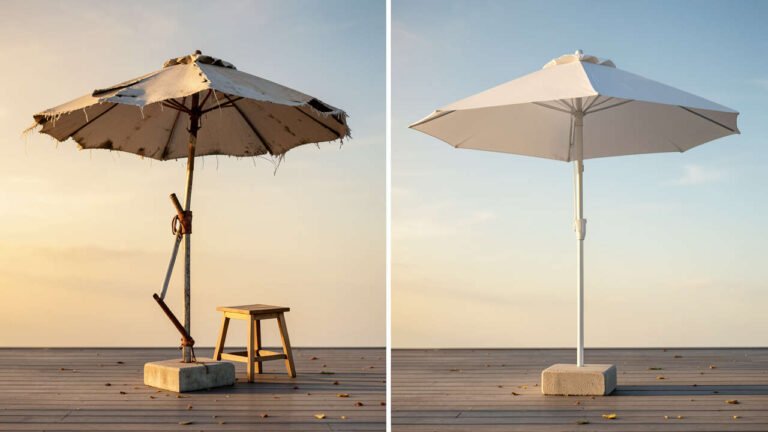
Most people make at least three of seven mistakes when buying their first market umbrella, including choosing the wrong size, ignoring fabric quality, and skipping wind resistance. A properly sized umbrella with solution-dyed acrylic fabric and a base weighing at least 50 pounds ensures safety, UV protection up to 98 percent, and a lifespan of 5 to 10 years. A tilt mechanism is essential for adjustable shade, and proper storage during off-season months can double the umbrella's lifespan by preventing mildew and rust.
A market umbrella adds style and shade to any patio. But most people choose the wrong one on their first try.
Quick Verdict: Most people make at least three of these seven mistakes when buying their first market umbrella: choosing the wrong size, ignoring fabric quality, skipping wind resistance, buying a weak base, overlooking the tilt mechanism, picking a poor pole material, and neglecting storage. A well-chosen umbrella lasts 5 to 10 years and blocks up to 98 percent of UV rays.
Key Takeaways
- A market umbrella that is too small or too large for your table and space will not provide proper coverage or will feel cramped.
- Fabric quality determines UV protection, water resistance, and lifespan – solution-dyed acrylic fabrics like Sunbrella last years longer than polyester.
- A base that weighs less than 50 pounds is often too light for a standard 9-foot umbrella and can cause dangerous tip-overs in moderate wind.
- A tilt mechanism is not optional for most patios – without it, shade moves away as the sun shifts throughout the afternoon.
- Proper storage during off-season months can double the lifespan of a market umbrella by preventing mildew, rust, and fabric degradation.

Market Umbrella Mistakes At a Glance
| Mistake | Why It Hurts You | The Fix |
|---|---|---|
| Wrong size | Poor shade coverage and awkward fit | Measure your table and add 4 to 5 feet on each side |
| Cheap fabric | Fades, tears, and offers low UV protection | Buy solution-dyed acrylic with a UPF 50+ rating |
| Weak base | Umbrella tips over and may break | Use 50 to 75 pounds for standard sizes |
| No tilt | Shade disappears as the sun moves | Pick a crank lift with push-button or auto-tilt |
| Wrong pole | Rust, bending, or broken hardware | Choose aluminum or wood over steel |
| Bad storage | Mildew, rust, and torn fabric | Cover or store indoors when not in use |
1 – Choosing the Wrong Size for Your Space
The most common mistake is buying a first market umbrella that is too small or too large for the patio table. A 6-foot umbrella over a 48-inch round table leaves your guests’ shoulders exposed to the sun. A 11-foot umbrella over a small bistro set looks oversized and awkward.
Why This Is a Mistake
Size affects both function and appearance. A too-small umbrella forces people to lean away from the sun. A too-large umbrella creates wind drag that stresses the pole and base. According to the, maximum umbrella size for typical residential use is 11 feet. Beyond that, structural demands increase significantly.
How to Avoid This Mistake
- Measure your table diameter. Add 4 to 5 feet to get the minimum umbrella size. For a 48-inch table, choose a 7- to 8-foot umbrella.
- Consider the seating area, not just the table. The umbrella should shade chairs as well as the table top.
- Check ceiling height if placing the umbrella over a seated area. A standard umbrella requires at least 6.5 feet of clearance from the ground to the canopy bottom.
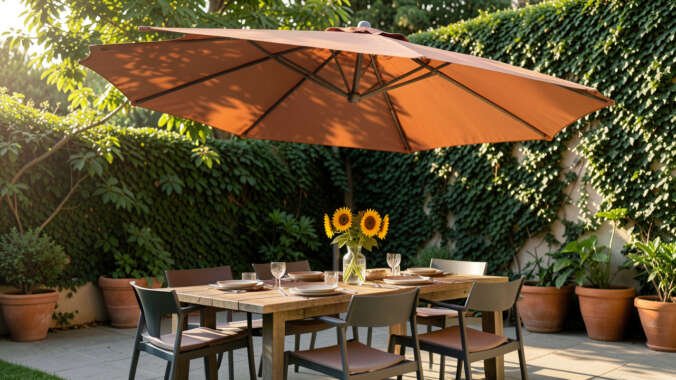
- For rectangular tables, use an offset or cantilever umbrella instead of a center-pole model. A center pole blocks conversation in the middle of a long table.
Tip: Bring a tape measure to the store or check the product specs online before you buy. Most umbrella listings include the canopy diameter and the pole height. Write those numbers down and compare them to your space.

2 – Ignoring the Quality of the Fabric
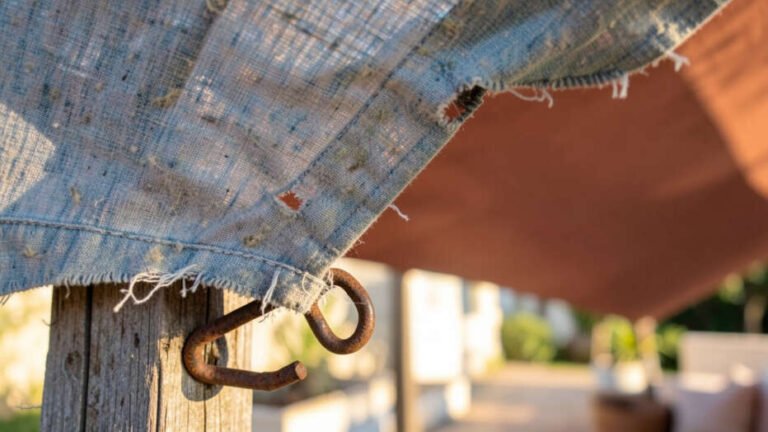
Fabric is the single biggest factor in how long your umbrella lasts. Cheap polyester fabric fades within one season and offers little UV protection. Quality solution-dyed acrylic fabric holds color for years and blocks most harmful rays.
Why This Is a Mistake
According to, a fabric with a UPF rating of 50 blocks 98 percent of UV radiation. Most budget umbrellas have no UPF rating at all. The fabric also determines water resistance, mold resistance, and durability. A low-quality canopy can crack and tear after just a few months of sun exposure.
How to Avoid This Mistake
- Look for solution-dyed acrylic fabric. Sunbrella by Glen Raven is the best-known brand. Other quality options include Outdura and Recasens.
- Check the UPF rating. A UPF 50+ rating is ideal for residential use. Avoid any umbrella that does not list a UPF number.
- Choose a fabric with a tight weave. Hold the fabric up to a light – if you see many pinholes of light, the weave is too loose.
- Consider color carefully. Darker fabrics absorb more heat but hide stains better. Lighter fabrics stay cooler under direct sun but show dirt more easily.
- Avoid fabrics labeled “polyester canvas” – this is often a marketing term for low-grade material that will fade within a year.
3 – Forgetting About Wind Resistance
A sudden gust of wind can snap a cheap umbrella frame or send the whole unit flying across your yard. Wind resistance is not just about the base – the frame design, rib material, and canopy shape all play a role.
Why This Is a Mistake
Standard market umbrellas with straight poles and no venting catch wind like a sail. The U.S. Consumer Product Safety Commission reports that unsecured outdoor umbrellas cause hundreds of tip-over injuries each year. Even moderate gusts around 15 to 20 miles per hour can lift a poorly designed umbrella off the ground.
How to Avoid This Mistake
- Choose a canopy with a center vent. The vent allows wind to pass through instead of pushing against the fabric.
- Look for fiberglass ribs instead of steel or aluminum. Fiberglass flexes under pressure and returns to shape. Metal ribs bend permanently.
- Consider an umbrella with a wind-release system. Some models have a hinge at the top that allows the canopy to flex in strong wind.
- Always lower and secure your umbrella when wind speeds exceed 20 miles per hour. Do not leave it open overnight if storms are possible.
- If you live in a windy area, choose an offset or cantilever umbrella. These models place the pole outside the seating area and often include stronger structural bracing.
Warning: Never leave a market umbrella open and unattended in high wind. Even with a heavy base, a sudden gust can rip the canopy from the frame or tip the entire unit over. Lower the umbrella when not in use.
4 – Buying a Base That Is Too Light
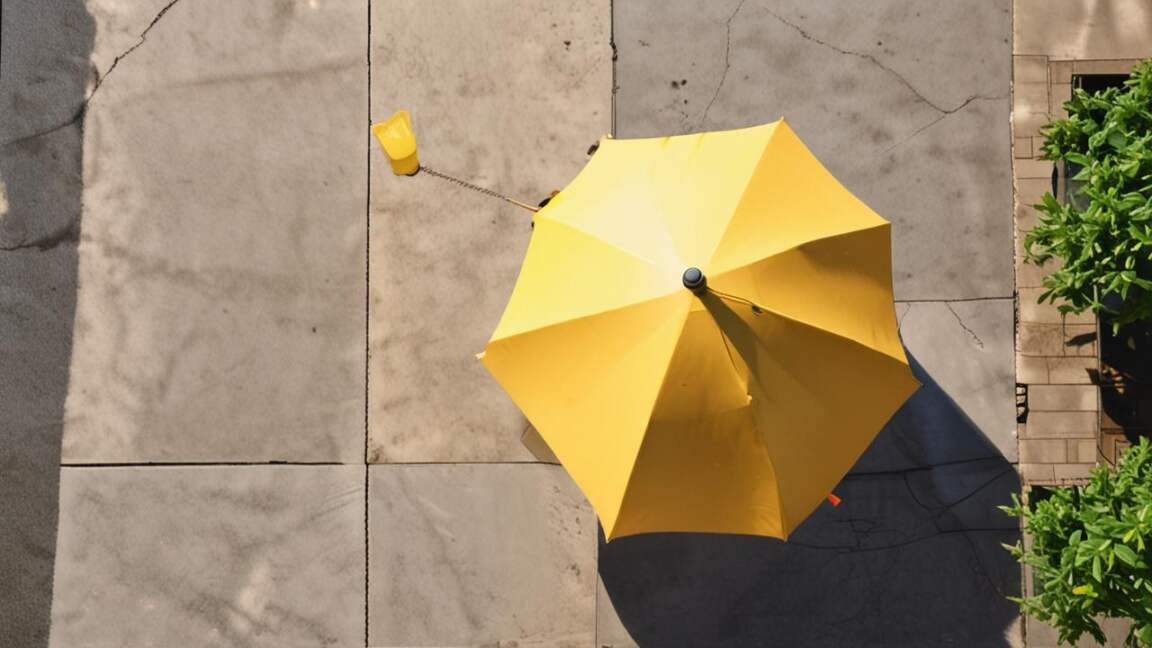
The base is the unsung hero of a market umbrella setup. A lightweight base turns a useful shade into a dangerous projectile. Most first-time buyers underestimate how much weight they need.
Why This Is a Mistake
A standard 9-foot market umbrella in open position creates significant lift in wind. According to manufacturers like, you need at least 50 pounds of base weight for a 7.5-foot umbrella. For a 9-foot umbrella, 65 to 75 pounds is recommended. For 11-foot models, 90 pounds or more is standard. Most budget bases weigh only 20 to 30 pounds.
How to Avoid This Mistake
- Match base weight to umbrella size. Do not rely on the table weight – the base must secure the umbrella independently.
- Choose a base that fits your pole diameter. Market umbrella poles come in sizes from 1.5 inches to 2.5 inches. Use the correct adapter sleeve if needed.
- Consider a rolling base with casters for heavy umbrellas. These allow you to move the umbrella without lifting the full weight.
- Use a cross-base design for tables with a center hole. Cross-bases distribute weight evenly under the table legs.
- If you use a freestanding base, place it on a flat, level surface. Uneven ground reduces stability.
Important: Never substitute loose objects like bricks or cinder blocks for a proper umbrella base. These can shift or break under pressure and do not secure the pole correctly. Always use a base designed for umbrella use.
5 – Overlooking the Tilt Mechanism
The sun moves across the sky throughout the day. A fixed, non-tilting umbrella provides shade for only a few hours. A tilt mechanism lets you adjust the canopy angle and keep shade where you need it.
Why This Is a Mistake
Without a tilt feature, your patio or table is fully shaded only when the sun is directly overhead – roughly between 11 a.m. and 2 p.m. In the late afternoon, the shade shifts entirely off the seating area. Many first-time buyers do not realize this until they sit in full sun at 4 p.m.
How to Avoid This Mistake
- Choose an umbrella with a push-button tilt, auto-tilt, or crank tilt system. Avoid models that require manual loosening of a collar or wing nut.
- A push-button tilt is the simplest and most reliable. You press a button, tilt the canopy, and release to lock.
- An auto-tilt mechanism uses a spring inside the pole. Push up on the crank handle to tilt. This is common on mid-range umbrellas.
- A crank tilt system uses a second crank to adjust the angle. This is convenient but adds mechanical complexity that can break over time.
- Test the tilt mechanism before buying if possible. A smooth, easy tilt motion indicates good manufacturing quality.
6 – Picking the Wrong Pole Material
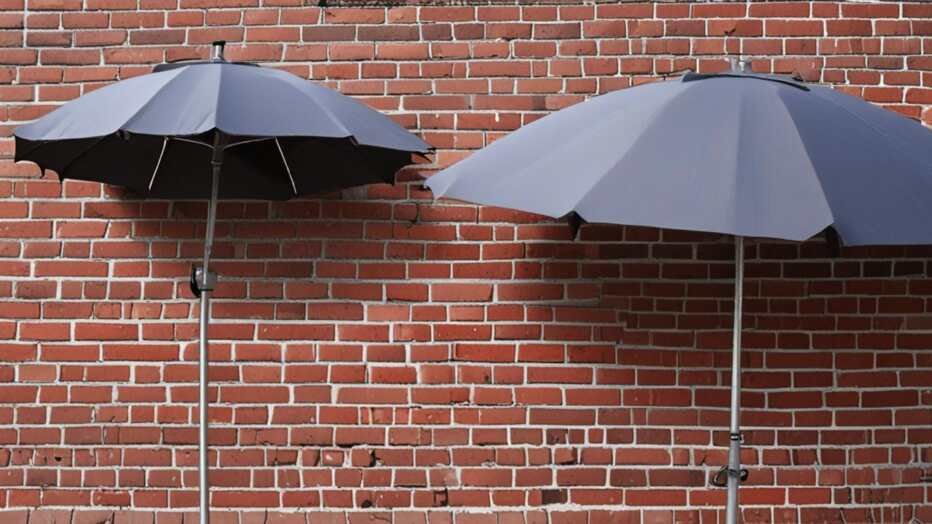
The pole is the backbone of the umbrella. It supports the canopy, connects to the base, and houses the crank and tilt mechanisms. Choosing the wrong material leads to rust, bending, or broken hardware within one or two seasons.
Why This Is a Mistake
Steel poles are heavy and prone to rust, especially in coastal or humid climates. Aluminum poles are lightweight and rust-resistant but can bend under high wind. Wood poles look classic but require regular sealing and can warp or crack. Each material has trade-offs that affect the umbrella’s lifespan.
How to Avoid This Mistake
- For most residential use, choose powder-coated aluminum. It resists rust, is lightweight, and offers good strength. Look for a pole with at least 1.5-inch diameter.
- If you prefer a wood pole for style, choose eucalyptus or teak. Both are naturally weather-resistant. Apply a protective seal once per year.
- Avoid plain steel poles unless you live in a dry climate and plan to store the umbrella indoors year-round. Rust is almost guaranteed otherwise.
- Check the pole finish. A powder-coated or anodized finish lasts longer than painted surfaces. Painted poles chip and rust quickly.
- For commercial or heavy-use settings, choose a two-piece aluminum pole with a reinforced joint. This is stronger than a single-piece pole of the same gauge.
7 – Neglecting Proper Storage and Maintenance
Most people buy a market umbrella in spring, use it through summer, and leave it outside all winter. This neglect cuts the umbrella’s lifespan in half. Proper storage and basic maintenance are critical for getting your money’s worth.
Why This Is a Mistake
The Outdoor Furniture Association reports that proper storage can extend an umbrella’s usable life from 3 years to 8 or more. Sun, rain, snow, and wind degrade fabric, rust metal, and crack plastic components. Mold and mildew grow on damp fabric stored in dark conditions.
How to Avoid This Mistake
- Close and cover the umbrella when not in use for more than a day. Use a breathable cover to prevent moisture buildup under plastic.
- Store the umbrella indoors during winter months. A garage, shed, or basement is ideal. If indoor storage is not possible, use a heavy-duty waterproof cover and secure it against wind.
- Clean the canopy twice per year. Mix mild soap with warm water and scrub gently with a soft brush. Rinse thoroughly and let dry completely before closing.
- Lubricate the crank and tilt mechanisms annually with silicone spray. Do not use oil-based lubricants – they attract dirt and gum up over time.
- Check the ribs and frame for damage before each season. Replace bent ribs or frayed stitching before they cause larger failures.
Tip: Store your umbrella fabric in a dry, ventilated area. Never store a wet canopy inside a sealed bag or cover. Mildew develops within 24 to 48 hours on damp fabric in dark conditions. Air-dry the canopy completely before closing it for storage.

What Your First Market Umbrella Should Include
A well-chosen first market umbrella balances four key factors – size, fabric, hardware, and base. Many brands offer packages that bundle the umbrella and base together, which simplifies the buying process. Here is a checklist of features to prioritize.
- Canopy diameter that matches your table plus 4 feet of overhang on each side.
- Solution-dyed acrylic fabric with a UPF 50+ rating and a tight weave.
- Fiberglass ribs for wind resistance and long-term flexibility.
- Powder-coated aluminum pole with a push-button tilt mechanism.
- A base weighing at least 50 pounds for umbrellas up to 7.5 feet, 65 pounds for 9 feet.
- A breathable storage cover for off-season protection.
Common Myths vs Facts
Myth: All market umbrellas are the same – just different colors.
Fact: Quality varies widely by fabric, frame material, and construction. A $60 umbrella from a big-box store often uses polyester fabric, steel ribs, and a painted steel pole. A $300 umbrella from a specialty brand uses solution-dyed acrylic, fiberglass ribs, and a powder-coated aluminum pole. The cheap version may last one season. The quality version can last a decade.
Myth: More ribs always mean a stronger umbrella.
Fact: Rib count matters, but rib material matters more. An 8-rib umbrella with fiberglass ribs is stronger than a 12-rib umbrella with hollow steel ribs. The fiberglass flexes without breaking. Steel ribs bend under stress and do not spring back. Focus on material quality first, then rib count as a secondary factor.
Myth: You do not need a tilt mechanism if you face the umbrella south.
Fact: The sun’s position changes throughout the day regardless of your patio orientation. A south-facing umbrella provides shade at noon but leaves your table exposed by late afternoon. A tilt mechanism adjusts the canopy angle to follow the sun. Without tilt, you get usable shade for only 3 to 4 hours per day.
Resources and Tools
Sunbrella Fabric Guide – Official fabric care and selection guide from the leading solution-dyed acrylic manufacturer.
Treasure Garden Base Guide – Detailed weight recommendations for different umbrella sizes from a major commercial and residential brand.
ASTM F1561 Standard – Industry standard for outdoor umbrella performance and safety published by the American Society of Testing and Materials.
Frequently Asked Questions
What size market umbrella should I buy for a round table?
Measure your table diameter and add 4 to 5 feet. For a 48-inch round table, choose a 7- to 8-foot umbrella. For a 60-inch round table, choose a 9-foot umbrella. The extra overhang keeps your guests’ shoulders in the shade.
How much weight do I need for my umbrella base?
Use 50 pounds for a 7.5-foot umbrella, 65 to 75 pounds for a 9-foot umbrella, and 90 pounds or more for an 11-foot umbrella. These weights apply to standard market umbrellas with center poles. Offset umbrellas may require even heavier bases due to their cantilever design.
Can I leave my market umbrella outside all year?
You can leave it outside if you use a high-quality waterproof cover and live in a mild climate. However, storing the umbrella indoors during winter months extends its life significantly. The Outdoor Furniture Association states that proper storage can double an umbrella’s lifespan from 3 years to 8 years or more.
What is the best fabric for a market umbrella?
Solution-dyed acrylic fabric is the best choice. Brands like Sunbrella, Outdura, and Recasens offer this material. It resists fading, repels water, and blocks up to 98 percent of UV rays when rated UPF 50+. Avoid polyester and cotton fabrics – they fade quickly and offer minimal UV protection.
How do I clean my market umbrella canopy?
Mix mild soap with warm water. Scrub the canopy gently with a soft-bristle brush. Rinse thoroughly with a garden hose. Let the canopy air-dry completely in the open position before closing it. Do not use bleach or harsh chemicals. Clean the canopy twice per year – once before summer use and once before winter storage.
Final Thoughts
Your first market umbrella should focus on size, fabric, and hardware quality – not just price or color. A 9-foot umbrella with solution-dyed acrylic fabric, fiberglass ribs, and a proper base will serve you for many seasons. Avoid the seven mistakes covered here and your umbrella will provide reliable shade for years to come.