Doors stick primarily due to wood expansion from humidity, misaligned hinges, or an uneven door frame, preventing proper closure. Most issues can be resolved quickly by tightening hinge screws, adjusting the strike plate, or lightly sanding high spots on the door edge. Performing these simple checks and maintenance prevents future sticking and ensures smooth, reliable operation for years.
Ever wrestled with a door that just won’t budge or slams shut on its own? You’re not alone. Many people find fixing sticking doors tricky, especially when they’re new to home repairs.
It can be frustrating when a simple door causes so much trouble. This guide breaks down Why Your Doors Are Sticking and How to Fix Them Fast with easy steps. Get ready to make your doors work smoothly again without a fuss.
Key Takeaways
- Doors often stick due to changes in humidity causing wood to swell.
- Misaligned hinges are a common cause of doors that drag or won’t close properly.
- Simple adjustments to hinges or door hardware can often solve sticking issues.
- Sanding or planing specific areas of the door can help it fit its frame better.
- Weatherstripping and seals can wear out, affecting how a door closes and seals.
- Regular maintenance can prevent doors from sticking in the first place.
![Why Doors Stick And How To Fix Them Fast[1]](https://creativehouseblog.com/wp-content/uploads/2026/05/Why_Doors_Stick_And_How_To_Fix_Them_Fast1.jpg)
Common Reasons Doors Stick
Doors can stick for a variety of reasons, and most are quite simple to understand. The most frequent culprit is changes in the weather, specifically humidity. Wood is a natural material that expands when it absorbs moisture and shrinks when it dries out.
When a wooden door swells, it can rub against its frame, making it difficult to open or close. This is especially common in humid climates or during different seasons.
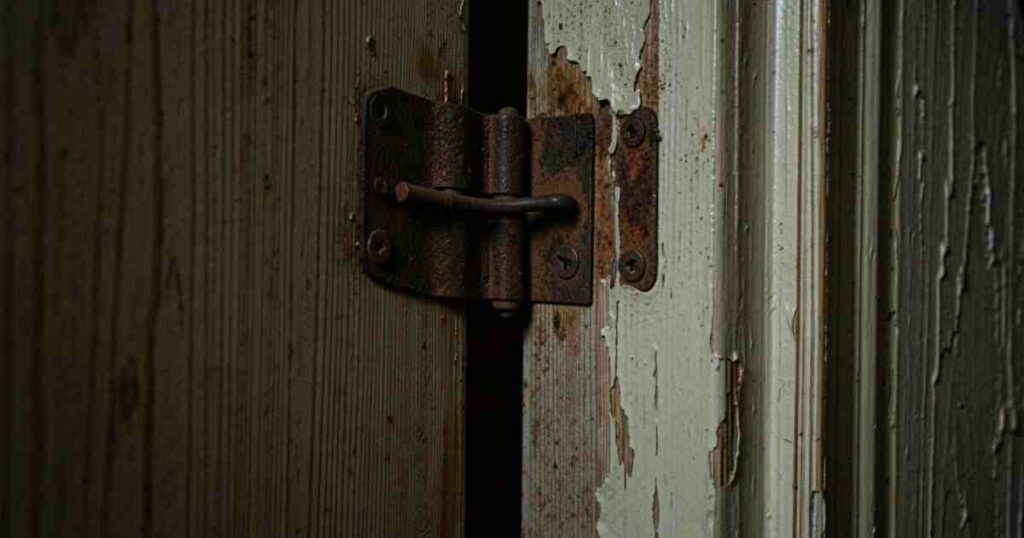
Humidity And Wood Expansion
Think of a wooden door like a sponge. When the air is damp, the wood soaks up water vapor. This causes the wood fibers to swell, increasing the door’s thickness or width.
Consequently, the door becomes a tighter fit within its frame. If the humidity drops, the wood dries out and shrinks. Sometimes, the expansion or contraction is uneven, leading to warping.
This warping can make a door stick in one particular spot.
For instance, imagine a wooden door in a bathroom or kitchen. These rooms tend to have higher humidity levels. Over time, the door can absorb enough moisture to start sticking to the top or side of its frame.
Then, when the weather dries out, the door might shrink and become loose, only to swell up again when humidity returns.
Door Frame Issues
Sometimes, the problem isn’t just the door itself but the door frame. The frame might have shifted over time due to the house settling, or it could have been installed improperly. If the frame is no longer perfectly square, it can pinch the door.
This means the door might fit well in some places but rub in others.
A house settling means the foundation or the structure of the house shifts slightly. This can put pressure on door frames, causing them to become out of square. Even a small shift can make a door stick.
You might notice the gap between the door and the frame is wider at the top or bottom on one side than the other.
Loose Or Damaged Hardware
Door hardware, like hinges and doorknobs, plays a critical role. Loose hinges can allow the door to sag. A sagging door will often drag on the floor or rub against the frame.
Stripped screws in the hinges can cause this sagging. The screws no longer hold the hinge securely to the door or the frame.
The strike plate, where the latch goes into the door frame, can also be a source of problems. If the strike plate is loose or the hole for the latch is too small, the door might not close properly. This can feel like it’s sticking or sticking.
Diagnosing A Sticking Door
Before you can fix a sticking door, you need to figure out exactly where and why it’s sticking. This step is crucial to ensure you apply the right solution. A little detective work can save you a lot of time and effort.
Identifying The Sticking Point
The easiest way to find where a door is sticking is to observe it carefully. Open and close the door slowly. Pay attention to any areas where it feels tight or where you hear scraping sounds.
You can also use a piece of paper. Try to slide a piece of paper between the door and the frame at different points. If the paper gets stuck, that’s a problem area.
Look for rub marks or scuff marks on the door or the frame. These marks are usually a clear sign of where the friction is occurring. Sometimes, a door sticks only when it’s open to a certain angle, or only when you try to close it.
Note these specific conditions.
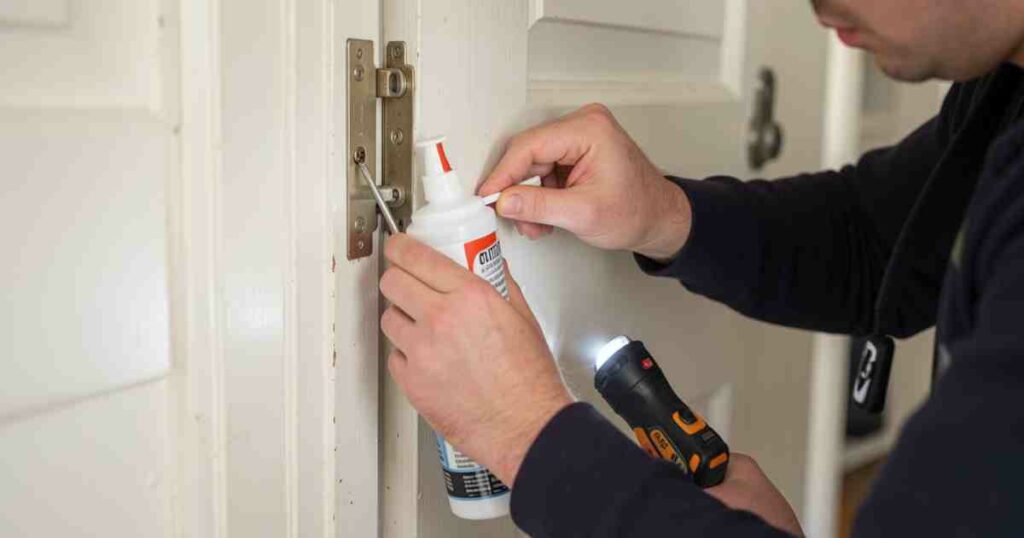
Checking The Hinges
Hinges are often the first place to look. Gently try to wiggle each hinge. If the hinge moves more than it should, the screws might be loose.
Also, check if the hinge pins are straight and not bent. Bent pins can prevent the door from hanging correctly.
You can also check if the door itself is plumb and level. Use a spirit level against the edge of the door. If it’s not straight, it’s likely due to hinge issues or the door frame itself being out of square.
Assessing The Door Frame
Inspect the door frame for any visible damage or signs of warping. Run your hand along the inside edges of the frame. Feel for any bulges or dips.
If the frame itself appears warped, it can be a more complex fix. However, sometimes minor issues can be resolved by adjusting the hinges.
A common frame issue is when the door sticks at the top on one side and the bottom on the other. This often indicates the frame has moved, making it not parallel to the door’s swing.
Simple Fixes For Sticking Doors
Many sticking door problems can be resolved with common household tools and a bit of effort. These fixes are designed to be easy for beginners to tackle. They address the most common causes of doors that refuse to cooperate.
Tightening Hinges
If you notice loose hinges, this is usually the easiest fix. Get a screwdriver that fits the screws in your hinges. If the screws just keep turning without tightening, the holes are stripped.
In this case, you’ll need a slightly larger screw or some wood filler to repair the hole.
For stripped holes, you can try inserting a wooden toothpick or a wooden matchstick coated in wood glue into the hole. Let it dry, then break off the excess and screw the hinge back in. This gives the screw something solid to grip.
If the screws are just loose, simply tighten them firmly.
Here’s a quick way to check if hinges are the problem:
Open the door slightly and try to lift it at the edge. If there’s significant play, your hinges are likely loose.
Check each hinge screw. Any that feel loose should be tightened.
If a screw hole is stripped, use the toothpick or wood glue method mentioned above.
Adjusting Hinges
Sometimes, tightening hinges isn’t enough. You might need to adjust how the door hangs. This is often done by adding or removing shims behind the hinges.
Shims are thin pieces of wood or cardboard. Adding a shim behind a hinge pushes that side of the door away from the frame. Removing a shim allows that side to come closer.
For example, if your door is sticking at the top corner on the latch side, you might need to remove a shim from the top hinge on the jamb side. Or, you could add a shim to the bottom hinge on the latch side. It takes some trial and error, but it’s very effective.
Here’s how to approach hinge adjustment:
Identify which hinge is causing the door to bind.
Loosen the screws on that hinge.
Insert a thin cardboard shim behind the hinge leaf. You might need to remove the hinge slightly to do this.
Retighten the screws.
Test the door. Repeat with more or fewer shims if needed.
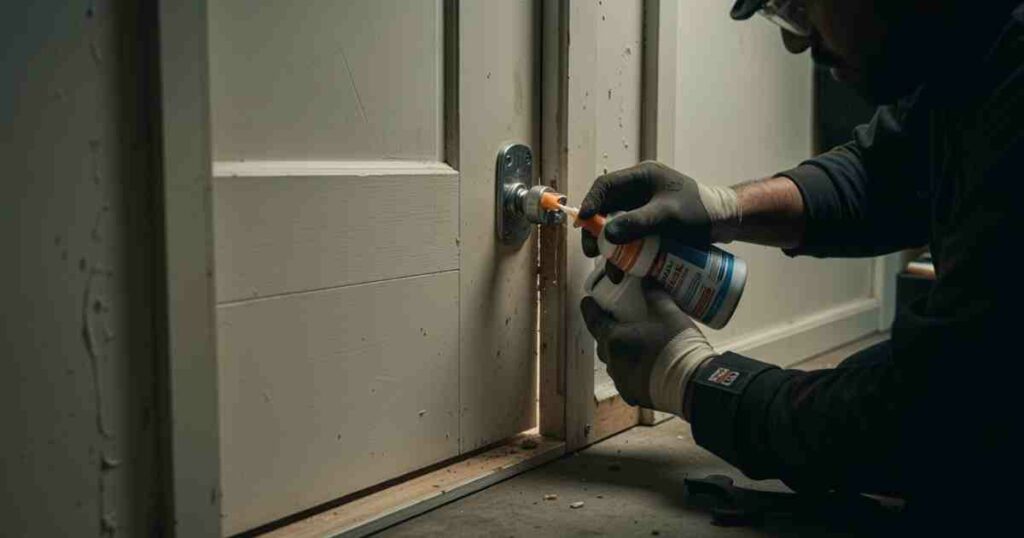
Lubricating Hinges
Squeaky hinges can sometimes make a door feel stiff. A good lubrication can solve this. Use a spray lubricant like WD-40 or a silicone-based lubricant.
You can also use household oil.
Spray the lubricant directly onto the hinge pins and into the hinge joints. Work the door back and forth to allow the lubricant to spread. Wipe away any excess lubricant.
This can smooth out the door’s movement and reduce friction.
More Advanced Solutions
If the simpler fixes don’t solve the problem, you might need to take slightly more involved steps. These solutions address issues like warped wood or frames that are significantly out of alignment.
Planing Or Sanding The Door
If the door is rubbing consistently in one spot, you might need to remove a small amount of wood.
This is where a planer or sandpaper comes in. You’ll want to use a coarse-grit sandpaper (like 80-grit) for significant rubbing, or a finer grit (like 120-grit) for minor adjustments.
Carefully shave or sand down the edge of the door where it’s binding. Work slowly and test the door frequently.
You can use a block plane for more aggressive wood removal or sandpaper wrapped around a sanding block for finer adjustments.
Be sure to sand the cut edge smooth and seal it afterward to prevent future moisture absorption.
Consider this scenario: A door sticks badly at the top corner when closing.
Open and close the door, noting the exact contact point.
Use a pencil to mark the area on the door that is rubbing.
If the rubbing is significant, use a block plane to carefully remove a thin layer of wood from the marked area.
If the rubbing is minor, use sandpaper to smooth down the edge.
Test the door again. Repeat sanding or planing if necessary, checking frequently.
Once the door operates smoothly, lightly sand the edges and apply a coat of paint or sealant to protect the wood.
Adjusting The Strike Plate
The strike plate is the metal piece on the door frame that the latch bolt enters. If the door is sticking when you try to close it, or if the latch doesn’t engage properly, the strike plate might be misaligned. Sometimes, the hole for the latch is too small or not lined up with the latch bolt.
You can file the opening in the strike plate slightly larger. If the strike plate is loose, tighten its screws. If the problem is severe, you might need to remove the strike plate and enlarge the mortise (the recess it sits in) slightly to allow for better alignment.
Weatherstripping And Seals
Worn-out weatherstripping can cause doors to feel stiff or difficult to close. Weatherstripping is the material around the edge of the door that seals out drafts. If it’s old or damaged, it can create extra friction.
Inspect the weatherstripping. If it’s cracked, flattened, or peeling away, it might need to be
Here are some tips for managing weatherstripping:
Check for gaps or damage in the existing weatherstripping.
If it’s flattened, try to fluff it up or replace it if it’s worn out.
When replacing, ensure you get the correct type for your door and frame.
Measure carefully and attach the new weatherstripping securely.
When To Call A Professional
While many door-sticking issues are DIY-friendly, some problems are best left to the experts.
If you’ve tried the common fixes and the door still sticks, or if you suspect a more serious structural issue, it’s wise to seek professional help. A carpenter or handyman can diagnose and fix more complex problems.
Structural Issues With The House
If your house is settling significantly, it can cause major shifts in door frames and even the overall structure.
This is not a simple DIY fix. A professional can assess if the house settling is causing the door problems and recommend solutions, which might involve foundation repairs or structural adjustments.
Warped Doors Or Frames
A severely warped door or frame can be very difficult to fix without specialized tools or expertise.
While minor warping can sometimes be managed by planing or sanding, significant warping might mean the door or frame needs to be replaced.
Professionals have the experience to determine if a repair is feasible or if replacement is the better option.
Preventing Future Sticking
Once you’ve fixed your sticking door, a little regular maintenance can help prevent it from happening again. Keeping your doors in good working order is key to avoiding future frustration.
Regular Inspections
Make it a habit to check your doors periodically. Look for any signs of wear and tear on the hinges, doorknobs, and the door itself. Test the door’s movement to ensure it opens and closes smoothly.
Seasonal Checks
Pay extra attention to your doors during seasonal changes. As humidity levels fluctuate, wood expands and contracts. Catching minor sticking issues early, when they are less severe, will make them easier to fix.
A quick check in spring and fall can save a lot of trouble.
Frequently Asked Questions Of Why Doors Stick And How To Fix Them Fast
Question: My door is sticking at the top. What should I do first?
Answer: First, try to identify if the hinges are loose. Tighten any loose hinge screws. If that doesn’t help, you might need to adjust the hinges by adding a shim behind one of them to slightly alter the door’s position.
Question: How can I tell if the problem is the door or the frame?
Answer: Look for rub marks on both the door and the frame. If the rub marks are consistently on the door edge, it might be the door swelling. If the frame looks warped or out of square, the frame might be the issue.
Question: Can humidity really cause a door to stick so badly?
Answer: Yes, especially with solid wood doors. Wood absorbs moisture from the air and expands. In very humid conditions, a door can swell enough to become very difficult to move, then shrink back when the air dries out.
Question: I sanded my door, but it still sticks a little. What next?
Answer: You might need to sand it down a bit more, or check the hinges. Sometimes, even after sanding, a slight hinge adjustment can make all the difference. Make sure you’re testing the door frequently as you sand.
Question: Is it normal for a new door to stick?
Answer: It can happen, especially in new homes where the wood is still settling or adjusting to the climate. Minor sticking in a new door is often resolved with simple hinge adjustments or light sanding.
Wrap Up
You now know why your doors are sticking and how to fix them fast. Most sticking issues come down to humidity, loose hardware, or minor frame adjustments. By following these simple steps, you can easily address common sticking points.
Enjoy smoothly operating doors again, all thanks to your own efforts.

![Electrical Safety Checks Every Homeowner Should Know[1]](https://creativehouseblog.com/wp-content/uploads/2026/05/Electrical_Safety_Checks_Every_Homeowner_Should_Know1-768x403.jpg)
![Autumn Home Maintenance Checklist Before Cold[1]](https://creativehouseblog.com/wp-content/uploads/2026/05/Autumn_Home_Maintenance_Checklist_Before_Cold1-768x403.jpg)

![7 Deep Fryer Mistakes That Make Food Soggy[1]](https://creativehouseblog.com/wp-content/uploads/2026/04/7_Deep_Fryer_Mistakes_That_Make_Food_Soggy1-768x448.jpg)
![Induction vs Gas Cooktops Which Is Best[1]](https://creativehouseblog.com/wp-content/uploads/2026/03/Induction_vs_Gas_Cooktops_Which_Is_Best1-768x448.jpg)