
The most effective ways to reduce indoor frying odors involve improving kitchen ventilation and managing the oil itself. Key strategies include using a powerful range hood or open windows, selecting oils with higher smoke points, and ensuring oil is not overheated. Properly cleaning surfaces and using natural absorbents after cooking will prevent smells from lingering and settling into your home.
Frying food indoors can make your home smell like a restaurant, and not always in a good way! For folks new to cooking this way, dealing with that lingering oil smell can seem tricky. But don’t worry, it’s much easier than you think to keep your kitchen fresh.
We’ve got simple tips that will help you enjoy delicious fried foods without the lasting aroma. Let’s explore how to make frying at home a much more pleasant experience.
Key Takeaways
- You will learn simple tricks to minimize oil smells when frying inside.
- Discover how ventilation makes a big difference in keeping your air fresh.
- Find out how to choose the right cooking oil to reduce odors.
- Understand the role of proper cleaning after frying.
- Learn about using natural methods to absorb or mask smells.
- Get tips on cooking techniques that produce less smell.

Understanding the Oil Smell Challenge
Why Frying Creates Odors
When you fry food, tiny particles of oil and food bits get into the air. These particles carry strong smells. As they cool down, they stick to surfaces like walls, curtains, and furniture.
This is why the smell can stick around for a long time after you’re done cooking. The heat also causes some compounds in the oil to break down, releasing more potent aromas.
The Beginner’s Dilemma
New cooks might not realize how quickly and how far these smells can travel. They might also not have the right tools or know the best ways to manage them. Without knowing these simple steps, it’s easy to feel overwhelmed by the persistent smell.
But with a few easy habits, you can enjoy fried foods without the house smelling for days.
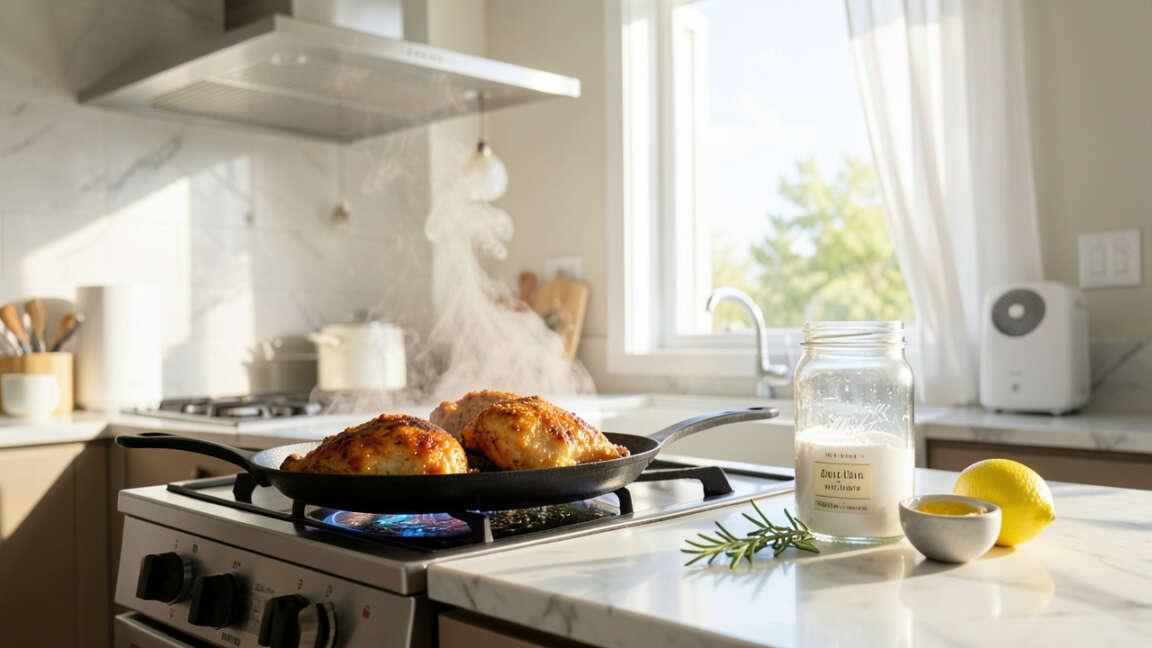
9 Ways to Reduce Oil Smell When Frying Indoors
1. Boost Your Kitchen Ventilation
This is probably the most important step. Always turn on your range hood fan before you start frying. Make sure it’s set to a high speed.
If you don’t have a range hood, open windows. Use a fan to blow air out of a window. This helps to pull the oily air outside before it can spread through your home.
Keep the fan running for a while even after you finish cooking.
2. Keep Your Kitchen Door Closed
If you can, close the door to your kitchen while you are frying. This acts as a barrier. It helps to contain the smell within the kitchen area.
This way, the smell won’t travel into other rooms like your living room or bedrooms. Once the cooking is done and the kitchen is aired out a bit, you can open the door again.
3. Choose the Right Cooking Oil
Some oils have stronger smells than others. Oils with a higher smoke point often have less odor. Consider using oils like canola, grapeseed, or sunflower oil.
These tend to be less aromatic than oils like olive oil, especially when heated. Experiment with different oils to see which ones work best for you and produce less smell.
4. Don’t Overheat the Oil
Heating oil too much can cause it to smoke and create a stronger, more unpleasant smell. Aim for the correct frying temperature for the food you are cooking. If the oil starts smoking, it’s too hot.
Let it cool down a bit before you add your food. Using a thermometer can help you control the oil temperature accurately.
5. Strain and Store Oil Properly
After you are done frying and the oil has cooled, strain it through a fine-mesh sieve. You can also use cheesecloth for extra fine straining. This removes any small food bits that can go rancid and make the smell worse over time.
Store the strained oil in an airtight container. Keep it in a cool, dark place. This helps keep the oil fresh and reduces lingering odors.
6. Clean Up Immediately
This is a big one! Don’t leave greasy pans or utensils lying around. Wipe down your stovetop, counters, and walls with a degreasing cleaner as soon as you can after frying.
The longer grease sits, the harder it is to clean and the more it can smell. Wash any dishes used right away.
7. Use a Baking Soda or Vinegar Solution
Baking soda is a fantastic odor absorber. You can place an open box of baking soda in your kitchen overnight after frying. It will soak up smells.
Another trick is to simmer a pot of water with a cup of white vinegar on the stove for about 15-20 minutes after you finish frying. The vinegar smell will disappear quickly, taking the oil smell with it.
8. Simmer Spices or Citrus Peels
To add a pleasant scent and mask any oil smell, try simmering a pot of water with fragrant ingredients. Cinnamon sticks, cloves, lemon peels, or orange peels work wonderfully. Just let it simmer gently on the stove.
This fills your kitchen with a nice aroma that can cover up cooking smells.
9. Fry Smaller Batches More Often
If you’re frying a lot of food, try doing it in smaller batches. This helps prevent the oil from getting too old or too hot. It also means less overall oil is being used and potentially creating smell.
Smaller batches also make cleanup easier and quicker, which helps manage odors.
Frequently Asked Questions
Question: How can I quickly get rid of frying smells?
Answer: Turn on your kitchen fan or open windows. Simmering a pot of water with vinegar or citrus peels can also help neutralize odors quickly.
Question: Does the type of oil really affect the smell?
Answer: Yes, it does. Oils with higher smoke points and neutral flavors, like canola or grapeseed oil, tend to produce less odor than some other oils.
Question: What is the best way to clean up after frying?
Answer: Wipe down all surfaces, including the stovetop and counters, with a degreaser right after cooking. Wash all dishes and utensils used promptly.
Question: Can I reuse frying oil?
Answer: Yes, you can reuse oil if it’s strained properly to remove food bits and stored in an airtight container. However, it might start to smell more over time.
Question: How long should I ventilate my kitchen after frying?
Answer: Keep your fan on or windows open for at least 15-30 minutes after you finish cooking to allow remaining oil particles to escape.
Final Thoughts
Keeping your home smelling fresh while frying is totally achievable with these simple tips. Focusing on good ventilation, proper oil choice, and immediate cleanup makes a huge difference. You can enjoy your favorite fried foods without worrying about a lingering smell.
Just follow these easy steps, and your kitchen will stay pleasant. Happy cooking!

![8 Fruits & Vegetables That Work Best For Juicing[1]](https://creativehouseblog.com/wp-content/uploads/2026/04/8_Fruits__Vegetables_That_Work_Best_For_Juicing1-768x448.jpg)
![10 Things You Should Never Put In A Garbage Disposal[1]](https://creativehouseblog.com/wp-content/uploads/2026/04/10_Things_You_Should_Never_Put_In_A_Garbage_Disposal1-768x448.jpg)
![How To Fix A Door That Doesn’t Close Right[1]](https://creativehouseblog.com/wp-content/uploads/2026/05/How_To_Fix_A_Door_That_Doesnt_Close_Right1-768x403.jpg)
![What Does a Food Processor Do Explained Simply[1]](https://creativehouseblog.com/wp-content/uploads/2026/03/What_Does_a_Food_Processor_Do_Explained_Simply1-768x448.jpg)
![10 Foods You Can Cook In A Deep Fryer (Beyond Fries)[1]](https://creativehouseblog.com/wp-content/uploads/2026/04/10_Foods_You_Can_Cook_In_A_Deep_Fryer_Beyond_Fries1-768x448.jpg)
![How to Reduce the Risk of Electrical Fires at Home[1]](https://creativehouseblog.com/wp-content/uploads/2026/05/How_to_Reduce_the_Risk_of_Electrical_Fires_at_Home1-768x403.jpg)