
Cleaning an espresso machine requires a consistent routine of daily, weekly, and monthly tasks to prevent coffee oil and mineral buildup. Following a structured schedule ensures optimal coffee flavor and extends the machine's operational lifespan. Essential tasks include daily rinsing, weekly backflushing, and monthly deep cleaning of components like the portafilter and steam wand.
Many people love espresso drinks but find cleaning their machine a bit tricky. It can seem like a lot of parts and steps at first. But don’t worry, it’s easier than you think!
Key Takeaways
- You will learn the importance of regular cleaning for espresso machines.
- Discover the daily tasks needed to keep your machine in top shape.
- Understand the monthly deep cleaning process for better performance.
- Learn how to clean specific parts like the portafilter and steam wand.
- Find out what cleaning supplies are best for your espresso machine.
- Know how to troubleshoot common cleaning issues.
Knowing How to Clean an Espresso Machine will help you make better tasting coffee and make your machine last longer. This guide will show you exactly what to do, step by step.
![How to Clean Your Espresso Machine Simple Guide[1]](https://creativehouseblog.com/wp-content/uploads/2026/03/How_to_Clean_Your_Espresso_Machine_Simple_Guide1.jpg)

Why Cleaning Your Espresso Machine Matters
Your espresso machine is a wonderful tool for making delicious coffee at home. But just like any kitchen gadget, it needs regular care. Coffee oils and mineral deposits can build up over time.
This build-up can affect the taste of your espresso, making it bitter or off-flavor. It can also clog your machine, leading to poor performance and shorter lifespan.
Think of it like cooking. If you don’t wash your pans after use, old food gets stuck and ruins your next meal. The same idea applies to your espresso machine.
A clean machine makes a cleaner tasting shot of espresso. It also helps the machine run smoothly, so you get that perfect crema every time.

Daily Cleaning Steps
Taking care of your machine every day is the best way to prevent big cleaning jobs later. These quick tasks take just a few minutes but make a huge difference. It’s the simplest part of knowing How to Clean an Espresso Machine.
After Each Use
After you pull your espresso shot, there are a couple of things to do right away. This helps keep things fresh.
- Empty the Portafilter: Knock out the used coffee grounds into your knock box or trash.
- Rinse the Portafilter: Give the portafilter a quick rinse under hot water to remove any leftover grounds or oils.
- Wipe Down the Group Head: Use a damp cloth to wipe the shower screen on the group head. This removes any coffee residue clinging there.
- Flush the Group Head: Run some hot water through the group head for a few seconds. This flushes out any loose grounds.
End of the Day Cleaning
Before you finish your coffee making for the day, a few more simple steps will keep your machine clean and ready for tomorrow.
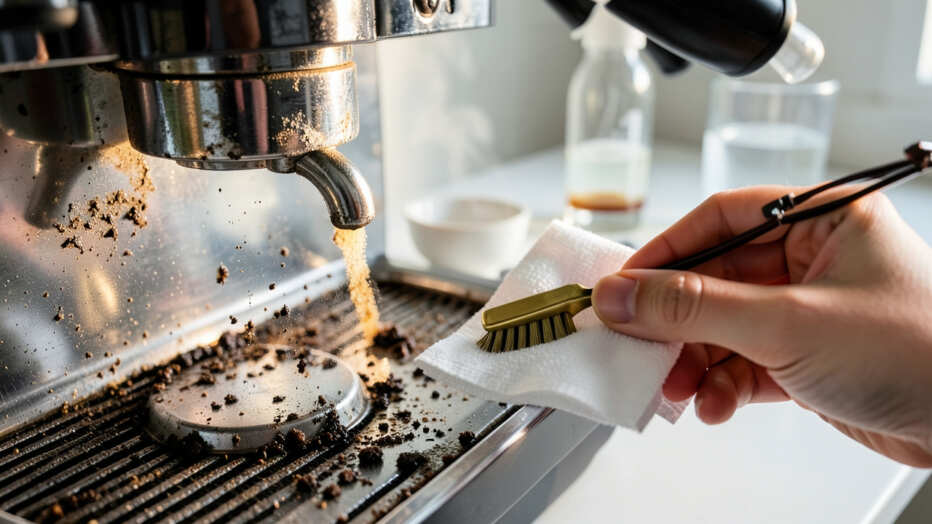
- Clean the Steam Wand: After steaming milk, always wipe the steam wand with a damp cloth. Then, run some steam through it for a few seconds to clear out any milk residue inside. This is super important for hygiene and to prevent milk from drying and blocking the wand.
- Empty and Rinse the Drip Tray: Pull out the drip tray and empty any water or coffee that has collected. Give it a quick rinse.
- Wipe Down Exterior: Use a soft, damp cloth to wipe down the outside of your machine. This keeps it looking nice and free of coffee splashes.
Weekly Cleaning Tasks
Once a week, you’ll want to do a slightly more thorough clean. This gets into parts you might miss with daily cleaning.
Backflushing (if applicable)
Many espresso machines can be backflushed. This process forces hot water back through the group head and into the drip tray. It helps dislodge coffee oils and grounds from the internal pathways of the group head.
Check your machine’s manual to see if yours has this feature and how to do it.
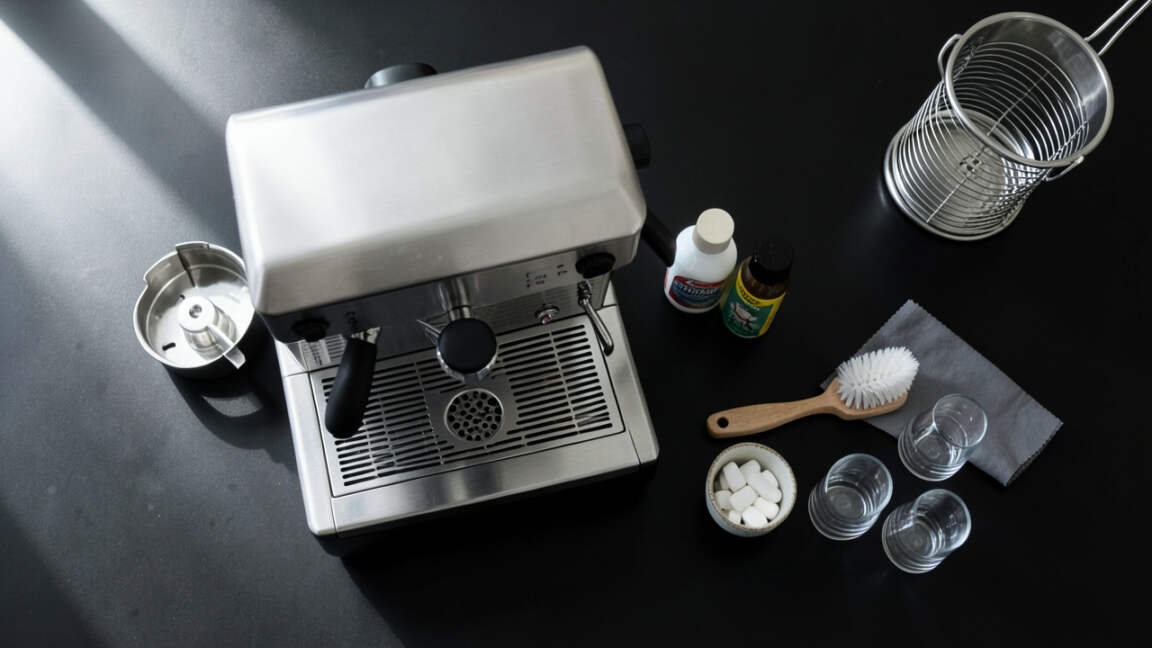
You’ll need a blind basket (a portafilter basket with no holes) and some espresso machine cleaning solution. Put a small amount of cleaning solution in the blind basket. Lock the portafilter into the group head.
Run the brew cycle for about 10-15 seconds, then stop. Repeat this about 5-10 times. Then, remove the portafilter, rinse the basket and portafilter.
Flush the group head with plain water by running cycles without the portafilter. This removes any cleaning solution residue.
Cleaning the Portafilter and Baskets
Take your portafilter and any filter baskets apart. Soak them in hot water with a bit of espresso machine cleaner for about 15-20 minutes. Then, scrub them with a brush to remove any stubborn coffee oils.
Rinse them very well with clean water and dry them completely.
Cleaning the Steam Wand (Deeper)
Even with daily cleaning, milk residue can build up. If your steam wand seems clogged or dirty, you can soak its tip in a solution of hot water and espresso machine cleaner. Use a pin or a small brush to clear the steam holes if they are blocked.
Monthly Deep Cleaning
Every month or so, depending on how much you use your machine, you’ll want to do a deep clean. This is where you tackle the build-up of mineral deposits from water.
Descaling
Descaling removes the calcium and magnesium deposits that build up from your water. These are often called “scale.” Scale can clog your machine’s pipes and heating element, making it less efficient and potentially damaging it.
The exact descaling process varies greatly by machine type. Always consult your espresso machine’s user manual for specific instructions. Some machines have a dedicated descaling cycle. Others require you to run a descaling solution through the water tank and group head manually.
Generally, you will mix a descaling solution with water according to the product’s instructions. Pour this mixture into your water reservoir. Run the solution through the group head and steam wand until the reservoir is nearly empty.
Then, empty and rinse the reservoir thoroughly. Fill it with fresh water and run several cycles of plain water through the group head and steam wand to rinse out all traces of the descaling solution.
Using filtered water or distilled water can significantly reduce the need for frequent descaling and help prolong your machine’s life.
Cleaning the Water Tank
While you’re descaling or doing a monthly clean, it’s a good idea to clean the water tank itself. Empty the tank, wash it with mild soap and water, and rinse it well. Make sure it’s completely dry before refilling.
Cleaning Specific Parts
Some parts of your espresso machine need special attention.
The Brew Group/Group Head
This is where the magic happens! It’s the part where you insert the portafilter.
Daily: Wipe with a damp cloth and flush with water.
Weekly: Backflush with water and cleaner (if your machine allows).
Monthly: Ensure you’ve descaled effectively to clear internal build-up.
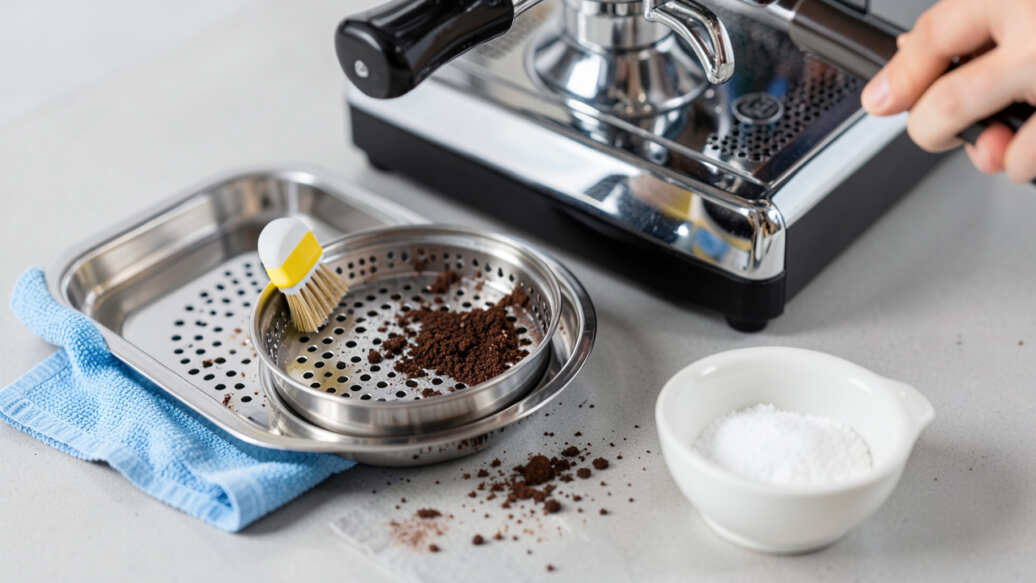
The Portafilter and Filter Baskets
These hold your coffee grounds. They get dirty quickly.
Daily: Knock out grounds and rinse.
Weekly: Soak and scrub with cleaner.
The Steam Wand
Essential for milk drinks. Needs to be spotless!
After each use: Wipe with a damp cloth and purge with steam.
Weekly/Monthly: Soak tip in cleaning solution and clear holes if needed.
The Drip Tray
Catches spills and overflow.
Daily: Empty and rinse.
Weekly: Wash with soap and water.
The Water Reservoir
Holds the water for brewing and steaming.
Monthly: Wash and rinse thoroughly.

Choosing the Right Cleaning Supplies
Using the right products will keep your machine working well and won’t harm its parts. Always check your machine’s manual for recommended cleaning agents.
- Espresso Machine Cleaner Tablets or Powder: These are formulated to break down coffee oils and residue. Look for brands that are safe for espresso machines.
- Descaling Solution: Use a descaling solution specifically made for espresso machines. These typically contain citric acid or similar safe acids. Avoid harsh household cleaners.
- Soft Cloths: Microfiber cloths are great for wiping down the exterior and group head.
- Small Brushes: A brush with firm bristles is useful for scrubbing portafilters and steam wand tips.
- Blind Basket: This is a flat portafilter basket used for backflushing.
Never use abrasive scrubbers, steel wool, or harsh chemicals like bleach or ammonia. These can damage your machine’s components.
Troubleshooting Common Cleaning Issues
Sometimes, even with regular cleaning, you might run into problems.
Slow Water Flow
If water is not flowing as strongly as it used to, it might be due to scale build-up. Perform a descaling cycle. Ensure your water reservoir is filled correctly and not blocked.
Bitter or Off-Taste Espresso
This is a classic sign of old coffee oils and residue. You need to backflush your machine and clean your portafilter and baskets thoroughly. Ensure you are using fresh coffee beans.
Steam Wand Not Steaming Properly
Milk residue can clog the steam wand. Make sure you are cleaning it immediately after each use. If it’s still blocked, soak the tip and use a pin to clear the holes.
Machine Leaking
Check that all parts are properly seated. Ensure the portafilter is locked in correctly. If leaks persist, there might be a seal issue, and you may need to contact the manufacturer.
FAQ Of How to Clean Your Espresso Machine Simple Guide
Question: How often should I clean my espresso machine?
Answer: You should do a quick daily clean after each use and at the end of the day. A more thorough weekly clean is recommended. Monthly descaling is important, depending on your water hardness.
Question: Can I use vinegar to descale my espresso machine?
Answer: While vinegar is a common household cleaner, it is generally not recommended for espresso machines. It can leave a strong taste and odor that is hard to remove, and it might damage certain internal components. Always use a dedicated espresso machine descaling solution.
Question: What is backflushing and why is it important?
Answer: Backflushing is a cleaning process that forces hot water and cleaner back through the group head into the drip tray. It helps remove coffee oils and residue that can build up inside the machine, improving taste and machine performance.
Question: My steam wand is blocked, what should I do?
Answer: First, ensure you wiped it immediately after use and purged it. If it’s still blocked, soak the steam wand tip in a warm solution of water and espresso machine cleaner for about 15 minutes. Then, use a small pin or a specialized steam wand cleaning tool to clear the tiny holes.
Question: How do I know if my machine needs descaling?
Answer: Signs your machine needs descaling include slower water flow, less hot steam, strange noises during operation, and visible mineral build-up. If you use hard water, descaling every 1-3 months is a good idea.
Final Thoughts
Keeping your espresso machine clean is key to delicious coffee and a long-lasting appliance.
By following simple daily, weekly, and monthly routines, you can ensure your machine performs at its best.
Regular cleaning prevents bitter tastes and keeps your machine running smoothly for years of great espresso.

![What New Homeowners Should Fix First 30 Days[1]](https://creativehouseblog.com/wp-content/uploads/2026/05/What_New_Homeowners_Should_Fix_First_30_Days1-1-768x403.jpg)
![10 Tips For Perfect Creamy Foam At Home[1]](https://creativehouseblog.com/wp-content/uploads/2026/04/10_Tips_For_Perfect_Creamy_Foam_At_Home1-768x448.jpg)
![7 Mistakes People Make When Using Indoor Electric Grills[1]](https://creativehouseblog.com/wp-content/uploads/2026/04/7_Mistakes_People_Make_When_Using_Indoor_Electric_Grills1-768x448.jpg)
![7 Meat Grinder Mistakes To Avoid[1]](https://creativehouseblog.com/wp-content/uploads/2026/04/7_Meat_Grinder_Mistakes_To_Avoid1-768x448.jpg)
![Can You Put Aluminum Foil in an Air Fryer[1]](https://creativehouseblog.com/wp-content/uploads/2026/03/Can_You_Put_Aluminum_Foil_in_an_Air_Fryer1-768x448.jpg)
![9 Easy Breakfast Ideas Using A Panini Press[1]](https://creativehouseblog.com/wp-content/uploads/2026/04/9_Easy_Breakfast_Ideas_Using_A_Panini_Press1-768x448.jpg)