
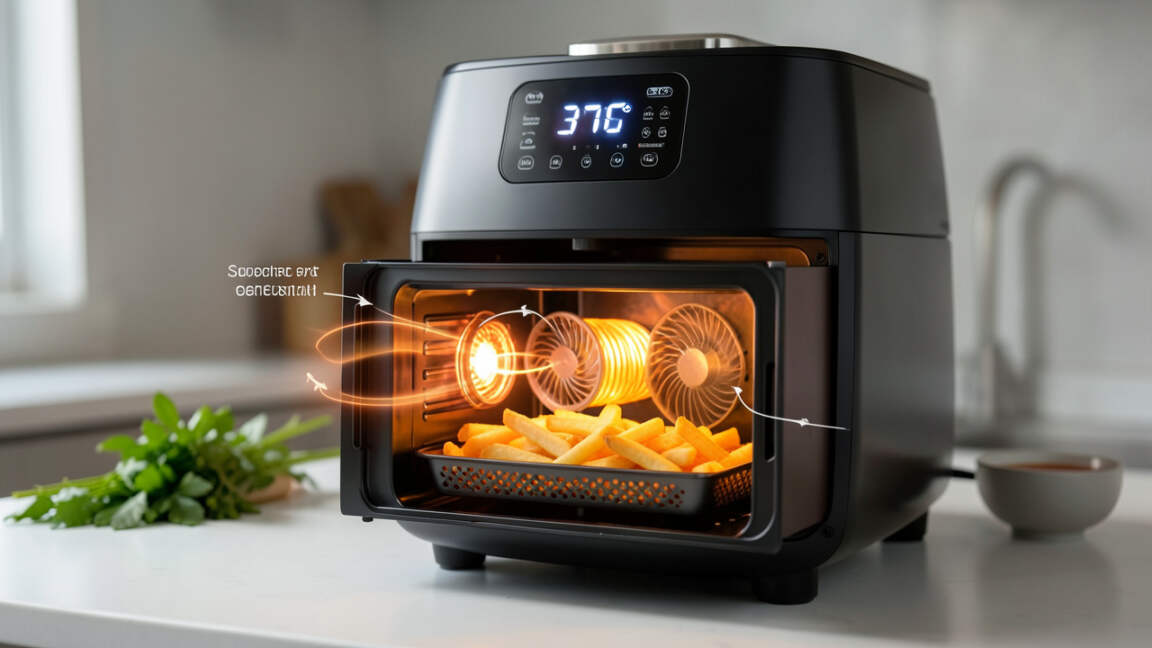
Air fryer temperature control works through a coordinated system of a heating element, a fan, and a thermostat. The thermostat constantly monitors the internal temperature and signals the control board to turn the heating element on or off, maintaining the set heat with precision. Understanding this cycle allows you to set the correct temperature for different foods, ensuring they cook evenly and achieve the perfect crispy texture.
Key Takeaways
- Air fryers use a heating element and a fan to circulate hot air.
- Temperature control is managed by a thermostat and control board.
- Different temperatures are needed for different foods to achieve desired results.
- Proper temperature setting ensures food cooks evenly and safely.
- Understanding how it works helps you adapt recipes for better outcomes.
Many home cooks wonder How Air Fryer Temperature Control Works. It seems simple, but getting it just right can be tricky for beginners. This post breaks down exactly what happens inside your air fryer.
We will show you the easy steps so you can cook with confidence. Let’s explore the magic of air frying and get your food perfectly crispy every time.
![How Air Fryer Temperature Control Works Explained[1]](https://creativehouseblog.com/wp-content/uploads/2026/03/How_Air_Fryer_Temperature_Control_Works_Explained1.jpg)
How Air Fryer Temperature Control Works
An air fryer is a kitchen appliance that cooks food by circulating hot air around it. It’s like a small, high-powered convection oven. The main goal is to make food crispy and delicious with less oil.
But how does it keep the heat just right for all your favorite meals?
The Heating Element
At the heart of every air fryer is its heating element. This is usually located at the top of the appliance, often near the fan. Think of it like the heating coils in an oven or toaster.
When you turn on your air fryer and set a temperature, electricity flows to this element. It gets very hot, very quickly.
The type of heating element can vary. Some use a coiled metal element, while others might use a ceramic or quartz element.
Regardless of the exact design, its job is always the same: to generate the intense heat needed for frying.
The Fan’s Role
The fan is the other crucial part of the air frying process. It’s also usually located at the top, working in tandem with the heating element. Once the heating element is hot, the fan kicks in.
Its job is to blast that hot air all around the cooking basket.
This rapid circulation of hot air is what makes air frying so effective. It surrounds the food from all sides, cooking it evenly and quickly. This process mimics deep frying by creating a crispy exterior, but with a fraction of the oil.
The fan’s speed and direction are carefully controlled to ensure maximum exposure of the food to the hot air.
The Thermostat at Work
How does the air fryer know to keep the temperature steady? That’s where the thermostat comes in. Every air fryer has a thermostat.
This is a sensor that measures the current temperature inside the cooking chamber. It’s like a little thermometer that constantly checks how hot it is.
When the air fryer reaches the temperature you’ve set, the thermostat signals the heating element to reduce its power or even turn off temporarily.
As the temperature starts to drop, the thermostat senses this and tells the heating element to turn back on. This on-and-off cycle keeps the temperature within a small range of what you selected.
The Control Board
The thermostat and the fan are all managed by the air fryer’s control board. This is the “brain” of the appliance.
When you select a temperature and cooking time on the display or dial, you are sending instructions to this control board.
The control board takes your settings and translates them into commands for the heating element and the fan.
It tells them when to turn on, how hot to get, and how fast to spin. For digital air fryers, this board contains sophisticated electronics that precisely manage the cooking process.
For older dial models, it might be a simpler mechanical system.
Setting the Right Temperature
Knowing How Air Fryer Temperature Control Works helps you pick the right heat for your food. Different foods need different temperatures to cook perfectly.
For example, delicate items like fish or vegetables might need a lower temperature, around 350-375°F (175-190°C).
This allows them to cook through without burning.
On the other hand, thicker meats or frozen items often benefit from higher temperatures, perhaps 380-400°F (190-200°C).
This higher heat creates a nice, crispy crust quickly. Some recipes might even call for starting at a high temperature and then reducing it halfway through to ensure the inside is cooked.
Why Temperature Matters for Crispy Food
The magic of achieving that perfect crispiness in an air fryer is all about the rapid, even distribution of heat.
When the temperature is set correctly, the hot air causes the moisture on the surface of your food to evaporate quickly. This dehydration, combined with any oil you’ve added, creates a satisfying crunch.
If the temperature is too low, the food will likely steam rather than crisp. It might cook through but lack that golden-brown, crunchy exterior everyone loves. Conversely, if the temperature is too high, the outside can burn before the inside is cooked.
This is why precise temperature control is so important for air frying success.
Adapting Recipes
Once you understand How Air Fryer Temperature Control Works, you can adapt recipes. Many recipes developed for conventional ovens can be converted for air frying.
You might find you need to reduce the cooking temperature by about 25-50°F (15-25°C) compared to an oven.
Also, cooking times are often shorter in an air fryer due to the intense hot air circulation.
It’s always a good idea to check your food periodically, especially when trying a new recipe or using your air fryer for the first time.
A quick peek can help you avoid burning or overcooking. You can also adjust the temperature or time as needed to get it just right.
Common Air Fryer Temperatures and Their Uses
Here’s a quick guide to common air fryer temperatures and what they’re best for:
- 300-325°F (150-160°C): Best for reheating delicate items like pastries, or for slow cooking things like certain vegetables.
- 350-375°F (175-190°C): This is a good all-around temperature for many foods. It works well for chicken wings, vegetables, fish fillets, and smaller cuts of meat.
- 380-400°F (190-200°C): Ideal for foods that need to get very crispy quickly. Think french fries, chicken tenders, breaded items, and burgers.
- 400°F+ (200°C+): Some air fryers go this high and can be used for specific recipes that require intense heat, like searing some meats or achieving an extra-crispy crust on certain items.
Troubleshooting Temperature Issues
Sometimes, your air fryer might not seem to be heating evenly, or the temperature might feel off.
If your food is burning on one side and undercooked on the other, it could be a fan issue or an unevenly placed heating element.
Ensure you’re not overcrowding the basket; this is a common mistake that prevents hot air from circulating properly.
If your food isn’t getting crispy enough, try increasing the temperature slightly or extending the cooking time.
If the temperature seems too high and food is burning quickly, reduce the temperature by 25°F (15°C) and check more often.
Using a separate kitchen thermometer to check the actual temperature inside the air fryer can also help if you suspect it’s not accurate.
FAQ Of How Air Fryer Temperature Control Works Explained
How does the air fryer fan make food crispy?
The fan circulates hot air very quickly around the food. This rapid movement evaporates moisture from the surface of the food, creating a dry, crispy exterior.
Can I use my air fryer like a regular oven?
Air fryers work similarly to convection ovens but are much smaller and more intense. You can cook many things, but you often need to adjust temperatures and times.
Why is my air fryer not getting hot enough?
Check if the temperature setting is too low, if the basket is overcrowded, or if the heating element is functioning correctly. A faulty thermostat or control board could also be the issue.
Do I need to preheat my air fryer?
Yes, preheating is often recommended. It allows the heating element and fan to reach the desired temperature before you add food, ensuring more even cooking and crispier results.
How often should I clean my air fryer?
Clean your air fryer after every few uses, or as needed. Regular cleaning of the basket and interior helps maintain its performance and prevents food buildup that can affect heating.
Final Thoughts
Understanding How Air Fryer Temperature Control Works empowers you to cook better. You now know the heating element creates heat and the fan distributes it. The thermostat and control board keep it steady.
Use this knowledge to pick the right heat for crispy, delicious results every time. Happy air frying!

![When to Use a Food Processor Versus Blender[1]](https://creativehouseblog.com/wp-content/uploads/2026/03/When_to_Use_a_Food_Processor_Versus_Blender1-768x448.jpg)
![7 Ways To Use A Milk Frother Beyond Coffee[1]](https://creativehouseblog.com/wp-content/uploads/2026/04/7_Ways_To_Use_A_Milk_Frother_Beyond_Coffee1-768x448.jpg)
![Smart Ways How to Keep Your Home Cool Without Wasting Energy[1]](https://creativehouseblog.com/wp-content/uploads/2026/05/Smart_Ways_How_to_Keep_Your_Home_Cool_Without_Wasting_Energy1-768x403.jpg)
![What Is a Stand Mixer Used For Explained[1]](https://creativehouseblog.com/wp-content/uploads/2026/03/What_Is_a_Stand_Mixer_Used_For_Explained1-768x448.jpg)
![How to Descale an Electric Kettle Easily[1]](https://creativehouseblog.com/wp-content/uploads/2026/03/How_to_Descale_an_Electric_Kettle_Easily1-768x448.jpg)
![Signs Your Heating System Needs Attention[1]](https://creativehouseblog.com/wp-content/uploads/2026/05/Signs_Your_Heating_System_Needs_Attention1-768x403.jpg)