
The primary reasons a bread maker fails to function properly involve power issues, incorrect ingredients, or using the wrong settings. Common malfunctions include the unit not turning on, the dough failing to mix or rise properly, and the bread being undercooked or poorly textured. Often, the solution involves basic troubleshooting such as ensuring the outlet works, measuring ingredients precisely, and selecting the appropriate cycle for your recipe.
Getting your bread maker to work right can feel tricky sometimes. You might be wondering why your delicious bread isn’t turning out like you hoped. Don’t worry!
Lots of people run into these same issues. We’ll walk through 6 Reasons Your Bread Maker Isn’t Working Properly step-by-step, making it super easy to fix. Let’s find out what’s going wrong and get you baking again.
Key Takeaways
- You will learn the most common reasons why bread makers stop working correctly.
- Discover how simple fixes can solve most bread maker problems.
- Understand the importance of using the right ingredients and amounts.
- Learn how to check and clean your bread maker for better results.
- Find out how to select the right bread maker settings for your needs.
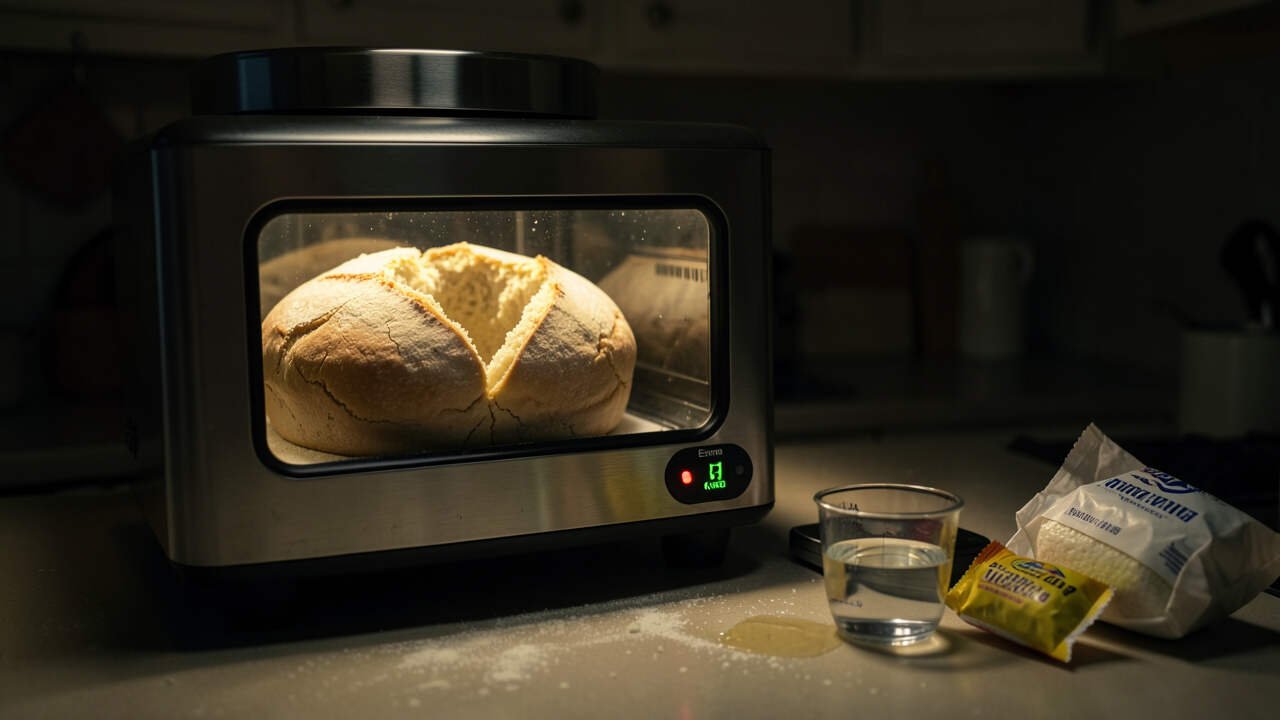
Common Bread Maker Problems and Solutions
1. The Bread Maker Doesn’t Turn On
This is the first thing you’ll notice. If your bread maker is completely dead, don’t panic. The most common reason is a simple power issue.
First, make sure the power cord is plugged in firmly at both ends: into the wall outlet and into the bread maker itself. Check if the outlet is working by plugging in another small appliance, like a lamp.
Sometimes, the lid might not be closed properly. Most bread makers have a safety switch that prevents them from starting if the lid isn’t secure. Give it a gentle push down to make sure it clicks into place.
If you’ve checked the plug and the lid, and it still won’t turn on, look for a power button. Some models have a main power switch that needs to be turned on before you can select a program. Read your bread maker’s manual if you’re unsure where this is.
2. The Dough Isn’t Mixing Well
A dough that’s not mixed properly is a big clue that something’s wrong. You might see dry flour left at the bottom or sides, or the dough might be clumpy instead of smooth. This usually points to a few things related to your ingredients or the mixing paddle.
Make sure you’re adding your ingredients in the correct order. Most recipes call for liquids first, then dry ingredients, and finally yeast. Adding yeast too early can cause it to interact with salt or sugar too soon, which can stop it from working properly.
Check your bread maker’s manual for the recommended order.
The mixing paddle itself might be the issue. Ensure it’s properly attached to the spindle at the bottom of the bread pan. If it’s loose or not seated correctly, it won’t turn and mix the dough.
Another reason could be the amount of liquid. If there isn’t enough liquid, the ingredients won’t come together to form dough. If there’s too much liquid, the dough can become too sticky and hard to mix.
Always measure your liquids and flours accurately.
3. The Dough Isn’t Rising
You’ve added your ingredients, the dough mixed, but it’s not getting any bigger. This is frustrating! The most frequent culprit here is the yeast.
Yeast is a living thing, and it needs to be fresh to work. Check the expiry date on your yeast package. If it’s past its date, it likely won’t be active.
You can also test your yeast by dissolving it in warm water with a pinch of sugar. If it becomes foamy within 5-10 minutes, it’s good. If not, it’s time for new yeast.
Water temperature is also critical. If the water is too hot, it can kill the yeast. If it’s too cold, the yeast won’t activate properly.
Most recipes suggest lukewarm water, usually between 105°F and 115°F (40°C to 46°C).
The environment where the bread maker is is also important. Bread makers have a warm cycle to help dough rise, but if the room is very cold, it can slow down the process. Ensure your bread maker is in a warm spot.
4. The Bread is Undercooked or Overcooked
Getting the baking just right is key to a great loaf. If your bread is still doughy inside when the cycle finishes, it might be that you’re using the wrong setting or the machine’s heating element isn’t working perfectly.
Double-check that you’ve selected the correct program for the type of bread you’re making. A whole wheat loaf needs a different setting than a white bread. Also, consider the size of your loaf.
If you’re making a smaller loaf in a machine designed for larger ones, it might not cook all the way through.
Sometimes, the crust setting can be the issue. If you prefer a darker crust, make sure you’ve chosen the appropriate setting. If your bread is always coming out pale, the machine might not be getting hot enough, or the sensor is off.
If it’s too dark or burnt, you’ll want to select a lighter crust setting next time.
If your bread is consistently undercooked or overcooked, regardless of the settings, there might be an issue with the internal thermostat or heating element of your bread maker. This might require professional repair or a new machine.
5. The Bread Maker Makes Strange Noises
Bread makers are designed to be fairly quiet while they work. If yours is suddenly making loud grinding, banging, or squealing noises, something isn’t right.
Often, these noises come from the mixing paddle. It could be loose, damaged, or something might have gotten stuck under it. Make sure the paddle is securely attached before starting a cycle.
Also, check the bread pan for any debris that could be interfering with the paddle’s movement.
The drive mechanism could also be the source of noise. If you hear grinding or whirring sounds that seem to come from the motor area, it could indicate a problem with the gears or motor itself. This is usually a sign that you might need a repair.
If the noise is more of a banging, it could be related to the kneading process. If the dough is too stiff or too wet, it can put extra strain on the motor and cause it to make more noise. Reviewing your recipe and ingredient measurements might help.
6. The Bread Has a Poor Texture or Shape
The appearance and feel of your bread are important. If your loaves are consistently dense, crumbly, or misshapen, it’s a signal that your bread maker isn’t working at its best.
Texture issues often relate back to the ingredients. Too much flour or not enough liquid can lead to dense bread. Too much yeast or a bread maker that’s too warm can cause it to rise too quickly and then collapse, resulting in a dense, heavy loaf.
Conversely, not enough yeast or a bread maker that’s too cool will lead to a flat, dense loaf.
The shape of your bread is usually determined by the bread pan and the kneading process. If the dough isn’t kneaded enough, it won’t develop the structure to hold its shape. If it’s kneaded too much, it can become tough.
Ensure the mixing paddle is clean and freely rotating.
Sometimes, if the bread pan isn’t properly seated in the bread maker, or if the machine is on an uneven surface, the kneading or rising process can be disrupted, leading to odd shapes. Make sure the pan clicks into place and the machine is stable.
Frequently Asked Questions
Question: Why is my bread maker loaf sinking in the middle?
Answer: This often happens if there’s too much yeast, too much liquid, or the dough proofed in too warm an environment. The dough rises too much and then collapses.
Question: Can I use my bread maker if the paddle doesn’t come out?
Answer: It’s best not to, as the paddle can get stuck in the bread, making it hard to remove and potentially damaging the bread pan or paddle. Check if it’s properly inserted before baking.
Question: My bread maker smells funny, what should I do?
Answer: This usually means it needs a good cleaning. Unplug the machine and wipe down the interior and the bread pan with a damp cloth. Make sure it’s completely dry before storing.
Question: Why does my bread maker have a ‘delay start’ option?
Answer: The delay start feature lets you add ingredients and set the machine to start baking later, so you can wake up to fresh bread or have it ready for dinner.
Question: How often should I clean my bread maker?
Answer: It’s a good idea to clean the bread pan and mixing paddle after each use. Wipe down the exterior and interior of the machine regularly to keep it in good working order.
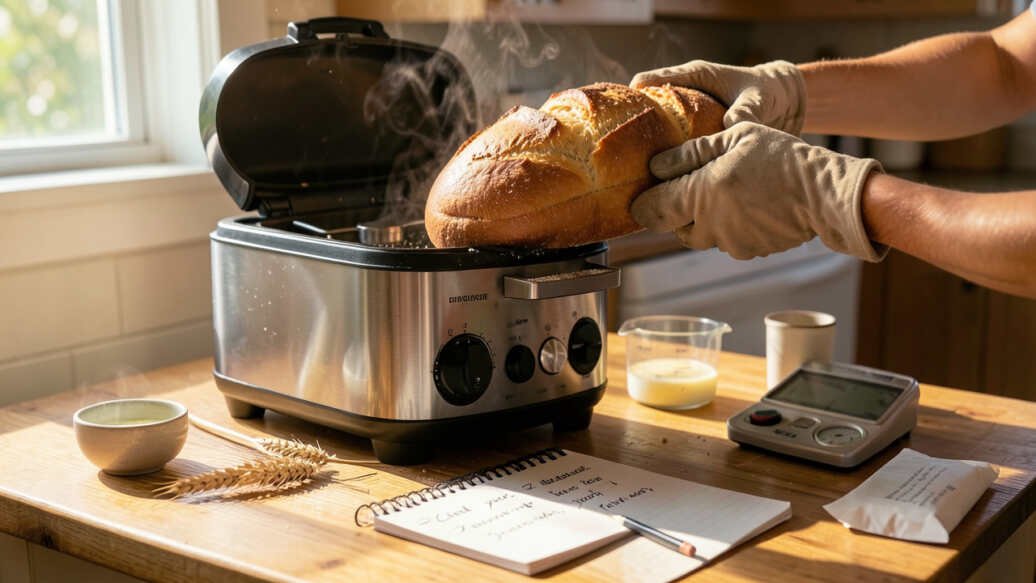
Final Thoughts
Troubleshooting your bread maker just got simpler. You now know the 6 Reasons Your Bread Maker Isn’t Working Properly, from power issues to ingredient mix-ups. Remember to check your power, ingredient order, yeast freshness, and baking settings first.
Many problems are easy fixes that just require a little attention. Keep your bread maker clean and follow recipe steps closely. You’ll be enjoying perfect homemade bread again very soon!

![8 Benefits Of Sous Vide Cooking At Home[1]](https://creativehouseblog.com/wp-content/uploads/2026/04/8_Benefits_Of_Sous_Vide_Cooking_At_Home1-768x448.jpg)
![Can A Stand Mixer Replace A Food Processor[1]](https://creativehouseblog.com/wp-content/uploads/2026/03/Can_A_Stand_Mixer_Replace_A_Food_Processor1-768x448.jpg)
![Flat Roof Maintenance Checks To Prevent Leaks[1]](https://creativehouseblog.com/wp-content/uploads/2026/05/Flat_Roof_Maintenance_Checks_To_Prevent_Leaks1-768x403.jpg)

![Are Electric Kettles Energy Efficient[1]](https://creativehouseblog.com/wp-content/uploads/2026/03/Are_Electric_Kettles_Energy_Efficient1-768x448.jpg)
![Can Air Fryers Truly Replace Ovens[1]](https://creativehouseblog.com/wp-content/uploads/2026/03/Can_Air_Fryers_Truly_Replace_Ovens1-768x448.jpg)