
To balance radiators for even heat, you must adjust the flow of hot water to each unit using the lockshield and thermostatic radiator valves. The primary causes of uneven heating are air trapped at the top of a radiator or an incorrect flow rate set by the valves. Correctly balancing involves bleeding cold radiators with a key and methodically adjusting the valve nuts until all radiators heat up uniformly.
Does your home have some rooms that are toasty while others are chilly? Many people find it tricky to get their heating system to warm every space just right. It can feel like a puzzle, especially if you are new to home maintenance.
But don’t worry, getting your radiators to heat every room evenly is easier than you might think.
This guide will show you exactly how to do it, step by step, so you can enjoy consistent warmth throughout your home. We will cover the simple tricks that make a big difference.
Key Takeaways
- Understand why radiators heat unevenly.
- Learn how to bleed radiators to remove air.
- Discover the importance of balancing radiator valves.
- Find out how to check radiator flow and temperature.
- Get tips for troubleshooting persistent heating issues.
- Achieve a consistently warm home without drafty spots.
![How To Balance Radiators For Even Heat[1]](https://creativehouseblog.com/wp-content/uploads/2026/05/How_To_Balance_Radiators_For_Even_Heat1.jpg)
Why Radiators Heat Unevenly
When your home’s heating system works, hot water flows through pipes to your radiators. The goal is for each radiator to receive the right amount of hot water to warm its room. If some radiators get too much hot water, they get very hot.
If others get too little, they stay cool. This often happens because of air trapped in the pipes or valves that are not set correctly. For beginners, figuring out where the problem lies can be confusing.
It’s common to feel unsure about touching your heating system. This section explains the common reasons for this heating imbalance.
Air Trapped in Radiators
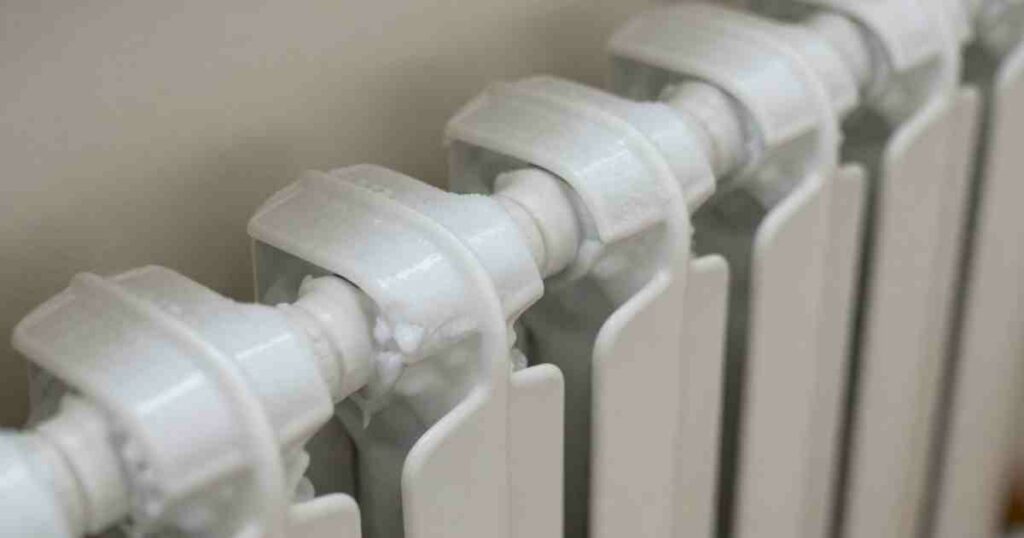
Air is lighter than water. When it gets into your heating system, it tends to rise to the top of radiators. This trapped air acts like a little plug.
It stops the hot water from filling the entire radiator, leaving the top part cold. Even if the water is hot, the air prevents the heat from spreading. Think of it like trying to drink through a straw with a hole in it; you won’t get much liquid.
Bleeding radiators is the process of letting this trapped air out. You’ll hear a hissing sound as the air escapes. Once the hissing stops and water starts to come out, you know the air is gone.
This simple action can make a big difference in how well your radiators heat up.
Flow Rate Issues
The flow rate is how much hot water moves through your heating system. If the flow is too slow or uneven, some radiators might not get enough hot water.
This can be due to blockages in the pipes, a pump that is not working correctly, or valves that are not fully open.
A balanced system ensures water flows smoothly and evenly to all parts of your home.
Imagine a garden hose. If the tap is only slightly open, the water pressure is low, and it might not reach the end of the hose. If there’s a kink in the hose, the water stops flowing altogether.
Similar issues can happen in your home’s heating pipes.
Valve Settings
Most radiators have two valves. One controls the amount of hot water entering the radiator. The other is usually a lockshield valve, which is meant to be set and left alone after the system is balanced.
If these valves are not set correctly, they can restrict the flow of hot water to certain radiators. Incorrectly adjusting these valves is a common mistake for those new to heating system maintenance.
The main valve, often called the control valve, is like the tap for that radiator. The lockshield valve fine-tunes the balance. It’s important to know which is which and how to adjust them properly.
How To Balance Radiators So Every Room Heats Evenly
Balancing your radiators means adjusting them so they all heat up at the same rate. This ensures that every room gets the warmth it needs. It’s a process that involves checking each radiator and making small adjustments.
The main idea is to make sure the radiators closest to your boiler don’t get all the hot water, leaving radiators further away cold.
This section will guide you through the step-by-step process. It’s a practical skill that saves energy and makes your home much more comfortable.
Step 1 Check Radiator Temperatures
Before you start adjusting anything, you need to know which radiators are not heating properly. Turn your heating system on. Let it run for about 30 minutes to an hour.
Then, carefully feel each radiator. Start from the ones closest to your boiler and move outwards. You can also use a room thermometer in each room to get a precise reading.
Pay attention to whether the radiator is cold at the top and hot at the bottom, or if it’s cold all over. If the top is cold and the bottom is hot, it likely has air trapped inside.
If the whole radiator is cold, it might not be getting any hot water at all, or the water it is getting is not hot enough.
Note down which radiators feel cooler than others.
A simple way to record this is to make a list of your rooms and the approximate temperature of the radiators in them. For example:
- Living Room Radiator: Very Hot
- Kitchen Radiator: Warm
- Bedroom Radiator: Cool
- Bathroom Radiator: Cold
Step 2 Bleed Radiators That Are Cold at the Top
If you find radiators that are cold at the top and hot at the bottom, this indicates trapped air. You’ll need a radiator key to bleed them. You can buy these at most hardware stores.
Locate the bleed valve on your radiator. It's usually a small square peg at the top on one end of the radiator. Place a cloth or small container underneath the valve to catch any drips.
Insert the radiator key into the square slot and turn it slowly counter-clockwise. You will hear a hissing sound as air escapes. Keep turning until the hissing stops and a steady stream of water comes out.
Then, close the valve by turning the key clockwise. Be careful not to overtighten it.
After bleeding, turn your heating back on and re-check the radiators. The ones you bled should now be heating up more evenly. You may need to repeat this process for all radiators that show signs of trapped air.
Step 3 Adjust Radiator Valves
Once you’ve bled any radiators with trapped air, you need to adjust the valves to balance the heat flow.
This is where you fine-tune the system. You’ll be working with the radiator control valves and the lockshield valves.
The control valve is usually on the side of the radiator with a numbered dial or a lever. The lockshield valve is on the opposite end, often covered by a plastic cap. You’ll need a small adjustable wrench or pliers to turn the lockshield valve.
First, remove the plastic cap from the lockshield valve. Note the position of the valve. You will adjust this one.
The goal is to reduce the hot water flow to radiators that are getting too hot, and ensure enough flow to those that are too cool. You will make small adjustments to the lockshield valves.
Step 4 Balancing Process Explained
Turn your heating system back on. Let it heat up fully. Now, you’ll go around each radiator and feel its temperature.
You want all radiators to feel equally hot when the system is running.
If a radiator is too hot compared to others, you need to reduce the flow of hot water to it. To do this, turn the lockshield valve clockwise. Make a small adjustment, maybe a quarter of a turn.
Then, let the system run for a while, about 15-30 minutes, to see if the temperature changes. You might need to repeat this process several times.
If a radiator is too cool, you need to increase the flow of hot water to it. To do this, turn the lockshield valve counter-clockwise. Again, make only small adjustments and wait to see the effect.
It’s a process of trial and error.
A useful technique is to close off the lockshield valve on all radiators that are too hot. Then, gradually open them a little bit at a time until they are the same temperature as the coolest radiator. This ensures all radiators are working to their best ability.
This process can take a few hours to get right. Be patient and make small adjustments. It’s better to make several small changes than one big one.
Step 5 Check Water Pressure
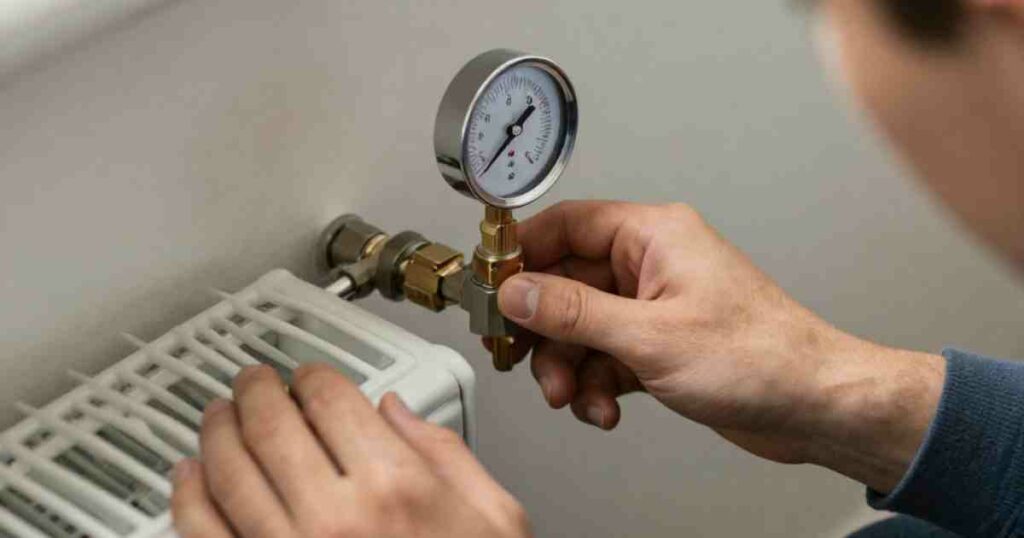
After adjusting your radiators, it’s important to check the pressure of your heating system. Most combi boilers have a pressure gauge on the front. The ideal pressure is usually between 1 and 1.5 bar when the system is cold.
If bleeding radiators has caused the pressure to drop too low, you may need to top it up.
Consult your boiler’s manual for specific instructions on how to do this. It usually involves opening a small filling loop valve. Be careful not to overfill the system, as this can cause damage.
Low water pressure can affect the circulation of hot water throughout your home, leading to uneven heating. If you’re unsure about checking or topping up the pressure, it’s best to call a professional heating engineer.
Step 6 Re-Test and Fine-Tune
Once you think you have balanced the system, run your heating and check all radiators again. Feel them to ensure they are heating evenly. You may find that a slight adjustment to one or two radiators can make a big difference.
It’s a good idea to re-check the temperatures after a few days of normal use. Sometimes, the system needs a little time to settle.
If you still have a radiator that is not heating properly, it might be a more complex issue, such as a blockage in the pipework or a faulty component.
The aim is to have all radiators reach a similar comfortable temperature around the same time.
This balanced system means your boiler doesn’t have to work as hard, saving energy and reducing your bills. It also provides consistent comfort throughout your home.
Understanding Radiator Valves
Radiator valves are key components in controlling the heat output of individual radiators. They allow you to fine-tune the temperature in each room, contributing significantly to the overall balance of your heating system.
Understanding the different types of valves and their functions is crucial for effective radiator balancing.
Types of Radiator Valves
There are two main types of valves on most radiators: the control valve and the lockshield valve.
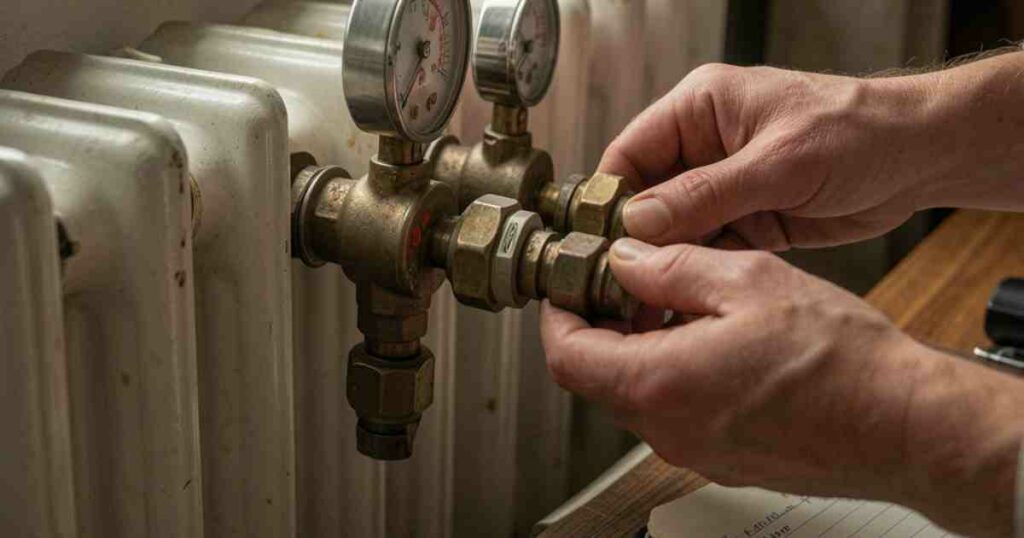
The control valve is the one you typically interact with to adjust the heat. It often has a number dial (from 1 to 5 or 6) or a lever that you can turn to increase or decrease the flow of hot water.
The lockshield valve is usually located on the opposite end of the radiator. It’s often capped with a plastic cover. This valve is designed to be set once the radiator is balanced and then left alone.
However, during the balancing process, you will adjust this valve to fine-tune the flow.
Some modern radiators also have thermostatic radiator valves (TRVs). These have a sensor that detects the room temperature and automatically adjusts the valve to maintain a set temperature.
TRVs can be very helpful for achieving consistent temperatures in individual rooms, but they still need to be part of a properly balanced system to work efficiently.
How Valves Control Heat Flow
When you adjust a radiator valve, you are changing the size of the opening through which hot water can flow into or out of the radiator.
Turning the control valve clockwise closes the valve, reducing the water flow and thus the heat output. Turning it counter-clockwise opens the valve, increasing the flow and heat output.
The lockshield valve works in a similar way but is used for fine adjustments during the balancing process.
By adjusting the lockshield valve, you can precisely control how much hot water reaches a specific radiator.
This is essential for ensuring that radiators furthest from the boiler receive enough hot water, while those closest don’t overheat.
If your radiators have TRVs, it’s important to set them correctly. Generally, you should set them to a medium setting (like 3 or 4) and then balance the system using the lockshield valves. Once balanced, you can use the TRVs to set your desired temperature in each room.
A common scenario for beginners is to only adjust the control valve. However, for proper balancing, the lockshield valve is the primary tool. It allows for precise control without constantly fiddling with the main valve.
When to Use a Radiator Key
A radiator key is specifically designed for bleeding radiators. It fits into the small square nut on the bleed valve. You turn the key to open the valve and release trapped air.
Without a radiator key, it’s difficult or impossible to bleed a radiator effectively.
It is important to use the correct size radiator key. Most modern radiators use a standard size, but older ones might vary. If you’re unsure, it’s best to buy a universal radiator key set.
Remember to have a rag or small container ready when bleeding a radiator, as some water will escape after the air is released. Bleeding is a crucial first step if a radiator is cold at the top, indicating trapped air.
Troubleshooting Common Heating Problems
Even after attempting to balance your radiators, you might still encounter some issues. These problems can stem from various parts of your heating system.
Knowing how to identify and address them will help you maintain a warm and comfortable home.
This section covers common hiccups and how to fix them.
Cold Spots and Inconsistent Heating
If you still have cold spots or inconsistent heating after balancing, the issue might be more complex.
One common problem is a partially blocked pipe. Over time, rust and debris can build up inside your heating pipes, restricting the flow of hot water.
This is more likely to affect radiators further away from the boiler.
Another possibility is that your central heating pump is not working efficiently. The pump is responsible for circulating hot water. If it’s weak or faulty, it won’t be able to push enough water to all parts of the system.
You might hear strange noises from the pump if it’s having problems.
Sometimes, the boiler itself might not be reaching the correct temperature. The boiler thermostat could be set too low, or there might be an issue with its internal components. Checking your boiler’s display for any error codes can provide clues.
Noisy Radiators
Gurgling, banging, or whistling sounds from radiators often indicate trapped air. As we discussed, air needs to be bled out. If bleeding doesn’t solve the noise, it could mean that air is constantly getting into the system.
This might be due to a leak in the system or a faulty expansion vessel.
If you hear a banging noise, it could be a pipe expanding and contracting as it heats up or cools down.
This is often caused by pipes rubbing against something they shouldn’t be, or by insufficient pipe clips.
Whistling sounds can sometimes be caused by water being forced through a narrow opening, often at a valve.
A ‘kettling’ noise from the boiler itself usually means limescale build-up inside the heat exchanger. This requires professional attention to descale the boiler or replace the affected parts.
Radiators Not Heating Up At All
If a radiator remains completely cold, even after bleeding, there could be a blockage in the radiator itself or in the pipework leading to it.
The lockshield valve might be fully closed, or there could be a buildup of sludge at the bottom of the radiator.
In some cases, the thermostatic radiator valve (TRV) pin might be stuck. If you have TRVs, try gently pushing the pin in and releasing it a few times. If it’s stiff, a few drops of penetrating oil might help.
Ensure the TRV is not set to ‘0’ or the snowflake symbol, which indicates frost protection mode.
If all else fails, you might need to consider flushing the entire heating system to remove sludge and debris. This is a more involved process and is often best left to a professional heating engineer.
When To Call a Professional
While many heating issues can be resolved with basic DIY steps, some problems are best left to the experts.
If you’re uncomfortable working with your heating system, or if the problem persists after you’ve tried the basic solutions, it’s time to call a qualified heating engineer.
Signs that you should call a professional include:
- Persistent leaks from pipes or radiators.
- Your boiler is showing error codes you don’t understand.
- You hear loud or unusual noises coming from the boiler.
- The water pressure in your system is consistently too high or too low, and you can’t fix it.
- You’ve tried bleeding and balancing, but still have cold radiators.
A professional heating engineer has the tools and knowledge to diagnose more complex issues accurately.
They can also carry out essential safety checks, such as gas safety inspections for your boiler.
Regular professional servicing of your boiler and heating system can help prevent many of these problems from occurring in the first place.
Benefits of a Balanced Heating System
Achieving a balanced heating system provides numerous advantages that go beyond just comfortable room temperatures.
It impacts your home’s efficiency, your energy bills, and the lifespan of your heating equipment. Understanding these benefits can motivate you to maintain your system properly.
Energy Efficiency and Cost Savings
When your radiators are balanced, your boiler doesn’t have to work as hard or run for as long to heat your home.
This is because hot water is circulating effectively to all radiators, ensuring each one is contributing to heating the room it’s in.
An unbalanced system forces the boiler to run hotter and longer to compensate for radiators that aren’t heating properly, leading to wasted energy.
For example, a home with unbalanced radiators might have some rooms that overheat while others remain cold. To make the cold rooms warm, the homeowner might turn up the thermostat, causing the already hot rooms to become uncomfortably warm. This cycle leads to significant energy waste.
With a balanced system, each radiator heats its room to the desired temperature, allowing the thermostat to cycle off sooner, saving you money on your energy bills.
Studies show that a well-balanced heating system can improve energy efficiency by up to 15%.
Data from the Energy Saving Trust suggests that improving heating system efficiency can lead to substantial savings on annual energy costs.
By ensuring your radiators are balanced, you are taking a key step towards a more energy-efficient home.
Improved Comfort Throughout The Home
The most immediate benefit of balancing radiators is consistent warmth in every room. No more choosing to spend time only in the warmest areas of your house.
Every space, from the bedroom to the bathroom, can be kept at a comfortable temperature.
This consistency is especially important for families with young children or elderly relatives, for whom extreme temperatures can be unhealthy.
Imagine a winter morning where you can walk from room to room without feeling a significant drop in temperature. This level of comfort enhances the overall liveability of your home.
The psychological benefit of knowing your home is consistently comfortable cannot be overstated. It contributes to a feeling of well-being and security.
Extended Lifespan of Heating Equipment
When your heating system is unbalanced, components like the boiler, pump, and pipes are put under unnecessary strain.
The boiler may overheat, and the pump may have to work harder to push water through restricted areas. This constant overexertion can lead to premature wear and tear on these expensive components.
A balanced system operates more smoothly, with water circulating at optimal flow rates. This reduces stress on the boiler and pump, helping them to function efficiently for longer.
Regular maintenance, including radiator balancing, is a form of preventative care for your heating system, potentially saving you significant repair or replacement costs down the line.
A well-maintained and balanced heating system can last many years longer than one that is neglected.
This makes the effort of balancing your radiators a worthwhile investment in the longevity of your home’s heating infrastructure.
Frequently Asked Questions Of How To Balance Radiators For Even Heat
Question: How often should I balance my radiators?
Answer: It’s a good idea to check and potentially balance your radiators once a year, typically before the start of the heating season in autumn. You might also need to re-balance them if you notice that some rooms are becoming colder than others or if you’ve had any work done on your heating system.
Question: Can I balance my radiators if I have a combi boiler?
Answer: Yes, you can absolutely balance radiators with a combi boiler. The process is the same as with other types of boilers. Just ensure your boiler’s pressure is within the recommended range after bleeding any radiators.
Question: What should I do if my radiators are hot at the bottom and cold at the top?
Answer: This indicates trapped air in the radiator. You need to bleed the radiator using a radiator key to release the air. Once the air is out, hot water should fill the radiator, and it should heat up evenly.
Question: My radiators are all heating up, but some rooms are still not warm enough. What could be wrong?
Answer: If all radiators are heating up, but certain rooms aren’t reaching the desired temperature, it could be due to poor insulation in those rooms, drafts, or an undersized radiator for the room’s heating needs. It might also indicate that the overall system isn’t powerful enough, or the boiler’s output is too low for the house size.
Question: Is it safe to adjust radiator valves myself?
Answer: Yes, adjusting radiator valves is a safe DIY task for most homeowners. The process involves simple turning actions. Just be cautious not to overtighten the valves and have a cloth ready for any drips when bleeding radiators.
Summary
Achieving a consistently warm home is possible. By following these steps to balance your radiators, you ensure every room heats evenly. You’ll learn to bleed air, adjust valves, and fine-tune your system.
This process saves energy, cuts costs, and makes your home more comfortable. Start today and enjoy the warmth.

![8 Cleaning Hacks For Limescale Removal[1]](https://creativehouseblog.com/wp-content/uploads/2026/04/8_Cleaning_Hacks_For_Limescale_Removal1-768x448.jpg)
![8 Ways To Clean A Panini Press Without Damaging It[1]](https://creativehouseblog.com/wp-content/uploads/2026/04/8_Ways_To_Clean_A_Panini_Press_Without_Damaging_It1-768x448.jpg)
![What Is a Stand Mixer Used For Explained[1]](https://creativehouseblog.com/wp-content/uploads/2026/03/What_Is_a_Stand_Mixer_Used_For_Explained1-768x448.jpg)
![8 Benefits Of Homemade Yogurt Using A Yogurt Maker[1]](https://creativehouseblog.com/wp-content/uploads/2026/04/8_Benefits_Of_Homemade_Yogurt_Using_A_Yogurt_Maker1-768x448.jpg)
![6 Reasons Your Fried Food Turns Out Too Greasy[1]](https://creativehouseblog.com/wp-content/uploads/2026/04/6_Reasons_Your_Fried_Food_Turns_Out_Too_Greasy1-768x448.jpg)
![Home Maintenance Checklist for Busy Families[1]](https://creativehouseblog.com/wp-content/uploads/2026/05/Home_Maintenance_Checklist_for_Busy_Families1-768x403.jpg)