Even after repeated attempts, leaf blowers keep failing due to seven specific problems, most commonly stale fuel contaminated with ethanol, a dirty air filter, or a worn spark plug. Four additional causes—carburetor clogging, primer bulb failure, loss of compression, and ignition coil issues—are less frequent but equally frustrating. Always start diagnosis with the spark plug and air filter, and use non-ethanol fuel with stabilizer to prevent most failures.
You pull the cord until your arm aches. The engine sputters but never roars to life.
Simply put, most leaf blower failures come from just three areas: stale or contaminated fuel, a dirty air filter, or a worn spark plug. The other four reasons – carburetor clogging, primer bulb failure, compression loss, and ignition coil issues – are less common but equally frustrating. This guide helps you diagnose the problem in under 10 minutes.
Key Takeaways
- Stale ethanol fuel is the leading cause of carburetor and engine failures in modern leaf blowers.
- Checking the spark plug and air filter should be your first diagnostic step before you disassemble the carburetor.
- A loss of compression, often from a scored cylinder, means the engine is worn out and cannot be revived without a full rebuild or replacement.
- Using non-ethanol fuel and adding a fuel stabilizer can prevent most starting and running problems before they start.
- Proper seasonal storage – including draining the fuel tank and running the carburetor dry – eliminates the root cause of five out of seven common failures.
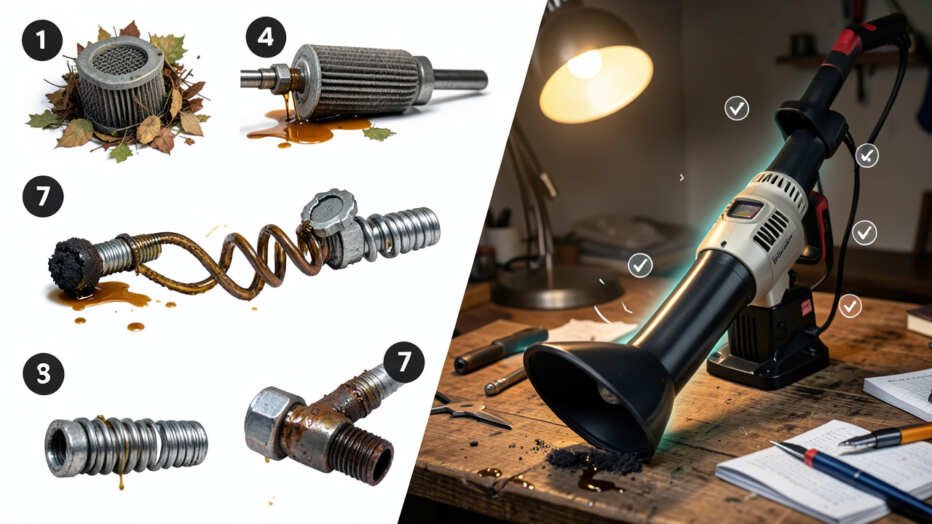
Quick Comparison: 7 Common Leaf Blower Failures
| Reason | Symptom | Difficulty to Fix | Typical Cost to Fix |
|---|---|---|---|
| Stale Fuel / Clogged Carburetor | Starts then dies, or won’t start at all | Medium | $10 – $40 |
| Worn or Fouled Spark Plug | Hard to start, runs rough, misfires | Easy | $5 – $15 |
| Clogged Air Filter | Runs rough, lacks power, excessive smoke | Easy | $5 – $20 |
| Failed Primer Bulb | Bulb stays flat, fuel does not prime | Easy | $5 – $15 |
| Faulty Ignition Coil | No spark even with a new plug | Hard | $15 – $30 |
| Loss of Compression | Pull cord feels loose, easy to pull | Hard | $50 – $100+ |
| Broken Recoil Starter | Rope snapped, no tension when pulled | Medium | $10 – $30 |
1 – Stale Fuel and Clogged Carburetor
This is the most common reason your leaf blower keeps failing. According to, fuel degradation is the leading cause of small engine failures.
Modern gasoline contains ethanol. Ethanol attracts moisture from the air. This moisture separates from the gas inside the carburetor. The result is a gummy varnish that blocks the tiny jets and passages.
Important: Ethanol damage can start in as little as 30 days. If your leaf blower ran fine last season but refuses to start now, the fuel system is almost certainly the culprit.
Fixing the carburetor requires cleaning or replacing it. You can remove the carburetor, spray carb cleaner through the jets, and blow them out with compressed air. In many cases, a new carburetor costs less than $20 and saves you hours of labor.
- Always drain the fuel tank before storing the blower for more than 30 days.
- Run the engine dry so no fuel remains in the carburetor bowl.
- Use non-ethanol fuel when possible. You can find it at many gas stations.
- Add a fuel stabilizer like Sta-Bil to extend the life of your gasoline.
2 – Worn or Fouled Spark Plug
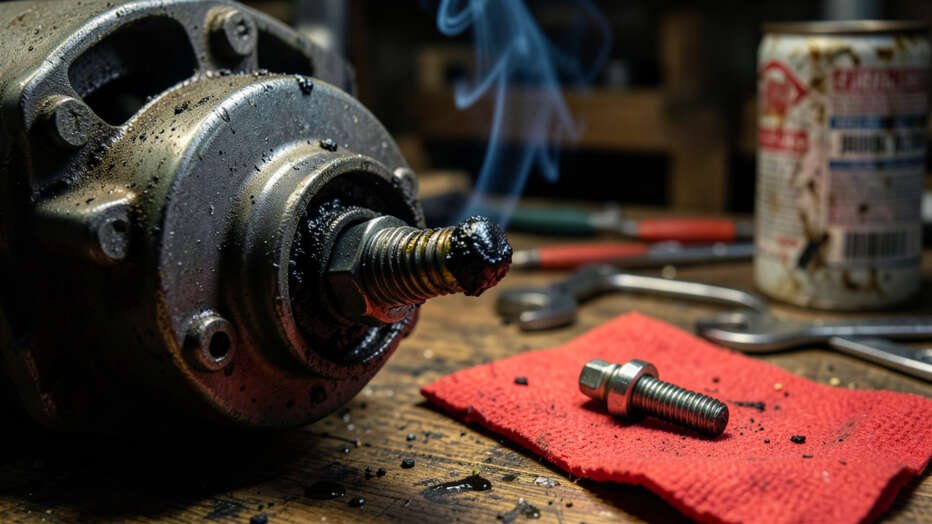
A spark plug is a cheap component that causes expensive frustration. If the spark plug is worn, the gap is too wide, or it is covered in carbon, the engine will not fire properly.
Check the spark by removing the plug. Reattach the plug wire. Hold the threaded base against the metal engine block. Pull the starter cord. You should see a bright blue spark.
If you see a weak yellow spark or no spark, replace the plug. Most leaf blowers use a standard plug like the Champion RCJ6Y or NGK BPMR6A.
Tip: Set the gap to 0.025 inches (0.635 mm). Use a feeler gauge to get it right. A proper gap ensures a strong spark for reliable combustion.
3 – Clogged or Dirty Air Filter
The air filter keeps dust and debris out of the engine. A dirty filter restricts airflow. This creates a rich fuel mixture. A rich mixture fouls the spark plug and makes the engine run rough.
Remove the air filter cover. Take out the foam filter. Check it for dirt and oil saturation. A clean filter should be lightly oiled. A clogged filter should be washed in warm soapy water, dried, and re-oiled.
Replace the air filter if it is torn or falling apart. This is one of the cheapest repairs you can make. According to, a significant portion of small engine service calls are solved with a simple air filter replacement.
- Check the air filter every 10 hours of use.
- Clean the filter immediately if you work in dusty conditions.
- Use the correct weight of bar and chain oil on the foam filter.
- Never run the engine without an air filter installed. This causes rapid engine wear.
4 – Failed Primer Bulb
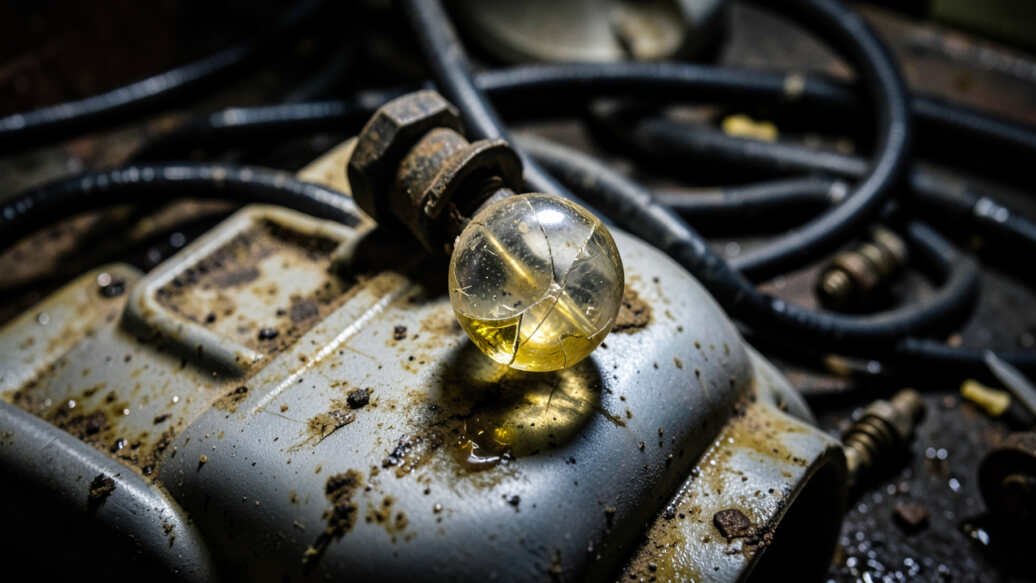
The primer bulb pushes fuel into the carburetor. This gives the engine the rich fuel mixture it needs to start cold. If the bulb is cracked, hard, or has a hole, it won’t create suction.
Press the primer bulb 5-6 times. A good bulb should feel firm and suck fuel from the tank. A bad bulb will feel soft or collapse inward. You can often see cracks in the rubber material.
Replacing a primer bulb is a simple 5-minute job. Most bulbs just pop into place. You can buy universal primer bulbs that fit most brands.
5 – Faulty Ignition Coil
The ignition coil creates the high voltage needed for the spark plug. Coils fail over time due to heat and vibration. If you have a new spark plug and still see no spark, the ignition coil is likely the problem.
You can test the coil with a multimeter. Check the primary and secondary resistance values. Compare them to the specs in your service manual. If the readings are out of range, replace the coil.
Another common issue is the air gap between the coil and the flywheel. The gap should be set with a business card or a special feeler gauge. A gap that is too wide or too close stops the magnetic field from generating spark.
Warning: Do not assume a new coil will fix a no-spark condition. Always verify the kill switch wire is not shorted to ground. A faulty on-off switch can disable the coil.
6 – Loss of Engine Compression
Compression is the engine’s ability to seal fuel and air in the cylinder. Without proper compression, the engine cannot create power. This is a serious mechanical failure.
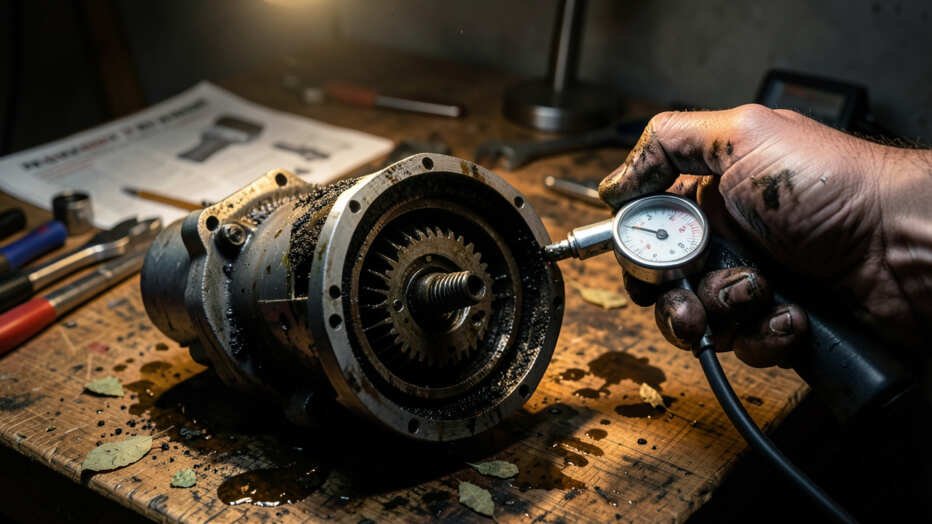
You can test compression with a compression gauge. Screw the gauge into the spark plug hole. Pull the starter cord hard 5-6 times. A healthy engine reads between 90 and 120 PSI. A worn engine reads below 60 PSI.
Low compression usually means a scored cylinder wall, worn piston rings, or a bad head gasket. This happens when the engine runs hot, runs without oil, or ingests dirt through a missing air filter.
- Low compression is often a terminal condition for handheld leaf blowers.
- A new engine or a complete top-end rebuild is the only solution.
- Compare the cost of a new leaf blower versus a replacement engine.
- Prevent compression loss by using the correct fuel-to-oil ratio (usually 40:1 or 50:1).
7 – Broken Recoil Starter
The recoil starter is the pull cord assembly. The rope can fray and snap. The spring can break or lose tension. The pawls that catch the flywheel can wear out.
If the pull cord moves freely with no resistance, the starter is broken. If the rope is stuck and won’t pull at all, the spring is likely jammed inside the housing.
You can replace the entire recoil starter assembly as a single unit. This is faster than trying to rewind a spring. Most models cost between $10 and $25 and bolt directly onto the engine shroud.
Tip: Before removing the recoil starter, relieve spring tension by slowly letting the cord retract. A released spring can be dangerous and difficult to reassemble.
How to Diagnose a Leaf Blower That Won’t Start
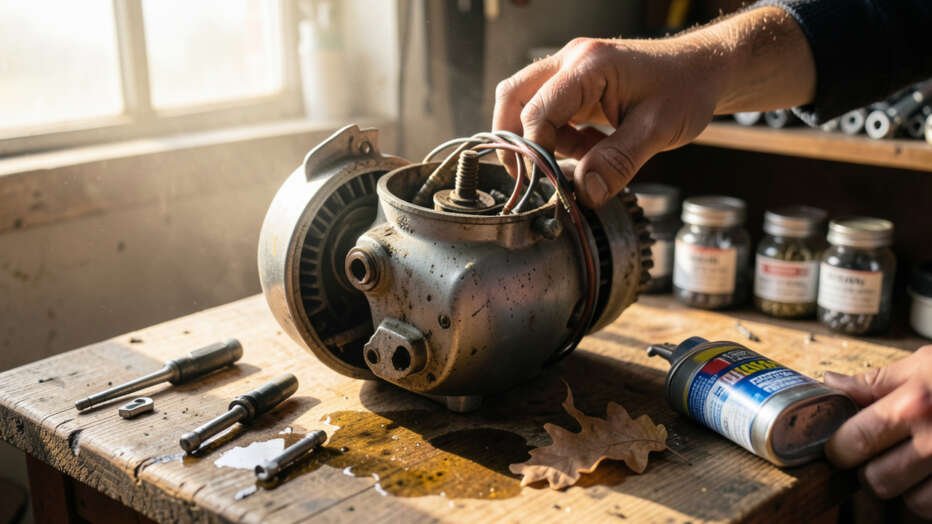
Use this step-by-step process to identify the exact cause of your failure. Do not skip steps. Do not guess.
- Test the compression. If it is under 60 PSI, you are wasting time on other components.
- Check the spark. Remove the plug and pull the cord. A bright blue spark means the ignition system is working.
- Check the fuel delivery. Does the primer bulb fill with fuel? Is the fuel fresh? Is the fuel line cracked?
- Clean or replace the air filter. A dirty filter causes poor combustion and rough running.
- Inspect the carburetor. If it has been sitting for months, the jets are likely clogged with varnish.
What Tools Do You Need for Leaf Blower Repair
You do not need a full mechanic’s toolbox. These basic tools cover almost every repair on a leaf blower that keeps failing.
- Spark plug wrench – A deep well socket (usually 5/8 inch or 13/16 inch).
- Feeler gauge – For setting the spark plug gap and the ignition coil air gap.
- Compression gauge – Tests the health of the cylinder and piston rings.
- Multimeter – Tests the ignition coil, kill switch, and wiring continuity.
- Carburetor adjustment tool – A special screwdriver for the mixture screws (D-shaped or splined).
- Carburetor cleaner – Aerosol spray for dissolving gum and varnish deposits.
Common Myths vs Facts About Leaf Blower Engines
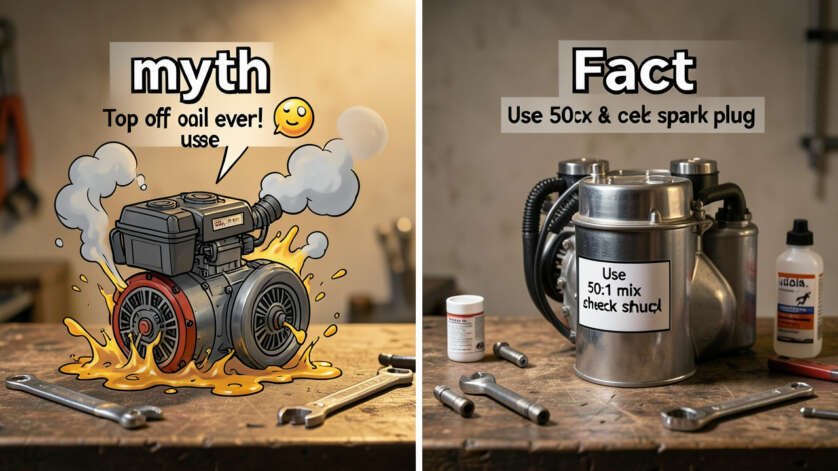
| Myth | Fact |
|---|---|
| “The carburetor is always the problem.” | Fuel issues are common, but you should always check for spark (spark plug and coil) and air (air filter and intake) before touching the carburetor. Replacing a good carburetor is a waste of money. |
| “Starter fluid is a safe way to test the engine.” | Starter fluid washes away the internal lubrication in a 2-stroke engine. This causes the piston to seize and the cylinder to score. Use a few drops of fuel mix in the carburetor instead. |
| “You cannot fix a leaf blower with low compression.” | Sometimes a scored cylinder can be honed. New piston rings can be installed. However, a new leaf blower often costs the same as a full rebuild. Replacement is usually the smarter choice. |
Frequently Asked Questions
What is the most common cause of leaf blower failure?
Stale gasoline that clogs the carburetor jets is the most common cause. According to, fuel that sits for more than 30 days starts to degrade and form deposits that block the small passages inside the carburetor.
How to start a leaf blower that has been sitting for years?
Drain the old fuel completely. Remove the carburetor and clean all jets and passages with carb cleaner. Replace the spark plug and air filter. Fill the tank with fresh fuel mix. Prime the bulb and it should start within a few pulls.
Why does my leaf blower start then immediately die?
This is a classic symptom of a clogged carburetor or a bad primer bulb. The engine gets enough fuel to fire once but cannot sustain itself because the carburetor jets are blocked. Try cleaning the carburetor first. It fixes this issue in about 70% of cases.
Is it worth replacing the engine on a leaf blower?
Usually not. A new handheld leaf blower costs between $80 and $200. A replacement engine costs $50 to $100. The labor to swap the engine can take over an hour. For most people, buying a new blower is more economical and less frustrating.
How often should I replace the spark plug in my leaf blower?
Replace the spark plug once per season or every 100 hours of use. A fresh spark plug ensures a strong spark, easier starting, and better fuel efficiency. It is the cheapest maintenance item that makes the biggest difference in performance.
Resources and Tools
- Outdoor Power Equipment Institute (OPEI) – Industry safety and fuel guidelines.
- NGK Spark Plugs – Official gap specifications and cross-reference charts.
- Champion Spark Plugs – Small engine spark plug guide.
- Sta-Bil Fuel Stabilizer – Official product info for ethanol treatment.
Final Thoughts
The most reliable way to prevent leaf blower failures is proper seasonal storage. Empty the fuel tank and run the carburetor dry before putting it away. Replace the spark plug and air filter at the start of each season. By using the seven diagnostic steps in this guide, you can save hundreds of dollars on repairs and get back to work in minutes.