
Choosing between a food processor and a blender can be tricky. Many people wonder about the Food Processor vs Blender Comparison. They look so similar!
But they do different jobs in the kitchen. This guide will make it easy to pick the right one for you. We will break it down step by step.
Key Takeaways
- A blender is best for liquids and smooth textures.
- A food processor excels at chopping, slicing, and shredding solids.
- Blenders are great for smoothies, soups, and sauces.
- Food processors handle tasks like making dough, pesto, and coleslaw.
- The motor strength and blade design differ significantly.
- Consider your most common kitchen tasks when choosing.
![Food Processor Versus Blender A Simple Guide[1]](https://creativehouseblog.com/wp-content/uploads/2026/03/Food_Processor_Versus_Blender_A_Simple_Guide1.jpg)

Understanding Food Processors
A food processor is a kitchen appliance designed for a variety of food preparation tasks. Think of it as your kitchen assistant for chopping, slicing, shredding, and mixing solid foods. It typically comes with multiple blades or discs that can be easily swapped out. This versatility is what makes it stand out.
How a Food Processor Works
A food processor has a motor base that powers a spinning blade or disc inside a work bowl. The bowl usually has a lid with a feed tube. You place your ingredients into the bowl, attach the correct blade or disc, secure the lid, and turn it on. The powerful motor quickly processes the food to your desired consistency.
What a Food Processor Does Best
Food processors are fantastic for tasks that require chopping or cutting ingredients into smaller, uniform pieces. They can shred cheese in seconds. They can slice vegetables for salads or stir-fries with ease. Making dough for bread or pizza is also a common use. Pureeing cooked vegetables or making dips like hummus are other popular applications. They can also help you make nut butters from scratch.
Key Components of a Food Processor
The motor base is the heart of the appliance. The work bowl is where the food goes. There’s usually a lid that locks into place for safety. Different blades are key: a multi-purpose S-blade for general chopping and pureeing, and discs for slicing and shredding. Some models come with other attachments for specific jobs.
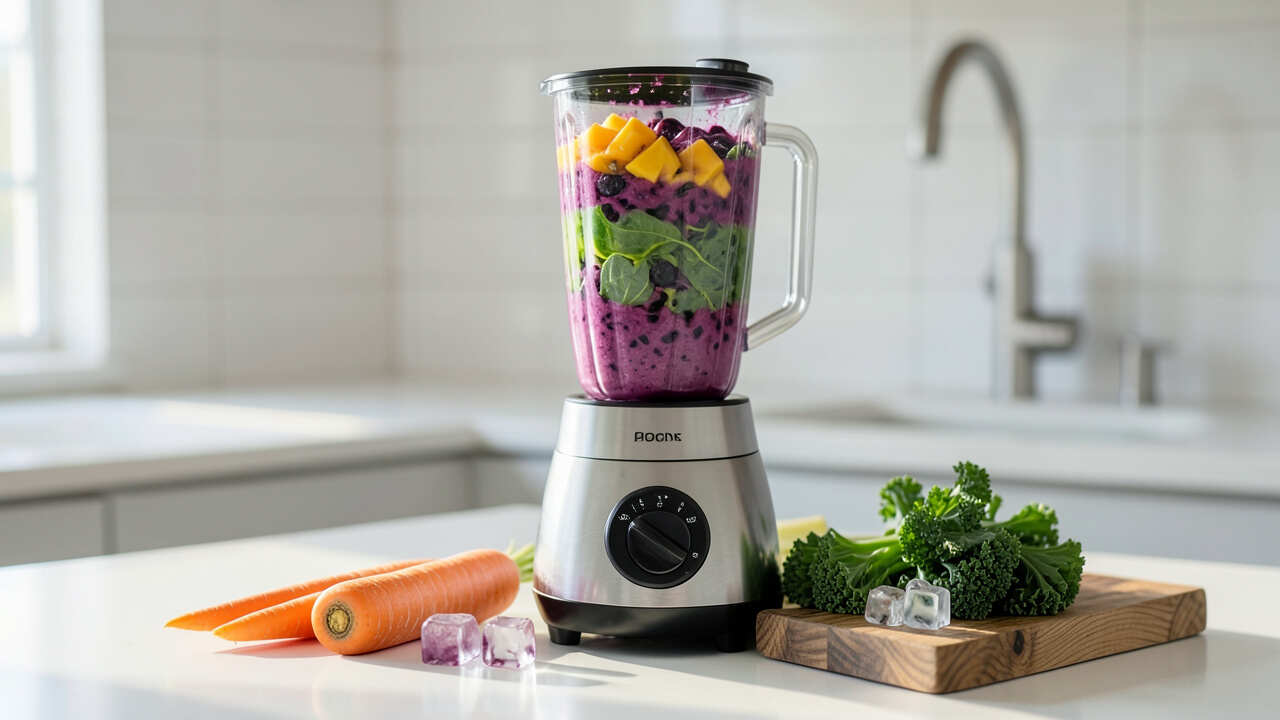
Understanding Blenders
A blender is primarily designed for liquefying ingredients and creating smooth mixtures. Its design is optimized for handling liquids and softer solids. Blenders are often seen as specialists for drinks and smooth sauces.
How a Blender Works
Like a food processor, a blender has a motor base. However, the motor powers blades located at the bottom of a jar or pitcher. You add your ingredients, usually with a liquid base, to the jar. When you turn it on, the blades spin at high speeds, creating a vortex that pulls the food down towards them. This action pulverizes and liquefies the contents.
What a Blender Does Best
Blenders are the go-to appliance for making smoothies and milkshakes. They are excellent for creating smooth soups, both hot and cold. Sauces, salad dressings, and pureed baby food are also perfectly handled by a blender. If you want something perfectly smooth and drinkable, a blender is your best bet. It can also crush ice for frozen drinks.
Key Components of a Blender
The motor base is similar to a food processor’s, providing the power. The jar or pitcher is where the blending happens. It has a lid that seals tightly. The blade assembly at the bottom is designed for high-speed pulverizing. Some blenders have multiple speed settings and pre-programmed functions for different tasks.
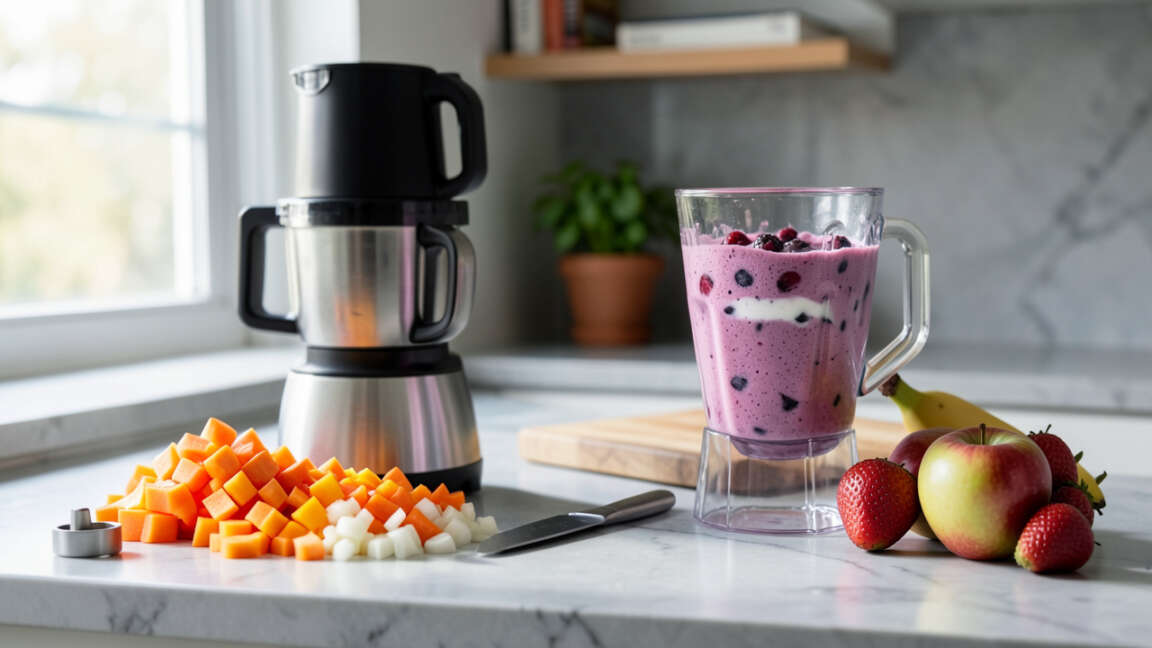
Food Processor vs Blender Comparison
The main difference lies in their function. A food processor is for prepping solid ingredients, while a blender is for liquefying. This distinction impacts their design, blades, and how they handle food.
Blade Design and Function
Food processors use S-shaped blades that chop and mix. They also come with flat discs for slicing and shredding. These blades are designed to cut through solid food efficiently.
Blenders have smaller, sharper blades clustered at the bottom. These are engineered to create a high-speed vortex, breaking down ingredients into a smooth liquid.
Motor Power and Speed
Both appliances have motors, but their power and speed are optimized for their tasks. Food processors often have more torque, which is good for kneading dough or chopping tough vegetables. Blenders typically have higher RPMs (revolutions per minute) to create that smooth liquid texture.
Texture and Consistency
This is where the real difference shows. Food processors produce a range of textures, from coarsely chopped to finely pureed, but rarely perfectly smooth. They are not meant for liquid.
Blenders are all about achieving ultra-smooth results. They excel at turning solid ingredients into a uniform liquid state.
Typical Uses
Let’s look at common kitchen tasks and see which appliance is better suited.
Chopping and Slicing
Food processor: Excellent for chopping onions, carrots, and nuts. Perfect for slicing potatoes or cucumbers.
Blender: Not designed for this. It will likely pulverize instead of chop or slice cleanly.
Pureeing
Food processor: Good for pureeing cooked vegetables for soups or sauces. Can handle thicker purees.
Blender: Ideal for making very smooth soups, sauces, and baby food. Creates a finer, silkier texture.
Making Dough and Batters
Food processor: Many models can knead dough for bread or pizza. Good for making cookie dough.
Blender: Not suitable for dough. It can overheat the motor or fail to mix properly.
Smoothies and Shakes
Food processor: Can make smoothies, but the texture might be a bit chunkier than a blender.
Blender: The undisputed champion for smooth, creamy smoothies and shakes.
Making Pesto and Dips
Food processor: Great for pesto, hummus, and other thick dips. It can achieve a slightly textured consistency.
Blender: Can make these too, but might require more liquid and can sometimes over-process them into a paste.
Shredding and Grating
Food processor: Comes with discs specifically for shredding cheese or vegetables.
Blender: Cannot shred or grate.
Size and Capacity
Food processors come in various sizes, from small mini-choppers to large models with big bowls. This makes them adaptable for small or large batches of solid food.
Blenders also vary in size, from personal blenders to large pitchers. Their capacity is more focused on liquid volume.
Ease of Cleaning
Both appliances can have many parts to clean. However, the blades in food processors are often easier to handle for cleaning than the fixed blade assemblies in many blenders. Some blender jars are dishwasher safe, but the blades can be tricky.
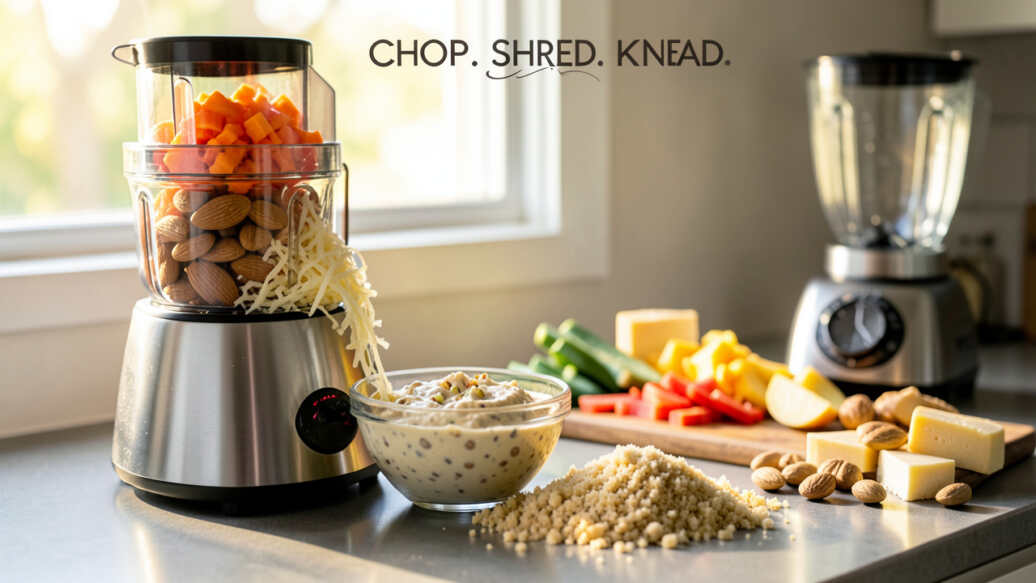
When to Choose a Food Processor
You should consider a food processor if you frequently prepare meals that involve a lot of chopping, slicing, or shredding. If you bake often and need to make doughs or cut butter into flour, it’s a great tool. Making homemade nut butters, pesto, or dips are also strong indicators. It’s your best friend for meal prep that involves processing solid ingredients.
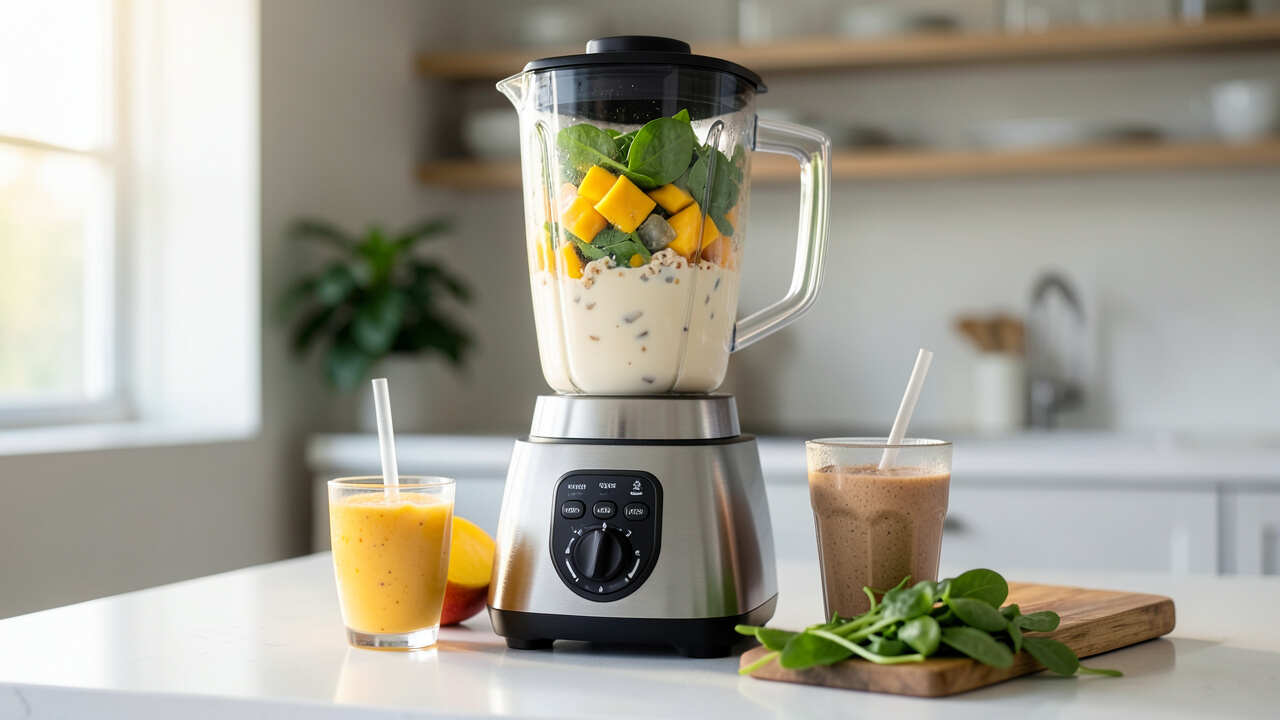
When to Choose a Blender
A blender is the clear choice if your kitchen routine centers around smoothies, shakes, and blended drinks. If you love making creamy soups, smooth sauces, or pureed desserts, a blender will serve you well. It’s also excellent for creating frozen cocktails or crushing ice. If your goal is liquid perfection, look no further than a blender.

Can One Replace the Other?
Generally, no. While there can be some overlap in function, each appliance excels in its specialized area. A food processor cannot achieve the smooth liquid consistency of a blender. A blender cannot efficiently chop, slice, or shred ingredients like a food processor. Trying to force one to do the job of the other often leads to suboptimal results or can even damage the appliance. Some very powerful blenders can do a decent job of chopping, and some food processors can puree, but neither is ideal for the other’s main task.
FAQ Of Food Processor Versus Blender A Simple Guide
Question: Can a blender chop vegetables?
Answer: Yes, some powerful blenders can chop vegetables, but they tend to pulverize them rather than creating uniform pieces. A food processor is much better for clean chopping.
Question: Can a food processor make smoothies?
Answer: Yes, a food processor can make smoothies, but the texture might be less smooth than what you get from a blender. It can sometimes leave small chunks.
Question: Which appliance is better for making dough?
Answer: A food processor is generally better for making dough because it has the torque needed to mix and knead ingredients effectively without overheating.
Question: Do I need both a food processor and a blender?
Answer: It depends on your cooking habits. If you do a lot of both liquid blending and solid food processing, having both offers the best results for each task.
Question: Which is easier to clean a food processor or a blender?
Answer: Cleaning ease can vary by model. However, many food processor parts are often dishwasher safe and easier to handle than the fixed blades in some blender jars.
Final Thoughts
Choosing between a food processor and a blender comes down to what you make most often. A food processor is for chopping, slicing, and shredding solid foods.
A blender is for liquefying ingredients into smooth drinks and purees. Consider your favorite recipes and the tasks you do regularly. This will help you make the right choice for your kitchen needs.

![Can A Stand Mixer Replace A Food Processor[1]](https://creativehouseblog.com/wp-content/uploads/2026/03/Can_A_Stand_Mixer_Replace_A_Food_Processor1-768x448.jpg)
![What New Homeowners Should Fix First 30 Days[1]](https://creativehouseblog.com/wp-content/uploads/2026/05/What_New_Homeowners_Should_Fix_First_30_Days1-1-768x403.jpg)
![Signs Your Boiler Needs Servicing Before It Breaks Down[1]](https://creativehouseblog.com/wp-content/uploads/2026/05/Signs_Your_Boiler_Needs_Servicing_Before_It_Breaks_Down1-768x403.jpg)
![Stand Mixer Attachments And Their Uses Explained[1]](https://creativehouseblog.com/wp-content/uploads/2026/03/Stand_Mixer_Attachments_And_Their_Uses_Explained1-768x448.jpg)
![10 Surprising Things You Can Do With An Electric Kettle[1]](https://creativehouseblog.com/wp-content/uploads/2026/04/10_Surprising_Things_You_Can_Do_With_An_Electric_Kettle1-768x448.jpg)
![How to Maintain Window Seals for Fewer Draughts and Damp[1]](https://creativehouseblog.com/wp-content/uploads/2026/05/How_to_Maintain_Window_Seals_for_Fewer_Draughts_and_Damp1-768x403.jpg)