
Air fryers primarily utilize stainless steel or heat-resistant plastics for the outer shell, aluminum with non-stick coatings for the cooking basket, and nichrome wire for the heating element. Additional critical components include copper for internal wiring to ensure electrical conductivity, mineral wool or fiberglass for insulation, and specialized plastics for safety features and control panels. The strategic use of these materials ensures efficient heat distribution, optimal cooking performance, and user safety during operation.
Key Takeaways
- Air fryer bodies are often made from durable stainless steel or heat-resistant plastic.
- The cooking basket and tray usually feature non-stick coatings applied to aluminum or stainless steel.
- Heating elements are typically made from nichrome wire, a metal alloy known for its heat resistance.
- Insulation materials like mineral wool or fiberglass keep the air fryer cool on the outside.
- Power cords and internal wiring use copper for good conductivity.
- Safety features often involve plastic casings for switches and internal components.
Thinking about buying an air fryer or just curious about what makes them work so well? You might wonder about the stuff they’re made from. It’s not always clear, and sometimes it feels like a puzzle.
Don’t worry! This guide will show you exactly what materials go into air fryers in a super simple way.
We’ll break it down step by step so you can feel confident knowing all about your kitchen helper.
Get ready to learn about the parts that make your favorite foods crispy!
![What Materials Are Used in Air Fryers[1]](https://creativehouseblog.com/wp-content/uploads/2026/03/What_Materials_Are_Used_in_Air_Fryers1.jpg)
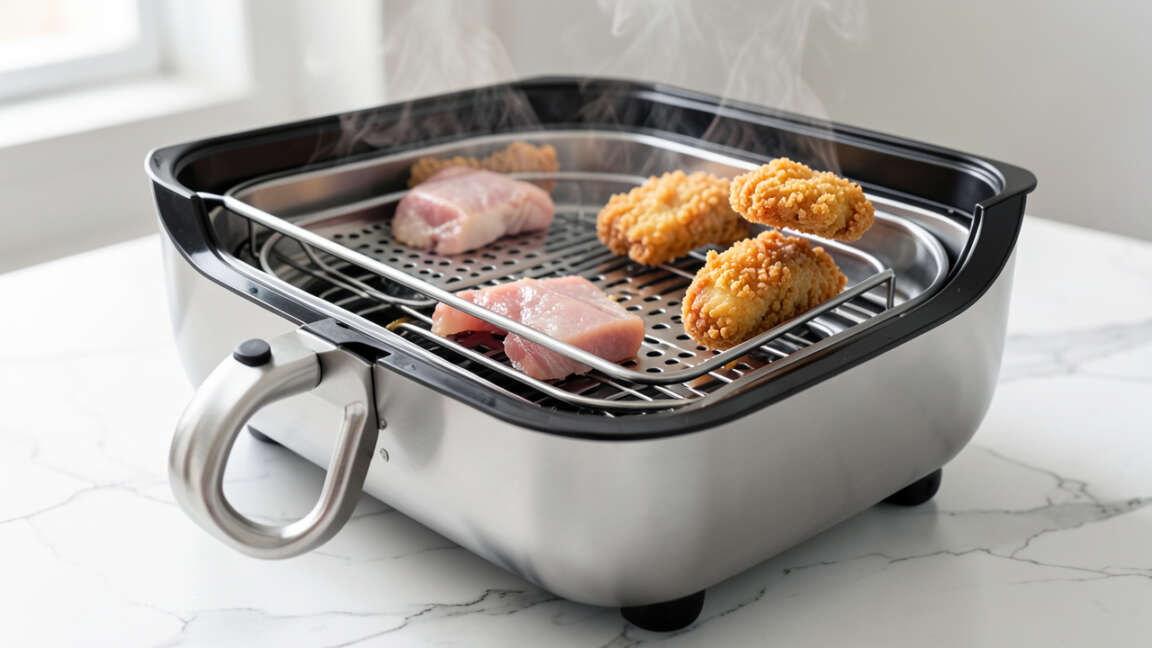
What Materials Are Used in Air Fryers
The Outside Shell Building the Base
The outer shell of an air fryer is the part you see and touch the most. It’s designed to look good on your counter and, more importantly, to be safe and durable.
Most air fryer bodies are made from either stainless steel or a strong, heat-resistant plastic.
Stainless steel gives a sleek, modern look and is very tough. It also holds up well to everyday use and is easy to wipe clean. Plastic shells, on the other hand, can make the air fryer lighter and sometimes a bit more affordable.
The plastic used is special; it’s engineered to handle the heat that builds up inside without warping or melting.
Think of this outer layer as the air fryer’s protective skin. It shields the inner workings and keeps the outside cool enough to handle. The type of material chosen affects the overall feel and price of the appliance.
Manufacturers pick materials that balance cost, durability, and safety for their specific models.
Inside the Basket Where the Magic Happens
The cooking basket and tray are where your food goes. These parts need to be non-stick so food doesn’t get stuck and is easy to clean. Most often, these are made from aluminum or stainless steel.
Aluminum is a good choice because it heats up quickly and evenly, helping your food cook faster. Stainless steel is also used because it’s very durable and doesn’t react with food.
On top of this metal base, a non-stick coating is applied. This is usually a type of polytetrafluoroethylene, often called PTFE or Teflon. This coating is what makes it so easy to get your food out and clean the basket afterward.
Some higher-end models might use ceramic coatings, which are also non-stick and can be a bit more heat-resistant.
It’s important to care for these non-stick surfaces. Using metal utensils can scratch the coating, which might reduce its effectiveness and could potentially lead to the material flaking off. Always use silicone, wood, or plastic tools when handling food in the basket.
The Heating Element The Heart of the Air Fryer
The heating element is what makes the air fryer work. It’s the part that gets super hot to cook your food. This is usually a coil made of a special metal alloy called nichrome.
Nichrome is a mix of nickel and chromium. These metals are great for heating elements because they can get very hot without breaking down easily.
They also resist oxidation, meaning they don’t rust or corrode when exposed to high temperatures for long periods.
When you turn on your air fryer, electricity flows through this nichrome wire. As the electricity passes, the wire heats up, glowing red-hot.
This intense heat is then circulated around your food by a fan, creating that crispy texture we love.
The design of the heating element is key to how well your air fryer cooks. Its placement and shape help distribute heat evenly throughout the cooking chamber.
The Fan Circulating the Heat
A strong fan is essential for an air fryer to work. This fan is usually made from a durable plastic, like polypropylene or ABS plastic.
These plastics are chosen because they are lightweight, strong, and can withstand the heat and airflow they experience.
The fan’s job is to push the hot air from the heating element around the food quickly and evenly. This rapid circulation is what makes food crispy, much like a convection oven.
The fan motor itself contains metal parts, typically copper wiring for efficient electrical conductivity, encased in a plastic housing for safety and insulation.
The fan needs to spin at a high speed to create the necessary airflow, so its construction is important for both performance and longevity.
Insulation Keeping Things Cool
Even though the inside of an air fryer gets very hot, the outside usually stays at a safe temperature to touch.
This is thanks to insulation materials. Many air fryers use mineral wool or fiberglass as insulation.
These materials are excellent at trapping heat and preventing it from escaping to the outer casing.
They are packed into the walls of the air fryer, creating a barrier between the hot cooking chamber and the exterior surfaces.
This insulation not only keeps the outside cool for safety but also helps the air fryer heat up faster and cook more efficiently.
By trapping the heat inside, less energy is lost, meaning your food cooks quicker and uses less electricity.
Internal Wiring and Electrical Components
Inside the air fryer, there are many wires and electrical parts that make everything work. The wires themselves are almost always made of copper.
Copper is used because it’s a fantastic conductor of electricity, meaning it allows electricity to flow through it very easily with minimal resistance.
This is crucial for powering the heating element, the fan, and the control panel.
These copper wires are covered in plastic insulation to prevent short circuits and protect you from electric shock.
Other internal components, like circuit boards, switches, and sensors, use a variety of materials including plastics, metals, and semiconductors.
These are all carefully selected for their ability to handle electrical loads and operate reliably at the temperatures found within the appliance.
Control Panels and Buttons
The part of the air fryer you interact with to set the time and temperature is the control panel.
These panels are typically made from plastic. For digital displays, you'll see glass or clear plastic screens.
The buttons themselves are also usually plastic and are designed to be pressed many times without wearing out.
Some modern air fryers have touch-sensitive panels, which are often made of glass or a smooth, durable plastic surface.
These materials are chosen for their durability, ease of cleaning, and ability to withstand frequent use.
The electronics behind the buttons and displays are housed within these plastic casings, keeping them protected and the user safe.
Safety Features Materials at Work
Safety is a top concern in appliance design. Air fryers have several safety features built-in. For example, many have overheat protection mechanisms.
These often involve thermal fuses or thermostats made from specialized materials that can sense when the temperature gets too high and automatically shut off the appliance.
The casings for these components are typically made from heat-resistant plastics or ceramics.
The power cords also have safety in mind. They consist of copper wires for conductivity, surrounded by layers of protective insulation, often PVC, which is a type of plastic that is flexible and resists heat and damage.
FAQ Of What Materials Are Used in Air Fryers
Is the non-stick coating in air fryers safe to eat if it flakes off?
While small flakes of non-stick coating are generally considered non-toxic and will likely pass through your system, it’s best to avoid consuming them. If the coating is significantly damaged, it’s a good idea to consider replacing the basket or tray to ensure both performance and safety.
Are there air fryers made without any non-stick coating?
Yes, some air fryers are made with stainless steel baskets and trays that do not have any non-stick coating. These can be a good option if you are concerned about non-stick materials. However, they may require a bit more oil and careful cleaning to prevent food from sticking.
Can stainless steel air fryer baskets rust?
High-quality stainless steel used in air fryer baskets is generally resistant to rust. However, if exposed to prolonged moisture or certain corrosive substances, rust can potentially form. Proper drying after washing can prevent this.
Are plastic parts in air fryers safe at high temperatures?
Yes, the plastics used in air fryers, especially those in contact with hot air or that form the outer casing, are specifically chosen to be heat-resistant and food-grade. They are designed to withstand the operating temperatures of the appliance without leaching harmful chemicals.
Why do some air fryer baskets feel lighter than others?
The weight difference in air fryer baskets often comes down to the base material and thickness. Baskets made from aluminum tend to be lighter than those made from stainless steel. The thickness of the metal and the design of the basket also play a role in its overall weight.

Final Thoughts
Understanding the materials in your air fryer helps you appreciate its design. You’ve learned about the stainless steel or plastic shell, the non-stick coatings on the basket, the nichrome heating element, and the copper wiring. These parts work together to create crispy food safely.
Knowing this can help you choose the right air fryer and care for it better.

![8 Ways To Improve Your Home Espresso Taste[1]](https://creativehouseblog.com/wp-content/uploads/2026/04/8_Ways_To_Improve_Your_Home_Espresso_Taste1-768x448.jpg)
![How to Fix a Leaking Gutter Joint Without Replacing It[1]](https://creativehouseblog.com/wp-content/uploads/2026/05/How_to_Fix_a_Leaking_Gutter_Joint_Without_Replacing_It1-768x403.jpg)
![Types of Coffee Makers Explained Simply[1]](https://creativehouseblog.com/wp-content/uploads/2026/03/Types_of_Coffee_Makers_Explained_Simply1-768x448.jpg)
![What Can You Make With a Blender[1]](https://creativehouseblog.com/wp-content/uploads/2026/03/What_Can_You_Make_With_a_Blender1-768x448.jpg)
![7 Mistakes To Avoid When Using A Hot Plate[1]](https://creativehouseblog.com/wp-content/uploads/2026/04/7_Mistakes_To_Avoid_When_Using_A_Hot_Plate1-768x448.jpg)
![6 Ways To Reduce Energy Use In Cooling Appliances[1]](https://creativehouseblog.com/wp-content/uploads/2026/04/6_Ways_To_Reduce_Energy_Use_In_Cooling_Appliances1-768x448.jpg)