
To fix a door that doesn't close properly, you must typically adjust its misaligned hinges. Start by inspecting and tightening the hinge screws, then ensure the door is aligned within the frame by adjusting the top or bottom hinge as needed. Minor adjustments to the hinge screws or strike plate can resolve most issues of sticking or gaps, restoring smooth operation and security.
Sometimes a door just won’t close right. It might rub on the floor, stick at the top, or leave a gap.
This is a common problem, and it can be a bit tricky for folks who haven’t worked with doors before.
But don’t worry! Fixing it is usually much simpler than you think. We’ll walk you through exactly how to adjust a misaligned door so it closes properly, step by step.
Key Takeaways
- You can often fix a misaligned door by adjusting its hinges.
- Screws in hinges can be tightened or adjusted to change how the door sits.
- Minor adjustments can make a big difference in how smoothly your door operates.
- Understanding hinge types helps in knowing which screws to adjust.
- Sometimes, door frame issues also need to be considered.
- With simple tools and these steps, you can solve most door alignment problems.
![How To Fix A Door That Doesn’t Close Right[1]](https://creativehouseblog.com/wp-content/uploads/2026/05/How_To_Fix_A_Door_That_Doesnt_Close_Right1.jpg)
How to Adjust a Misaligned Door So It Closes Properly
Doors can become misaligned for many reasons. Over time, houses settle, which can slightly warp the frame. Hinges might loosen from use, or maybe a door was installed a little off.
When a door doesn’t close smoothly, it’s not just annoying; it can also be a security issue or let drafts in.
This section will guide you through the most common reasons a door might not close well and how to fix them using simple adjustments.
We will focus on how to adjust a misaligned door so it closes properly by looking at the hinges first, as this is where most problems can be solved.
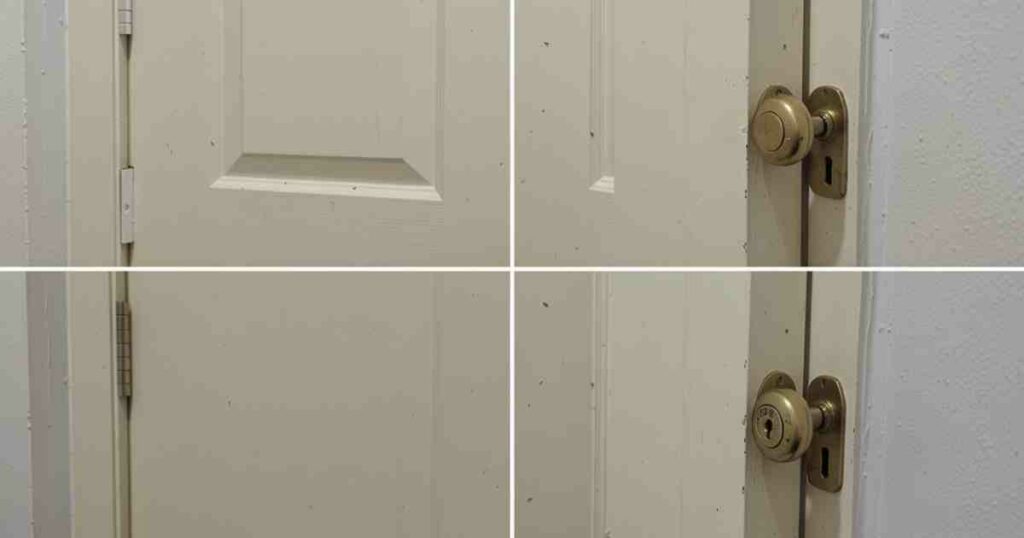
Understanding Door Hinges
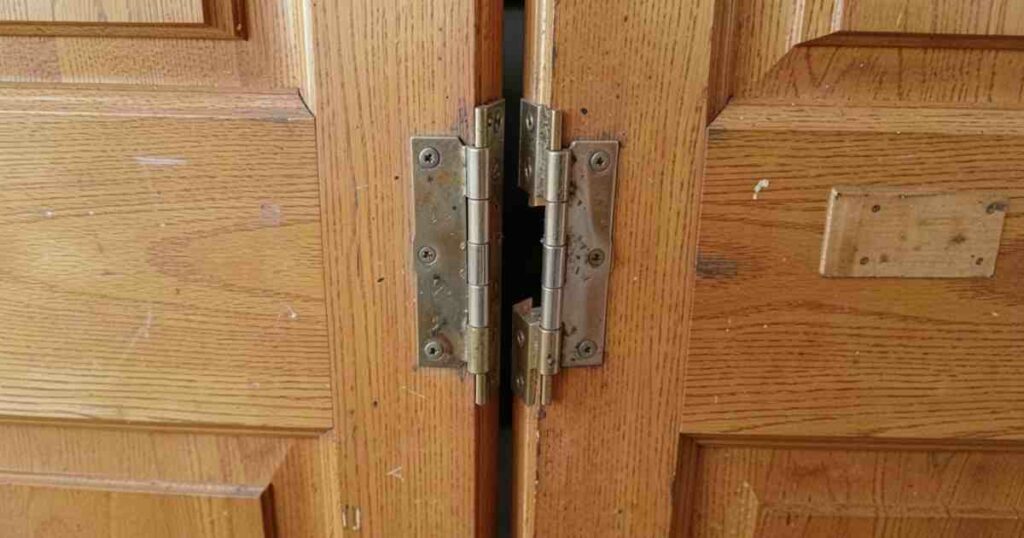
Doors hang on hinges. These metal pieces connect the door to the door frame. They are what allow the door to swing open and shut.
Most interior doors use two or three hinges. Exterior doors might have more for extra support.
Each hinge has two main parts: the door leaf, which attaches to the door, and the frame leaf, which attaches to the frame.
A pin connects these two parts, allowing them to pivot.
The screws holding the hinges are key to door alignment. If these screws are loose, the door can sag.
If they are too tight in certain spots or the hinge itself is bent, it can push or pull the door out of line.
Knowing the different types of hinges can also help. The most common is the mortise hinge, where part of the hinge is set into a cutout in the door and frame.
There are also surface-mounted hinges, which are less common for standard doors but might be seen on cabinets or utility doors.
For how to adjust a misaligned door so it closes properly, we will focus on the common mortise hinges.
Types of Hinges and Their Role
Mortise hinges are standard for most residential doors. They are designed to be flush with the door and frame surface, giving a clean look. These hinges typically have three screws per hinge leaf.
Two screws go into the frame, and two go into the door. The number and placement of these screws are critical for maintaining the door’s position.
Adjustable hinges offer more control but are less common. They have mechanisms that allow for fine-tuning the door’s position without needing to remove the hinge.
However, for most household doors, standard mortise hinges are used, and adjustments are made by slightly loosening or tightening their screws, or by using shims.
For any hinge, the main goal is to ensure it’s securely attached and evenly supporting the door.
When a door starts to rub or not close, the first place to look is these attachment points. A loose screw here can cause a door to sag over time.
This sagging is often the main culprit when a door scrapes the floor or binds at the top.
How Hinge Screws Affect Alignment
The screws in your door hinges are the primary mechanism for adjusting how a door hangs.
Each hinge typically has multiple screws. The screws that go into the door frame are particularly important for vertical alignment.
The screws that go into the door itself affect how the door sits when closed.
If a door sags, it usually means the screws holding the frame leaf of the hinge are loose. Tightening these screws can pull the door back up.
If the door is rubbing against the strike plate side of the frame, the screws on the hinge side might need adjustment.
Sometimes, a screw is stripped and won’t tighten. In such cases, you might need to use longer screws or wood filler to create a new anchor point.
It is also possible for the door itself to be warped or for the frame to have shifted. But before assuming a major issue, always check the hinges first. Simple tightening can solve many problems.
Troubleshooting Common Door Problems
Doors can present a variety of alignment issues. The most frequent is a door that scrapes the floor on one side or at the bottom corner.
Another common problem is a door that won’t latch properly because the latch bolt doesn’t align with the strike plate on the frame.
Sometimes, the door might stick when you try to open or close it, indicating it’s binding somewhere along its swing path.
These issues often stem from the same root cause: the door is not hanging plumb and square within its frame.
This can be due to loose hinges, a house settling, or changes in humidity causing the wood to expand or contract.
Fortunately, most of these problems can be resolved with some basic adjustments to the hinges, which we will detail in the following sections.

Door Rubs On The Floor
When your door scrapes the floor, it usually means the door has sagged. This is typically caused by loose hinges. The weight of the door pulls it down, and if the screws aren’t tight, the door will drop.
To fix this, you need to tighten the screws in the hinges. Pay special attention to the screws in the frame side of the hinges. These are the ones that hold the hinge leaf to the wall stud.
If the screws just spin and don’t tighten, the wood might be stripped. In that case, you may need to remove the screw, put some wood glue and toothpicks or golf tees into the hole, let it dry, then re-drill a pilot hole and put the screw back in.
Another method for a sagging door is to use a shim. You can place a thin piece of cardboard or wood behind the hinge leaf. This pushes the hinge leaf slightly further out, effectively lifting the door.
Start with one hinge and see if it makes a difference. You might need to do this for more than one hinge, or for multiple screws on a hinge.
Door Sticks At The Top Or Side
If a door sticks at the top or the side, it indicates that the door is too close to the frame in that area. This could mean the door is slightly warped, or the frame has shifted.
Often, this problem can be fixed by adjusting the hinges on the opposite side of where the door is sticking.
For example, if the door is sticking on the latch side at the top, you might need to adjust the hinges on the pull side to pull the door away from the frame slightly.
One way to do this is to slightly loosen the screws on the hinges on the side where the door is sticking.
Then, gently push the door away from the frame in the area where it sticks. Re-tighten the screws.
You may need to repeat this a few times, making small adjustments each time.
Another trick for a door that sticks on the latch side is to use a hinge bender tool. This tool allows you to slightly bend the hinge knuckle, which can pull the door away from the frame. Use this tool carefully, as too much pressure can damage the hinge.
Door Latch Doesn’t Align With Strike Plate
This is a frustrating problem because it means you can’t close and lock the door properly. It happens when the door is not hanging squarely, so the latch bolt misses the opening in the strike plate on the frame.
The first step is to identify which hinge needs adjustment. If the latch is too high, the door may have sagged, and you need to lift it.
If the latch is too low, the door might be binding at the top, and you need to lower that side.
Often, tightening loose screws on the hinges is all that’s needed. If the door has sagged, tighten the frame-side screws on the hinges.
If the door is binding at the top, you might need to slightly loosen the top hinge screws and tighten the bottom hinge screws to pull the door up.
If tightening screws doesn’t work, you might need to slightly bend the strike plate itself, or file the opening in the strike plate a little larger. However, try hinge adjustments first, as they are less invasive.
How to Adjust a Misaligned Door So It Closes Properly Step-by-Step
Now, let’s get to the practical steps for how to adjust a misaligned door so it closes properly.
This process involves using common household tools and requires only a little patience. We’ll cover tightening hinges, using shims, and dealing with stripped screws.
Step 1 Gather Your Tools
Before you start, make sure you have the right tools handy. You’ll likely need a Phillips head screwdriver and possibly a flathead screwdriver. A measuring tape can be useful to check gaps.
If you anticipate stripped screws, have some wood toothpicks or golf tees, wood glue, and possibly a drill with a small bit ready. A hammer might be needed to tap hinges or shims into place.
It is also good to have a flashlight to see into the hinge recesses clearly. Safety glasses are always a good idea when working with tools.
Having a helper can be useful, especially for heavier doors, to hold the door steady while you make adjustments.
For any adjustments involving shims, you’ll want some thin pieces of wood, cardboard, or specialized hinge shims. If you need to replace a screw, have a slightly longer or thicker screw of the same type ready.
Step 2 Inspect The Hinges
Open the door and examine each hinge carefully. Look for any screws that appear loose. Gently try to tighten them with your screwdriver.
If a screw turns easily and doesn’t tighten, it’s likely stripped.
Check if the hinges themselves look bent or damaged. Sometimes, a hinge can get slightly out of shape from impact, which can affect how the door hangs. Also, notice the gap between the door and the frame.
This gap should be relatively even all around when the door is closed. If it’s wide at the top and narrow at the bottom, the door is likely sagging.
Pay attention to which hinge seems to be the most problematic. Often, the issue is concentrated on one or two hinges, rather than all of them. Observing the gap consistency is crucial for determining the type of adjustment needed.
Step 3 Tighten Loose Screws
Start by tightening all visible screws on the hinges. Use the correct size screwdriver to avoid stripping the screw head. Tighten them firmly, but don’t overtighten, as this can strip the wood or damage the hinge.
If a screw feels loose and just spins, you’ve found a stripped screw hole. Don’t force it. You will need to repair this hole before the screw can be tightened properly.
Close the door after tightening to see if the problem is resolved. Often, this simple step is enough to fix a misaligned door. If the door still doesn’t close right, proceed to the next steps.
Step 4 Addressing Stripped Screw Holes
If a screw hole is stripped, you need to fill it to give the screw something to grip. The easiest way is to use wood toothpicks or golf tees. Break off a few toothpicks or golf tees so they fit into the hole.
Apply a bit of wood glue to the toothpicks/tees and insert them into the stripped hole. You want to pack the hole as tightly as possible. Let the glue dry completely, usually for at least an hour.
Once dry, break off any excess sticking out.
After the glue is dry, you can re-drill a small pilot hole into the center of the filled hole. Then, drive the original screw back in. It should now have a solid anchor point and tighten properly.
For larger stripped holes, you might use wood filler or even a wooden dowel. The principle is the same: fill the hole with a material the screw can grip.
Step 5 Using Shims for Fine Adjustments
If tightening screws doesn’t fully solve the problem, or if the door is sticking at a specific point, you might need to use shims. Shims are thin pieces of material used to create space or provide support.
To shim a hinge, you typically need to loosen its screws. Then, slide the shim behind the hinge leaf. You might need to use a shim that is the same size as the hinge leaf, or just a partial shim placed strategically.
For a sagging door that scrapes the floor, you might place a shim behind the frame leaf of the top hinge to lift the door.
For a door that sticks on the latch side, you might place a shim behind the frame leaf of the hinge on the opposite side to pull the door away.
Experiment with different shim thicknesses and positions. Even a thin piece of cardboard can make a difference. When you’re happy with the door’s position, re-tighten the hinge screws securely.
Using shims is an art as much as a science. It requires trial and error to get the door to swing perfectly. Always make small adjustments and test the door’s movement after each change.
When to Consider Frame Issues
While most door alignment problems can be solved by adjusting the hinges, there are times when the issue lies with the door frame itself.
If you’ve tried all hinge adjustments and the door still doesn’t close properly, it’s time to look at the frame.
This is less common for interior doors but can happen with older houses or doors that have experienced significant structural movement.
Frame issues might include a frame that is no longer plumb (vertical) or square. This can happen due to foundation settling or moisture damage.
If the frame has bowed inward or outward, it will prevent the door from closing correctly, regardless of hinge adjustments.
Addressing frame issues is usually a more involved repair, potentially requiring carpentry skills. It might involve reinforcing the frame, planing the door edge, or in severe cases, replacing the frame itself.
However, before you jump to this conclusion, double-check all hinge adjustments and ensure the door itself isn’t warped.
Signs of Frame Problems
You might suspect frame issues if you notice large, uneven gaps between the door and the frame.
For instance, if the gap at the top is very wide on one side and almost nonexistent on the other, the frame might be out of square.
Another sign is if the door only rubs in one specific spot, and adjusting the hinges doesn’t change this particular rubbing point.
You can use a level to check if the door frame is plumb and square. Place the level vertically against the side jambs and horizontally against the top jamb. If the bubble isn’t centered, the frame is not plumb or square.
Also, consider the age and history of your house. Older homes are more prone to settling, which can affect door frames.
Any recent renovations or significant structural work might also contribute to frame movement.
Professional Help Versus DIY
For most minor door alignment issues, a DIY approach is perfectly fine. Tightening screws, adding shims, or dealing with stripped screw holes are tasks most homeowners can handle.
The knowledge of how to adjust a misaligned door so it closes properly through simple hinge work is invaluable.
However, if you’ve exhausted all hinge adjustments and suspect a problem with the door frame itself, or if you’re dealing with a very heavy or expensive door, it might be wise to call a professional.
A carpenter or handyman can diagnose frame issues and perform more complex repairs. They have specialized tools and experience that can ensure the job is done correctly without causing further damage.
Don’t hesitate to seek professional help if you’re uncomfortable with a repair or if the problem seems beyond simple fixes. It’s better to pay for expertise than to risk damaging your door or frame.
Frequently Asked Questions Of How To Fix A Door That Doesn’t Close Right
Question: What are the most common reasons a door won’t close properly
Answer: The most common reasons include loose hinges, stripped screw holes, a warped door or frame, and the house settling over time.
Question: How can I tell if my door hinges are loose
Answer: When you gently try to wiggle the door, you might notice movement at the hinge points. Also, screws that turn easily without getting tighter indicate looseness.
Question: Can I fix a door that rubs only on one corner
Answer: Yes, usually by adjusting the hinges closest to that corner or the opposite corner. Small adjustments can shift the door enough to fix corner rubbing.
Question: What is a shim and how do I use it
Answer: A shim is a thin wedge-shaped piece of wood or cardboard. You use it by sliding it behind a hinge leaf to push that part of the hinge out, which moves the door.
Question: Should I replace the hinges if they look old or rusty
Answer: While old or rusty hinges might work, replacing them with new ones can sometimes solve alignment issues caused by wear and tear. Ensure the new hinges are the same size and type.
Summary
Fixing a door that doesn’t close right is often achievable with simple hinge adjustments. By tightening loose screws, repairing stripped holes, or using shims, you can get your door to operate smoothly again.
These steps for how to adjust a misaligned door so it closes properly empower you to handle common household repairs.

![What Is a Blender Used For in the Kitchen[1]](https://creativehouseblog.com/wp-content/uploads/2026/03/What_Is_a_Blender_Used_For_in_the_Kitchen1-768x448.jpg)
![9 Delicious Crepe Ideas You Can Try At Home[1]](https://creativehouseblog.com/wp-content/uploads/2026/04/9_Delicious_Crepe_Ideas_You_Can_Try_At_Home1-768x448.jpg)
![9 Breakfast Ideas Using A Waffle Maker[1]](https://creativehouseblog.com/wp-content/uploads/2026/04/9_Breakfast_Ideas_Using_A_Waffle_Maker1-768x448.jpg)
![7 Mistakes To Avoid When Making Crepes[1]](https://creativehouseblog.com/wp-content/uploads/2026/04/7_Mistakes_To_Avoid_When_Making_Crepes1-768x448.jpg)
![Flat Roof Maintenance Checks To Prevent Leaks[1]](https://creativehouseblog.com/wp-content/uploads/2026/05/Flat_Roof_Maintenance_Checks_To_Prevent_Leaks1-768x403.jpg)
![How To Spot Slow Leaks At Home Before They Grow[1]](https://creativehouseblog.com/wp-content/uploads/2026/05/How_To_Spot_Slow_Leaks_At_Home_Before_They_Grow1-768x403.jpg)