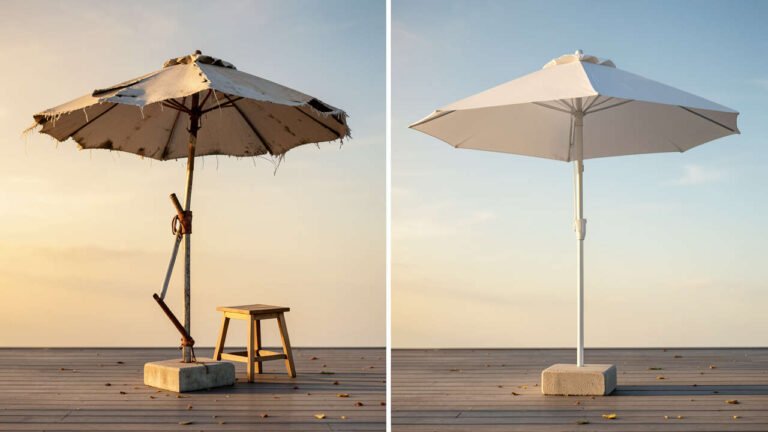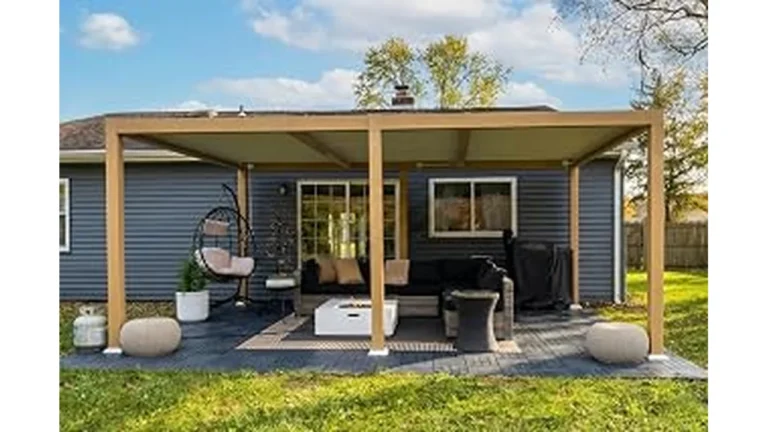
A sun shade sail should be replaced when it shows frayed edges, stretched fabric causing sagging over six inches, mold that cannot be cleaned, or rusted hardware like D-rings or turnbuckles. Most shade sails last between five and ten years depending on fabric quality and sun exposure, with significant fading indicating loss of UV protection. Water pooling on the fabric signals urgent replacement, as the material can no longer withstand tension safely.
Your sun shade sail works hard every single day, blocking harsh UV rays and keeping your outdoor space cool. This guide covers exactly how to tell when it is time to replace your sun shade sail for good.
In short, you should replace your sun shade sail when you see frayed edges, stretched fabric, mold you cannot clean, or rusted hardware. Most shade sails last 5 to 10 years depending on fabric quality and sun exposure. If water pools on the fabric, replacement is urgent.
- Frayed threads or unraveling seams are a clear sign that your shade sail fabric has lost its structural integrity.
- If the fabric sags more than 6 inches in a corner, the stretched material will not provide proper shade and tension.
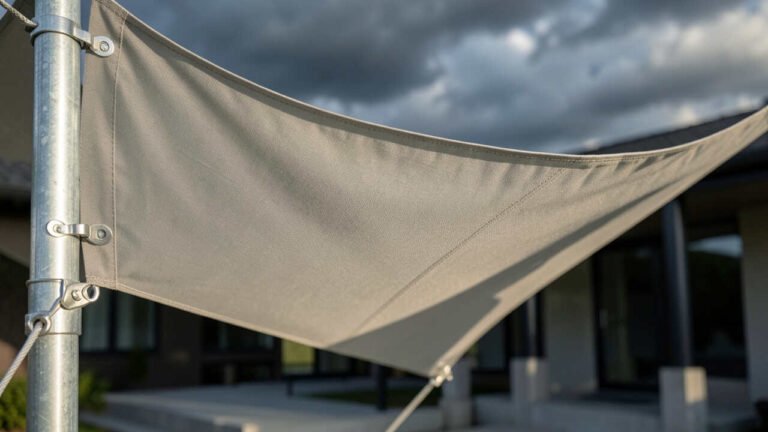
- Rusted or bent D-rings, turnbuckles, or cables indicate that the mounting hardware is no longer safe to trust.
- A faded shade sail that has lost 50% or more of its original color has typically lost significant UV protection capability.
What Happens If You Wait Too Long to Replace Your Sun Shade Sail?
Waiting to replace a worn shade sail leads to bigger problems. A failing sail can rip apart in a moderate wind. The loose hardware can damage your house or patio structure.
Warning: A torn shade sail can act like a sail on a boat. In strong winds, it can pull down its mounting posts or rip off your roof fascia. Replace it before the wind does.
Water pooling is another serious risk. When fabric stretches too much, rainwater collects instead of draining. This weight can collapse the frame or snap the cables. According to the American Society for Testing and Materials (ASTM), most commercial-grade shade fabrics lose up to 50% of their tensile strength after just 5 years of continuous sun exposure. Once that strength is gone, replacement is the only safe option.
How to Inspect Your Shade Sail for Damage
You should inspect your sail at least twice a year. Do it in the spring and again in the fall. Follow this step-by-step process to check every part of the installation.
- Release the tension. Unfasten the turnbuckles on one corner to safely lower the sail.
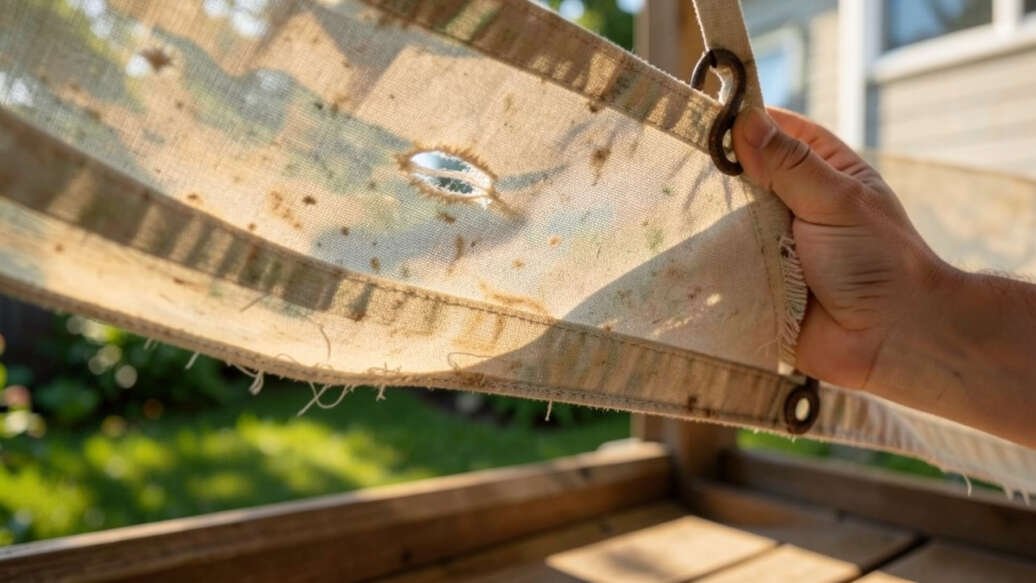
- Examine the fabric. Hold it up to the light. Look for pinholes, thinning areas, and fading along the folds.
- Check the stitching. Run your finger along every seam. Broken threads or gaps mean the stitching is failing.
- Inspect the webbing. Look for cracks, fraying, or splitting at the edges where the fabric attaches to the hardware.
- Test the hardware. Twist the turnbuckles. They should move freely. Check D-rings for bends or rust spots.
Visual Inspection Checklist
| Component | What to Look For | When to Replace |
|---|---|---|
| Fabric (HDPE) | Fading, thinning, holes, fraying edges | When light passes easily through the fabric |
| Stitching | Broken threads, unraveling seams | When the seam begins to separate |
| Hardware | Rust, corrosion, bent D-rings or turnbuckles | At the first sign of rust or deformation |
| Webbing | Fraying, cracking, splitting under tension | When the fibers break along the edge |
| Tension System | Sagging fabric, inability to adjust flat | When adjusting no longer flattens the sail |
What Are the Different Types of Shade Sail Fabric and Their Lifespan?
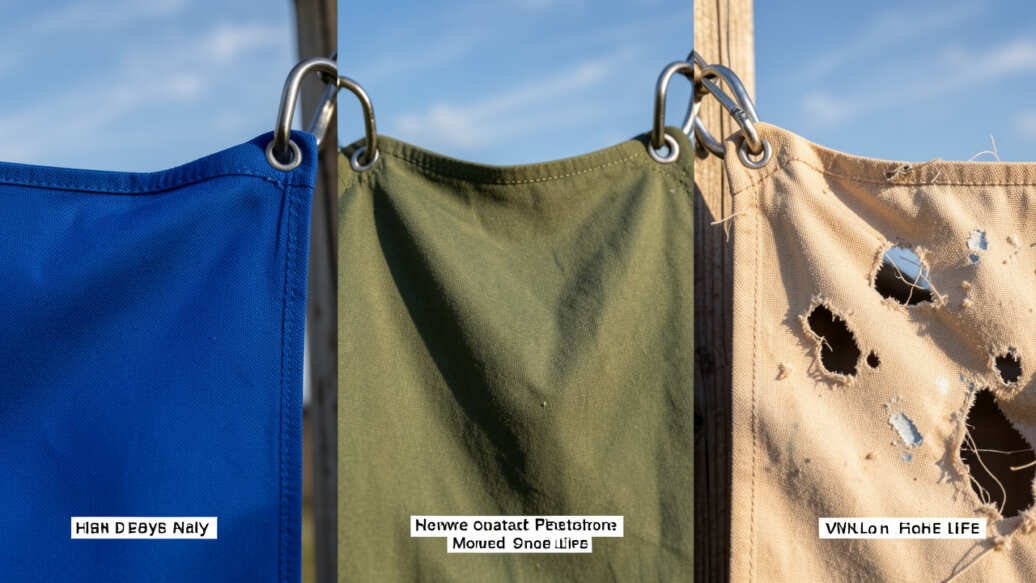
Not all shade sails use the same material. The fabric type is the biggest factor in how long your sail lasts. Most residential shade sails currently use one of these three materials.
- HDPE (High-Density Polyethylene): This is the most popular material. It breathes, allows wind to pass through, and blocks up to 95% of UV rays. HDPE lasts 5 to 10 years with proper care.
- Polyester with PVC Coating: This fabric is heavier and blocks 100% of sunlight. It works well for rain protection but traps heat. It lasts 3 to 7 years before the coating cracks.
- Acrylic Canvas (Sunbrella): This is a premium fabric often used on boats. It resists fading and mold very well. It lasts 8 to 12 years but costs more than HDPE.
Why Does Hardware Rust and Fail So Fast?
The hardware is often the first part to fail on a shade sail. Most people focus on the fabric and forget about the metal. Salt, humidity, and pollution attack the hardware over time.
Important: If you live within 10 miles of the coast, you must use Grade 316 marine-grade stainless steel. Grade 304 stainless steel can rust in under a year in salt air.
| Hardware Grade | Best Use Case | Expected Lifespan |
|---|---|---|
| 304 Stainless Steel | Inland areas with low pollution | 3 to 5 years before surface rust appears |
| 316 Marine Grade Steel | Coastal areas, pools, high humidity | 10+ years with no visible corrosion |
| Galvanized Steel | Temporary or budget installations | 1 to 3 years before heavy rusting |
How Do I Know If My Shade Sail Is Too Stretched Out?
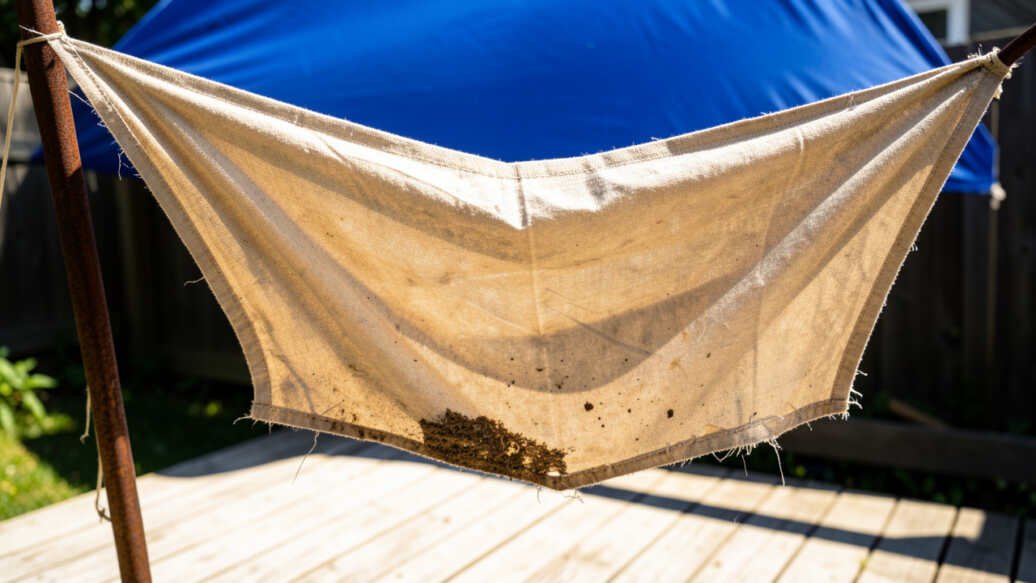
Fabric stretches naturally over time. Heat and tension pull the fibers longer. A slight stretch is normal. A significant stretch means the fabric is failing.
Look for these signs of excessive stretching:
- The fabric hangs more than 6 inches lower in the center than the corners.
- You fully tighten the turnbuckles, but the sail still looks loose.
- Water pools in the middle of the fabric after rain.
- You see ripples or waves along the edges that will not pull tight.
A stretched sail cannot provide the correct tension. Without tension, the fabric flaps in the wind. This flapping puts stress on the edges and hardware. You should replace your sun shade sail before the wind tears it completely.
Is Mold and Mildew a Reason to Replace?
Mold and mildew do not always mean you need a new sail. You can clean most mold with mild soap, warm water, and a soft brush. HDPE fabric is naturally mildew-resistant because it breathes.
Replace the sail if:
- The mold has stained the fabric deeply and will not come out after two cleanings.
- The fabric smells musty even after drying completely in the sun.
- You see black spots that spread across the fabric surface.
Tip: To prevent mold, clean your shade sail twice a year. Lay it flat on a lawn, spray it with a hose, scrub it with mild soap, and rinse thoroughly. Let it dry fully before reinstalling.
Deep mold is a sign that the fabric has absorbed organic material and moisture. This breaks down the fibers over time. If mold has taken hold, it is best to replace your sun shade sail with a breathable HDPE model.
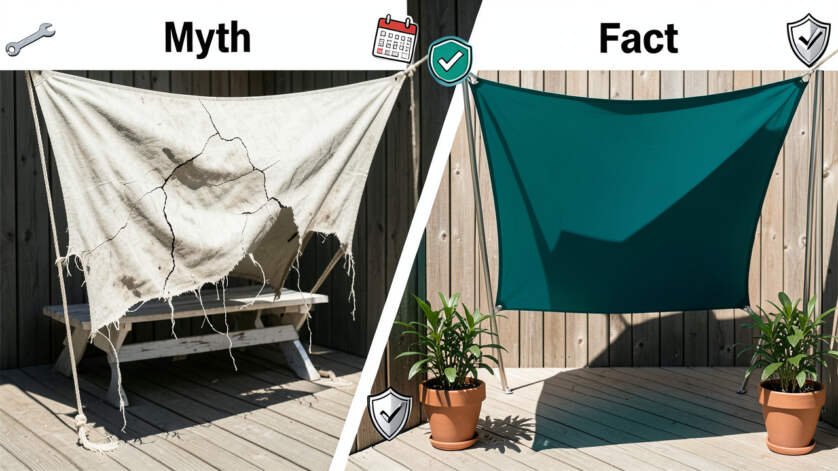
Common Myths vs Facts About Shade Sail Replacement
Myth: You can just patch a hole in the shade sail.
Fact: A patch creates a weak stress point. The wind pulls on the patch and rips the surrounding fabric. It is safer and often cheaper to buy a new sail than to patch an old one.
Myth: All shade sails are the same, so just buy the cheapest.
Fact: Low-quality sails use acrylic-coated fabric that traps heat and rots. High-quality HDPE fabric breathes and lasts 2 to 3 times longer. According to manufacturers like, premium HDPE sails block up to 95% of UV rays and often carry a 10-year warranty.
Myth: Once installed, a shade sail requires no maintenance.
Fact: Dirt and debris accelerate fabric breakdown. You should clean your sail with mild soap and water at least twice a year. Regular maintenance prevents premature aging and extends the life of the sail.
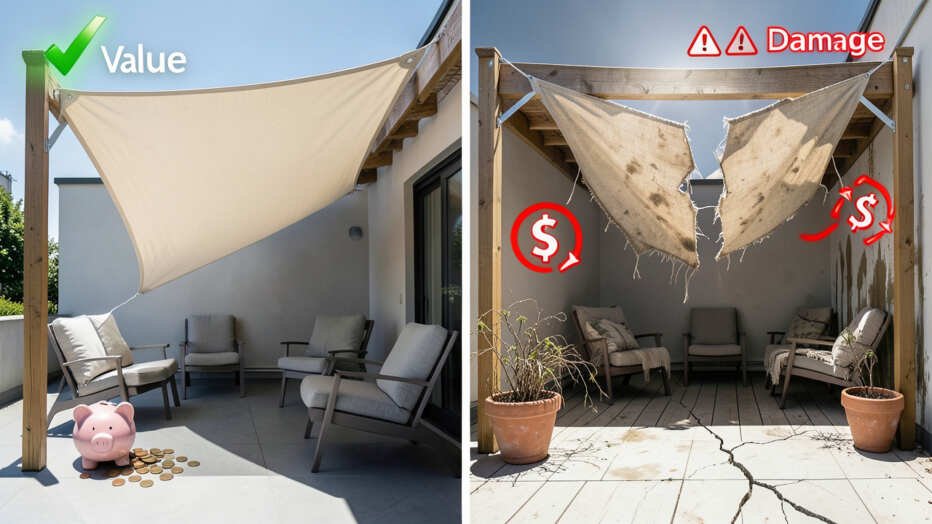
Cost of Replacement vs. Cost of Damage
Many people wait too long to replace their shade sail to save money. This actually costs more in the long run.
- Replacement sail cost: $100 to $500 for a standard residential size.
- New hardware cost: $30 to $80 if you replace the turnbuckles and cables.
- Deck repair cost: $500 to $2,000 if wind tears the sail and damages the structure.
- Patio furniture damage: $200 to $1,000 if the sail fails and furniture is exposed to sun and rain.
Replacing early saves you money and keeps your outdoor space safe. A new sail also looks better and provides better UV protection.
Pro Tips to Extend the Life of Your New Shade Sail
- Choose HDPE fabric. It breathes, blocks UV rays, and resists mold better than anything else currently on the market.
- Buy marine-grade 316 stainless steel hardware. It costs a little more upfront but lasts decades instead of years.
- Remove the sail in winter. Snow and ice add weight that stretches and damages the fabric. Store it indoors during cold months.
- Adjust tension every spring. Temperature changes loosen the fabric. Tighten the turnbuckles once a year to keep the sail flat.
- Clean the fabric with mild soap and water. Harsh chemicals break down the UV coating. Use a soft brush to lift dirt.
- Trim nearby trees. Falling branches and sap can stain and tear the fabric. Keep branches at least 3 feet away from the sail.
Resources and Tools
Coolaroo Shade Fabric – A leading brand of premium HDPE shade cloth with a 10-year warranty.
ASTM International Standards – Official standards for fabric tensile strength and UV resistance testing.
Sunbrella Fabric Guide – High-end fabric solutions for marine and shade applications.
Shade Sails Wikipedia – Detailed background on the history and engineering of shade sails.
Frequently Asked Questions
How often should I replace my sun shade sail?
Most shade sails last between 5 and 10 years. The exact lifespan depends on the fabric quality, sun exposure, and local climate. Replace the sail when you see frayed threads, persistent sagging, or deep mold stains.
Can I wash my shade sail to make it last longer?
Yes. Washing your sail removes dirt and salt that break down the fibers. Use mild soap and water. Avoid bleach and power washers, as these damage the UV coating.
What is the best fabric for a long-lasting shade sail?
HDPE (High-Density Polyethylene) is the best fabric for long life. It breathes, blocks up to 95% of UV rays, and resists mildew. and similar brands offer HDPE sails with excellent lifespans.
How do I know if my shade sail is too stretched out to keep using?
If you cannot get the fabric tight even after adjusting the turnbuckles to their maximum length, the sail has stretched too much. A stretched sail will sag and pool water. Replace it immediately.
Is it safe to replace a shade sail myself?
Yes, for most standard residential sizes. Use proper safety equipment like gloves and safety glasses. Have a helper for large sails. If the sail spans more than 20 feet or requires roof mounting, hire a professional.
Final Thoughts
Your shade sail is an investment in your outdoor comfort and UV protection. Inspect it twice a year for fraying, rust, or sagging. Replace it at the first sign of serious wear to keep your outdoor space safe and comfortable. When in doubt, replace your sun shade sail rather than risk damage or injury.