
Efficiently organizing a mini fridge involves strategically placing items to maximize space and maintain food freshness. Core practices include grouping similar items, using designated containers, and utilizing the door and vertical space effectively. This systematic approach helps reduce food waste, prevents spoilage, and makes all contents immediately accessible in compact living spaces.
Getting your mini fridge neat and tidy can feel like a puzzle, especially when you’re just starting out. It’s easy to cram things in without a plan, leading to spoiled food and wasted space. But don’t worry!
We’ve got a simple, step-by-step guide to help you master 8 Tips to Organise Your Mini Fridge Efficiently. We’ll show you how to make the most of every inch, so you can find what you need fast and keep your food fresh.
Key Takeaways
- You’ll learn how to group similar items together for easy access.
- Discover smart ways to use vertical space inside your mini fridge.
- Understand the best places for different types of food to keep them fresh longer.
- Find out how to use containers and dividers effectively.
- Get tips on cleaning and maintaining your organised mini fridge.
- Learn to reduce food waste by knowing what you have.
Why Organising Your Mini Fridge Matters
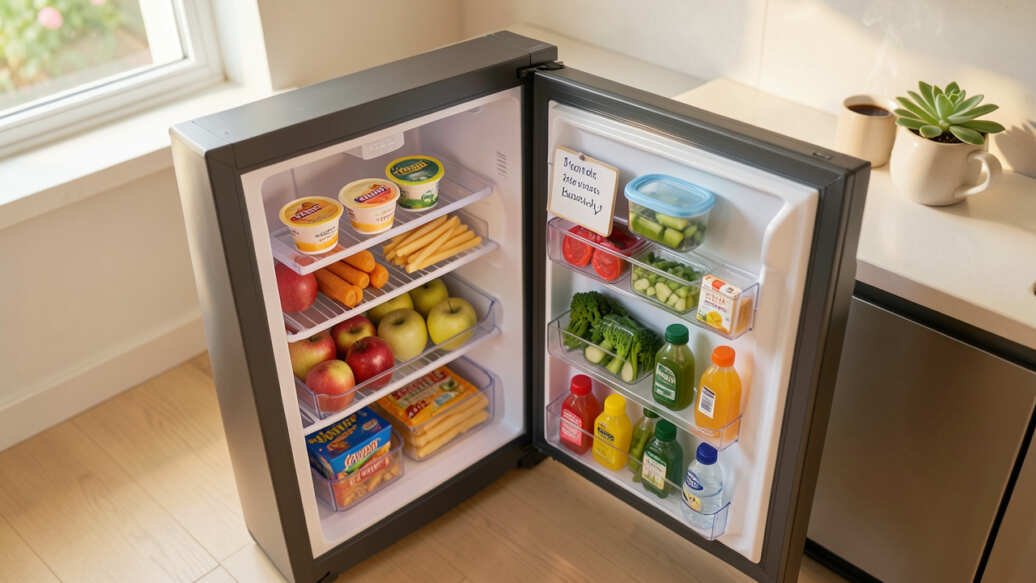
A mini fridge is great for small spaces, like dorm rooms, offices, or small apartments. But without a good plan, it can quickly become a mess. This means you might not see food before it goes bad, or you might buy things you already have.
This can lead to wasted money and food.
Making your mini fridge work for you is all about smart organisation. It’s not just about making it look nice; it’s about making it more useful. When everything has its spot, you save time and stop food from being forgotten in the back.
8 Tips to Organise Your Mini Fridge Efficiently
1. Empty and Clean It Out
Before you do anything else, take everything out of your mini fridge. This is your chance to get rid of anything that’s expired or you won’t eat. Wipe down all the shelves and drawers.
A clean fridge is the best starting point for good organisation.
Use a mild soap and water mixture. For tougher spots, a bit of baking soda paste can work wonders. Make sure to dry everything completely before putting food back in.
This step is super important and sets the stage for success.
2. Group Similar Items Together
Think about how you use your fridge. Do you often grab drinks? Do you have lots of small jars?
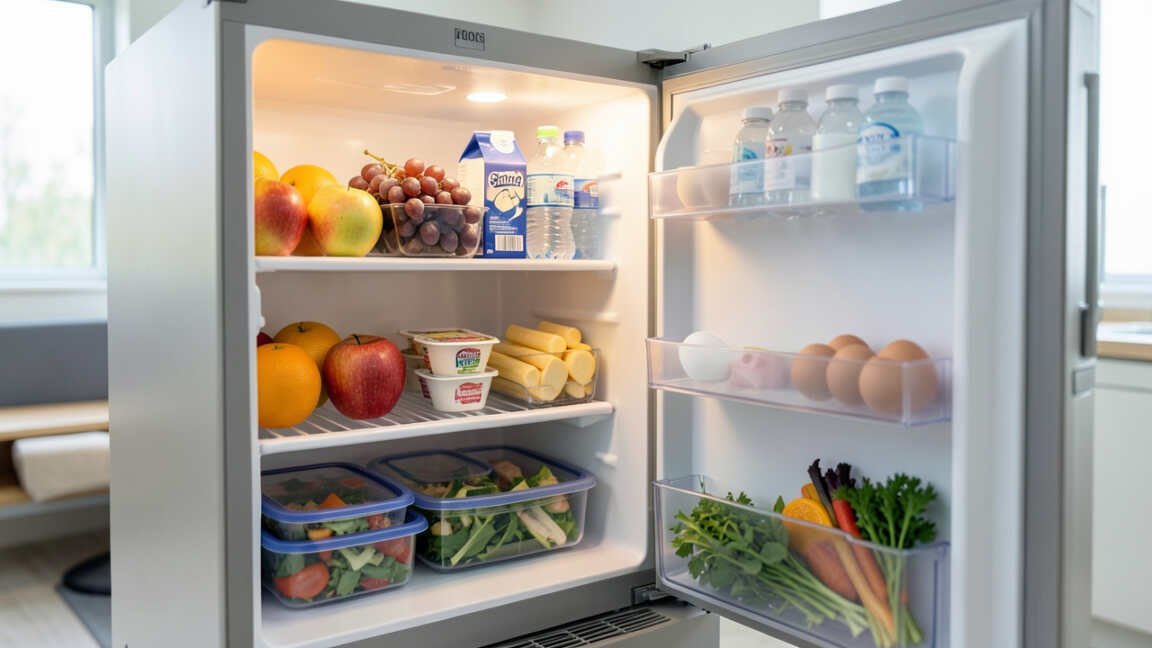
Grouping similar items makes it easier to find things quickly. Put all your drinks on one shelf, your condiments on another, and your snacks together.
This method helps prevent overbuying too. When you can see all your yogurts or sauces in one place, you know exactly what you have. It also makes your fridge look much neater and more professional.
3. Use the Door Wisely
The door shelves are often a bit warmer than the main shelves. This makes them perfect for items that don’t need super cold temperatures. Think condiments like ketchup, mustard, and salad dressings.
Jars of pickles or olives also do well here.
Avoid putting milk or eggs on the door. These items need a more consistent, colder temperature to stay fresh. Use the door for things that can handle slight temperature changes.
4. Designate Shelves for Food Types
Give each main shelf a purpose. The top shelf can be for ready-to-eat foods like leftovers or yogurts. The middle shelves are good for dairy products like milk and cheese, as well as drinks.
The bottom shelf is usually the coldest, making it ideal for raw meat or poultry.
Always store raw meat on the bottom shelf. Use a tray or container to catch any drips. This stops raw juices from contaminating other foods, which is a key food safety tip.
5. Employ Containers and Bins
Small containers and clear bins are your best friends in a mini fridge. Use them to hold yogurts, cheese sticks, snacks, or even small portions of leftovers. They keep items tidy and prevent them from rolling around.
Clear containers let you see what’s inside without pulling them out. This saves time and reduces the chance of food getting lost. They also make it easy to move groups of items when you need to clean or rearrange.
6. Maximize Vertical Space
Don’t let all the empty space above your food go to waste. Stackable containers are excellent for this. You can also buy small fridge shelves or risers that create extra levels within your fridge.
This allows you to store more items without making the fridge look crowded.
Consider drawer organisers for fruits and vegetables. Some drawers can be divided to keep different produce items separate and fresh for longer. Think about how you can build upwards to fit more in.
7. Label Everything (Optional but Helpful)
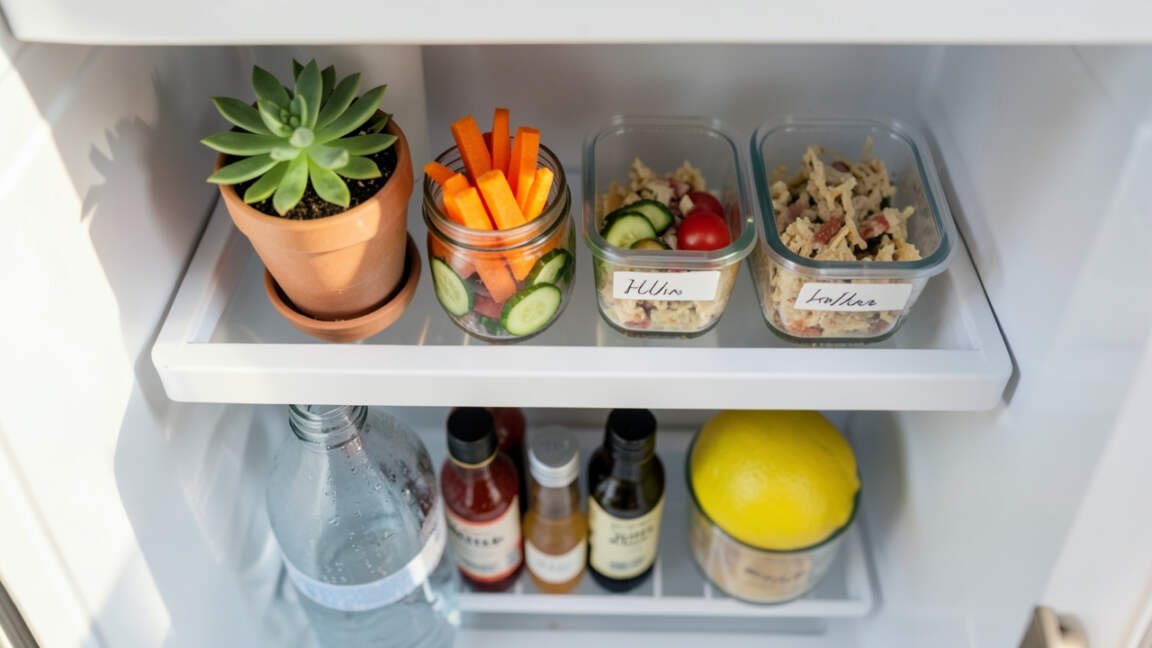
If you share your mini fridge, or if you want to keep track of leftovers, labeling is a great idea. Write the date on leftovers or new items. This helps you use older items first and avoid waste.
It also helps everyone know what belongs to whom.
Simple masking tape and a marker work well for labeling. You can also buy reusable labels if you prefer. It’s a small step that can make a big difference in keeping things organised and fresh.
8. Regular Maintenance and Check-ins
Organisation isn’t a one-time job. Make it a habit to quickly scan your fridge every few days. Move items to the front that need to be eaten soon.
Do a quick wipe-down of any spills as they happen.
Once a month, take a few minutes to do a more thorough clean. Remove everything, wipe down shelves, and check for any items that have gone bad. This keeps your fridge in top shape and prevents that overwhelming mess from returning.
Frequently Asked Questions
Question: How often should I clean my mini fridge?
Answer: It’s a good idea to do a quick spot clean of spills as they happen. A more thorough cleaning, where you empty it out and wipe down all surfaces, is best done about once a month.
Question: What is the best way to store fruits and vegetables?
Answer: Most fruits and vegetables do best in the crisper drawers if your mini fridge has them. If not, store them in breathable bags or containers on a shelf. Keep ethylene-producing fruits (like apples and bananas) separate from other produce.
Question: Can I store opened jars on the door?
Answer: Yes, opened jars of condiments like pickles, olives, mustard, and salad dressings are perfect for the door shelves. They don’t require the coldest part of the fridge.
Question: How can I stop my mini fridge from smelling bad?
Answer: Keeping your fridge clean is the first step. You can also place an open box of baking soda inside to absorb odors. Make sure to discard any spoiled food promptly.
Question: What should I put on the bottom shelf?
Answer: The bottom shelf is the coldest part of your mini fridge, making it the ideal spot for raw meat, poultry, and fish. Always store these items in a sealed container or on a plate to prevent drips.
Final Thoughts
Keeping your mini fridge tidy helps you save food and money. By following these 8 Tips to Organise Your Mini Fridge Efficiently, you can make sure everything has a place. You’ll be able to find what you need fast and enjoy fresher food.
Start with a clean slate, group your items, and use clever storage ideas. A well-organised fridge is a happy fridge, and it makes your life a little bit easier every day.

![Flat Roof Maintenance Checks To Prevent Leaks[1]](https://creativehouseblog.com/wp-content/uploads/2026/05/Flat_Roof_Maintenance_Checks_To_Prevent_Leaks1-768x403.jpg)
![Essential Ingredients For Bread Makers[1]](https://creativehouseblog.com/wp-content/uploads/2026/03/Essential_Ingredients_For_Bread_Makers1-768x448.jpg)
![How Electric Kettles Work Explained Simply[1]](https://creativehouseblog.com/wp-content/uploads/2026/03/How_Electric_Kettles_Work_Explained_Simply1-768x448.jpg)
![Slow Cooker vs Crockpot What's The Difference[1]](https://creativehouseblog.com/wp-content/uploads/2026/03/Slow_Cooker_vs_Crockpot_Whats_The_Difference1-768x448.jpg)
![Air Fryer Airflow For Better Cooking[1]](https://creativehouseblog.com/wp-content/uploads/2026/03/Air_Fryer_Airflow_For_Better_Cooking1-768x448.jpg)
![How to Clean Gutters Safely Without Hiring Anyone[1]](https://creativehouseblog.com/wp-content/uploads/2026/05/How_to_Clean_Gutters_Safely_Without_Hiring_Anyone1-768x403.jpg)