
Figuring out the difference between a high-speed blender and a regular one can be confusing for lots of people.
You see them advertised with big claims, and it’s hard to know which one is right for your kitchen. Don’t worry, we’ll make it super simple.
This guide breaks down High-Speed vs Regular Blenders Explained step by step so you can choose the best blender for your needs. Get ready to see how easy it is to make healthy drinks and tasty meals.
Key Takeaways
- High-speed blenders have powerful motors that spin much faster than regular blenders.
- Regular blenders are good for simple tasks like mixing dips or making smoothies.
- High-speed blenders can break down tough ingredients for smoother textures and more nutrients.
- The price difference between high-speed and regular blenders can be significant.
- Choosing the right blender depends on what you plan to make most often.
- Regular blenders are generally easier to find and more affordable for everyday use.
![High Speed Versus Regular Blenders Explained[1]](https://creativehouseblog.com/wp-content/uploads/2026/03/High-Speed_Versus_Regular_Blenders_Explained1.jpg)
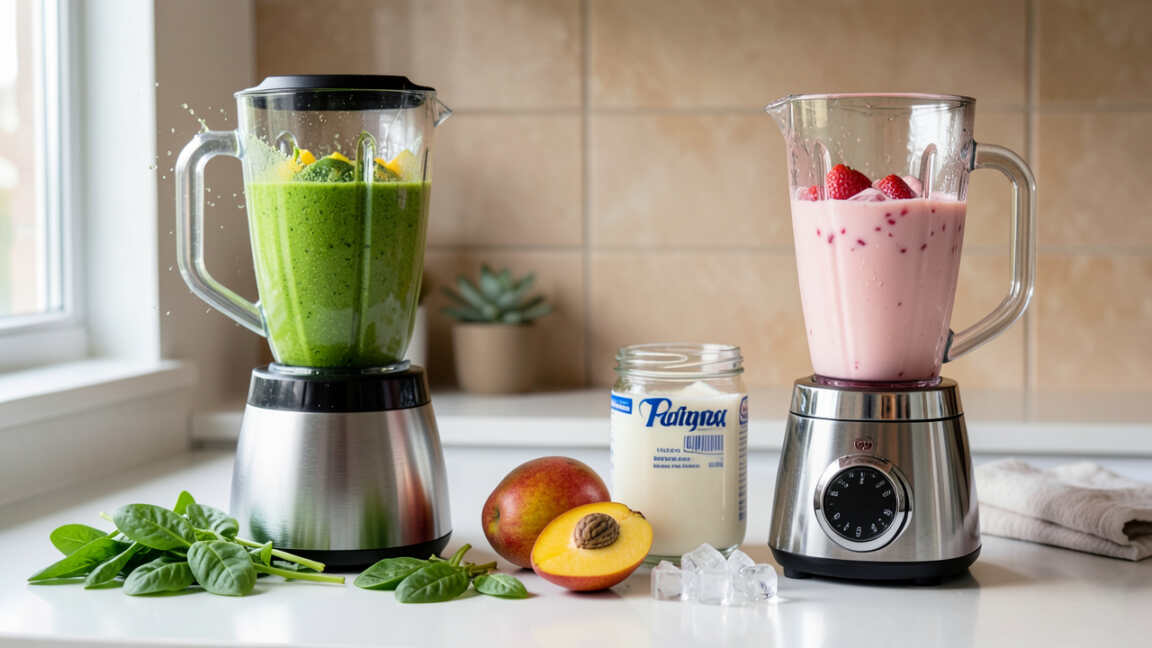
Understanding Blender Basics
Blenders are kitchen workhorses. They help us make yummy smoothies, creamy soups, and smooth sauces. But not all blenders are the same.
There’s a big difference between the ones you see in fancy kitchens and the ones you might have used for years. The main difference comes down to how fast their blades spin and how strong their motors are.
What Is A Regular Blender
A regular blender is your everyday kitchen helper. It usually has a motor that is between 300 and 700 watts. The blades spin at a moderate speed.
This is perfect for many common tasks.
Think about making a simple fruit smoothie. A regular blender can easily chop up soft fruits like bananas and berries. It can also mix in liquids like milk or yogurt.
You can use it to make salad dressings, dips, and sauces. It’s also good for crushing ice, though it might leave a few chunks.
Regular blenders are generally more affordable. They are also easier to find in most appliance stores. They are a great choice if you only need a blender for basic kitchen tasks and don’t need super-smooth results every single time.
What Is A High-Speed Blender
A high-speed blender is a powerhouse. It has a much stronger motor, often ranging from 1000 to over 2000 watts. The blades spin at incredibly fast speeds, sometimes over 30,000 rotations per minute.
This speed and power make a big difference in what it can do.
Because of their speed, high-speed blenders can do more than just mix. They can pulverize almost anything. This means they can turn tough vegetables like kale and carrots into perfectly smooth textures.
They can blend fibrous fruits and even seeds and nuts.
The result is a much smoother consistency in your drinks and meals. This also means you can get more nutrients out of your food because the ingredients are broken down more finely. You can make things like nut butters, almond milk, and very creamy soups that have no texture at all.
They are also great for making hot soups right in the blender.
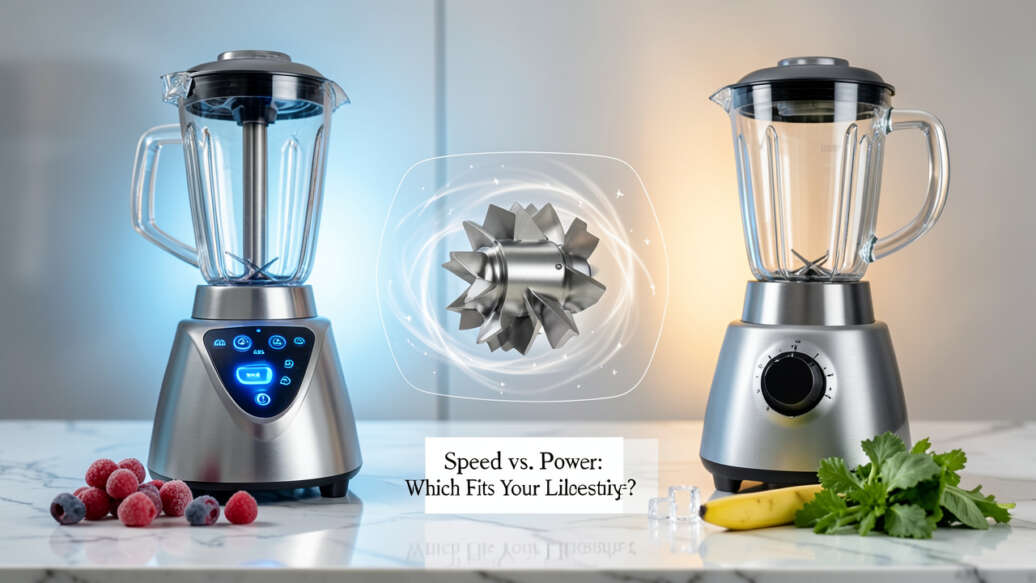
Comparing Key Features
Let’s look at the main ways these blenders differ. This will help you see which one fits your kitchen best.
Motor Power And Speed
This is the biggest difference. Regular blenders have less powerful motors. They are designed for lighter tasks.
High-speed blenders have much stronger motors. This lets them spin their blades very fast.
Higher motor wattage means the blender can handle tougher ingredients. It can also blend for longer periods without overheating. The speed of the blades is what creates that super-smooth texture.
Blade Design
Both blenders have blades, but their design can differ. Regular blender blades are usually smaller and designed for general chopping and mixing. High-speed blender blades are often larger and sharper.
They are built to create a vortex that pulls ingredients down into the blades.
This vortex action helps ensure that all ingredients are evenly processed. It prevents pockets of unblended food from forming. The blades are usually made of hardened stainless steel to withstand the high speeds and tough ingredients.
Container Material And Size
Regular blenders often come with glass jars. Glass is durable and doesn’t scratch easily. Some might have plastic jars.
High-speed blenders almost always use strong, BPA-free plastic containers. This is because the high speeds and forces could break a glass jar.
The size of the containers can vary for both. However, high-speed blenders are sometimes sold with single-serve cups in addition to larger pitchers. This adds to their versatility.
Texture And Consistency
The texture of what you make is a major factor. Regular blenders can leave small chunks or a less smooth texture, especially with fibrous ingredients. High-speed blenders excel at creating ultra-smooth results.
They can make liquids so fine that they are almost creamy and velvety.
This is especially important if you want to make things like green smoothies without any leafy bits. It’s also key for making dairy-free milks from nuts or seeds. The smooth texture is a hallmark of high-speed blending.
Durability And Lifespan
High-speed blenders are built to last. Their powerful motors and strong construction mean they can withstand heavy use. They are often backed by longer warranties, sometimes up to 7 or 10 years.
This shows the manufacturers’ confidence in their durability.
Regular blenders are also durable, but their lifespan might be shorter if used for tasks they weren’t designed for. They are generally a good investment for moderate use. Their warranties are typically shorter, around 1 to 3 years.
Price
The cost is a significant difference. Regular blenders can be very affordable, with prices starting as low as $20-$50. Even good quality ones usually don’t go much over $150.
High-speed blenders are a bigger investment. They can range from $200 to over $700. The powerful motors and advanced technology contribute to their higher price tag.
You are paying for the performance and durability.

What Can Each Blender Do Best
Knowing what you want to make will help you choose. Here’s a breakdown of common uses for each type.
Uses For A Regular Blender
- Making basic fruit smoothies with soft ingredients.
- Mixing batters for pancakes or cakes.
- Creating simple dips and sauces.
- Blending baby food from cooked fruits and vegetables.
- Chopping nuts for toppings (though results may be uneven).
- Making milkshakes.
If your kitchen needs are simple and your budget is a bit tighter, a regular blender is a solid choice. It handles most everyday kitchen tasks well.
Uses For A High-Speed Blender
- Creating ultra-smooth green smoothies with no pulp.
- Making nut milks and dairy-free milks from scratch.
- Processing tough fibrous ingredients like kale, ginger, and carrots.
- Making smooth soups and sauces directly in the blender.
- Grinding grains or making flours.
- Creating smooth nut butters.
- Making ice cream or sorbet from frozen fruit.
If you’re serious about healthy eating, want perfect textures, or plan to make a wide variety of blended items, a high-speed blender might be worth the cost.
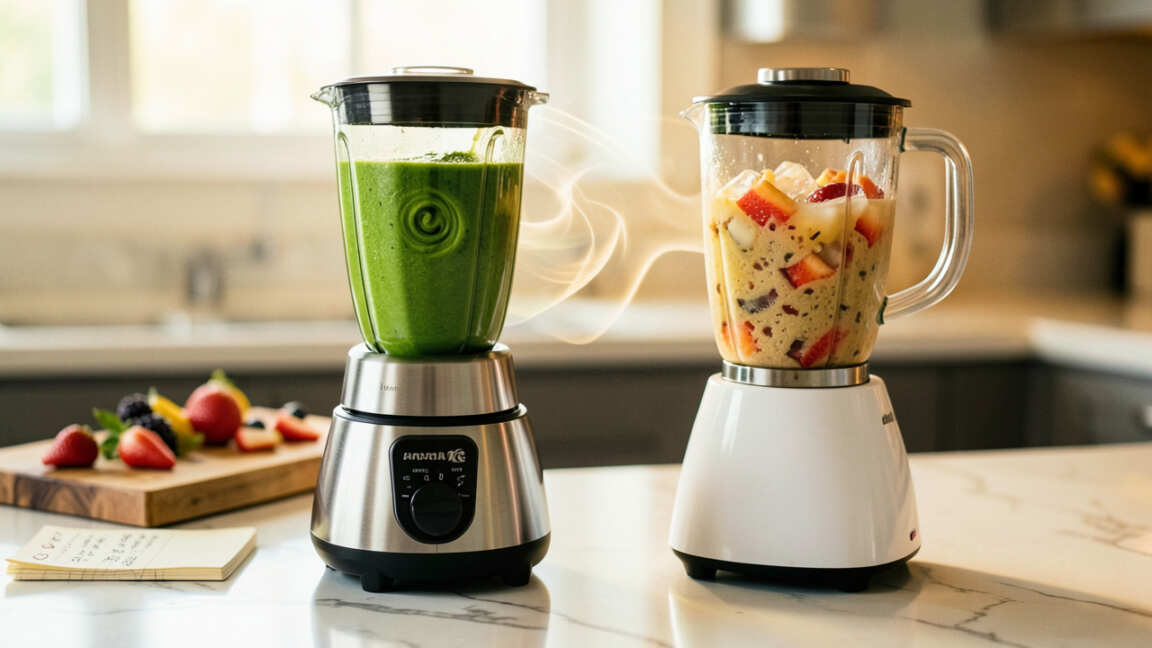
Making Your Choice
Deciding between the two types depends on a few key questions.
Consider Your Budget
How much are you willing to spend? Regular blenders are budget-friendly. High-speed blenders are a significant purchase.
Set a budget first to narrow down your options.
Think About What You Will Blend
What kinds of recipes do you make most often? If it’s just simple smoothies and dips, a regular blender is fine. If you want to tackle greens, nuts, and seeds for ultimate smoothness, a high-speed blender is the way to go.
How Often Will You Use It
If you plan to use your blender daily for serious blending, a high-speed model might last longer and give better results. For occasional use, a regular blender might be sufficient.
What Is Your Space Like
High-speed blenders are often larger and heavier due to their powerful motors. Make sure you have enough counter or storage space for the model you choose.
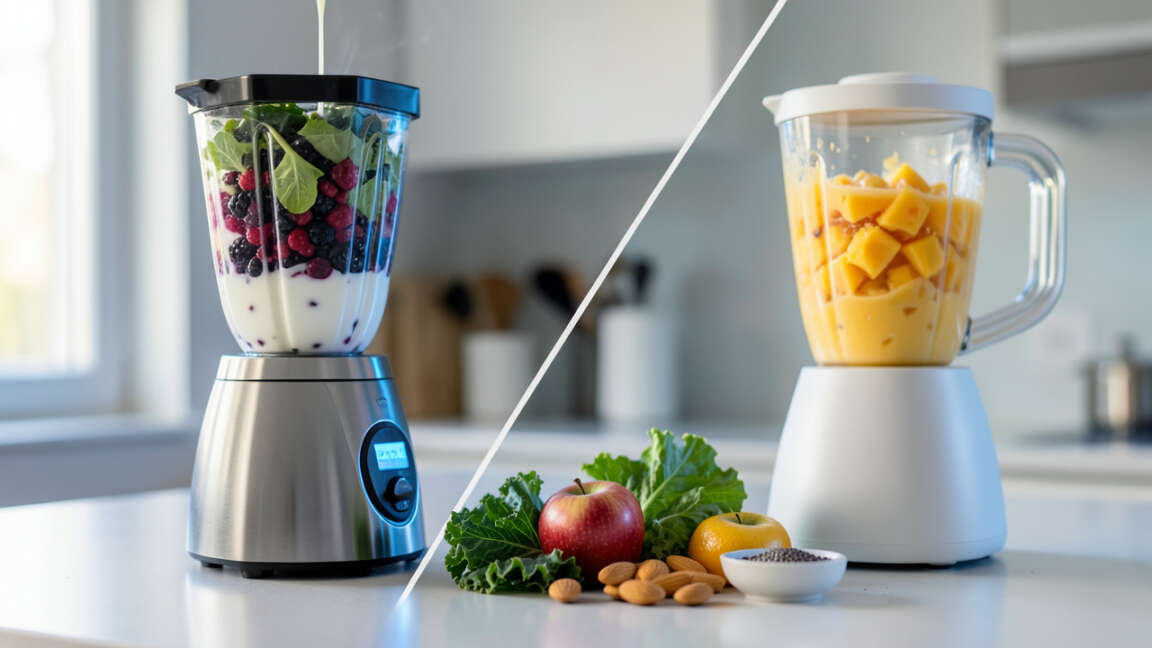
High-Speed vs Regular Blenders Explained A Quick Comparison
| Feature | Regular Blender | High-Speed Blender |
|---|---|---|
| Motor Power | 300-700 Watts | 1000-2000+ Watts |
| Blade Speed | Moderate | Very High (30,000+ RPM) |
| Best For | Simple smoothies, dips, sauces | Ultra-smooth drinks, nut butters, hot soups, tough ingredients |
| Texture | Good, may have small chunks | Very smooth, creamy, no chunks |
| Durability | Good for moderate use | Excellent for heavy use |
| Price | $20-$150 | $200-$700+ |
| Container Material | Glass or Plastic | Durable Plastic (BPA-free) |
FAQ Of High-Speed Versus Regular Blenders Explained
Question: Can a regular blender make smoothies
Answer: Yes, a regular blender can make smoothies, especially with softer fruits and liquids. You might find that some leafy greens or fibrous ingredients don’t get as smooth as they would in a high-speed blender.
Question: Do I really need a high-speed blender
Answer: You don’t necessarily need one unless you plan to make things that require extreme smoothness, like nut milks, ultra-smooth green smoothies, or process tough ingredients regularly. A regular blender works for many people’s needs.
Question: Are high-speed blenders noisy
Answer: High-speed blenders can be quite loud due to their powerful motors and fast-spinning blades. Regular blenders are generally quieter.
Question: How do I clean a high-speed blender
Answer: Cleaning is usually simple. Add a drop of dish soap and warm water to the pitcher, secure the lid, and blend for about 30-60 seconds. Rinse thoroughly afterward.
For tougher messes, refer to your blender’s manual.
Question: Can high-speed blenders replace food processors
Answer: In many cases, yes. High-speed blenders can chop nuts, make pastes, and even grate vegetables, performing many tasks that a food processor would do, especially for smoother results.

Final Thoughts
Choosing between a high-speed and regular blender comes down to your kitchen habits and goals.
If you want everyday ease and a lower price, a regular blender fits the bill. For advanced blending and perfect smoothness, a high-speed blender offers superior power and results.
Both can be great tools for delicious food.

![6 Reasons Smart Kitchen Devices Save Time[1]](https://creativehouseblog.com/wp-content/uploads/2026/04/6_Reasons_Smart_Kitchen_Devices_Save_Time1-768x448.jpg)
![Induction vs Electric Stoves A Simple Guide[1]](https://creativehouseblog.com/wp-content/uploads/2026/03/Induction_vs_Electric_Stoves_A_Simple_Guide1-768x448.jpg)
![Air Fryer Basket Coatings Explained Clearly[1]](https://creativehouseblog.com/wp-content/uploads/2026/03/Air_Fryer_Basket_Coatings_Explained_Clearly1-768x448.jpg)
![Manual Versus Automatic Espresso Machines[1]](https://creativehouseblog.com/wp-content/uploads/2026/03/Manual_Versus_Automatic_Espresso_Machines1-768x448.jpg)
![Do Air Fryers Need Preheating Explained[1]](https://creativehouseblog.com/wp-content/uploads/2026/03/Do_Air_Fryers_Need_Preheating_Explained1-768x448.jpg)
![10 Healthy Meals You Can Make Using Steam Cooking[1]](https://creativehouseblog.com/wp-content/uploads/2026/04/10_Healthy_Meals_You_Can_Make_Using_Steam_Cooking1-768x448.jpg)