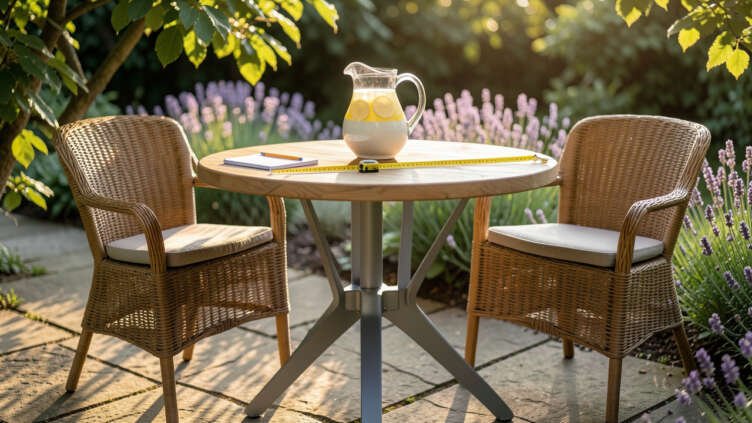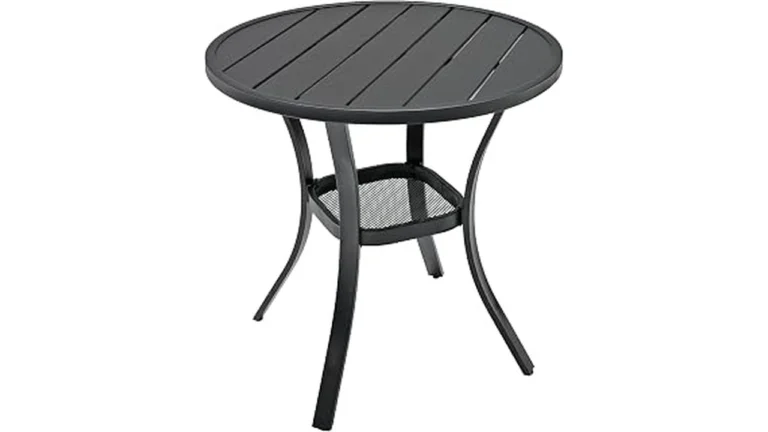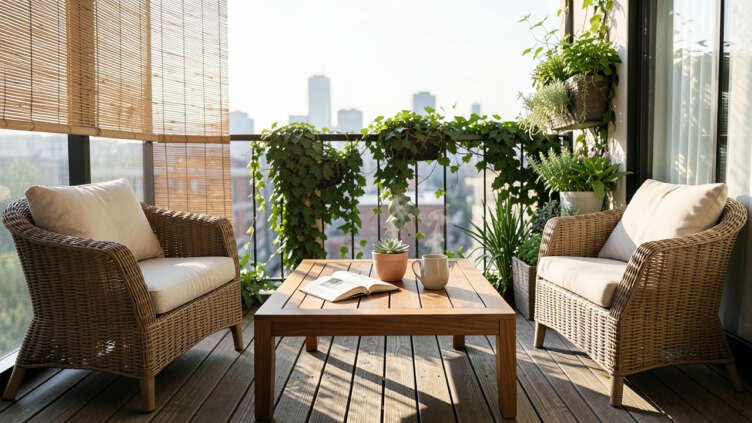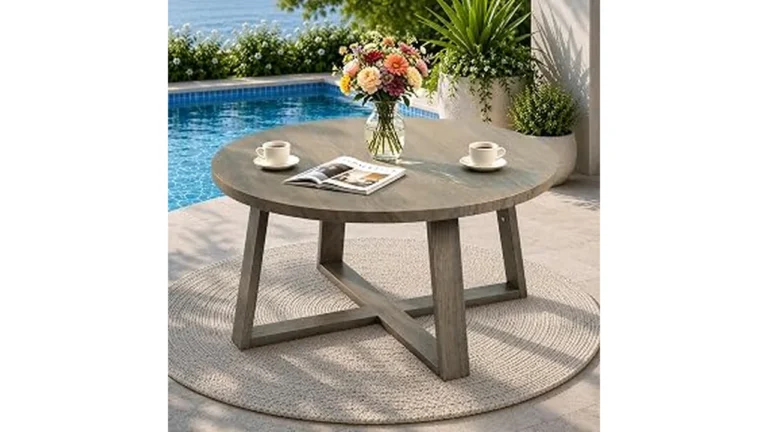
An outdoor table is wrong for your apartment balcony when it blocks the balcony door, leaves less than 24 inches of clear walking space, forces chairs to overhang the railing, or makes the balcony feel cluttered. Measure your balcony’s usable floor space—not railing‑to‑railing—and ensure at least 36 inches of clear walking path to comply with safety codes. The ideal table height is 28 to 30 inches, and heavy materials like cast iron should be avoided to prevent floor damage and wobbling.
You bought a cute bistro table for your balcony. But now you feel cramped, your planters have nowhere to go, and you rarely sit out there. The problem is not your balcony – it’s the table.
Quick Verdict: An outdoor table is wrong for your apartment balcony when it blocks the door, leaves less than 24 inches of walking space, forces chairs to hang over the edge, or makes the area feel cluttered. The right table fits your available floor space, leaves room for movement, and matches the balcony’s proportions.
Key Takeaways
- Measure your balcony’s usable floor space – not the railing-to-railing length – before buying any table.
- An outdoor table is wrong if you cannot open the balcony door fully without moving the table.
- A table that leaves less than 36 inches of clear walking space violates most building safety codes and makes the balcony unusable.
- Heavy materials like cast iron can damage lightweight balcony flooring and are wrong for most apartment balconies.
- The ideal table height for an apartment balcony is 28 to 30 inches – counter-height tables often create balance problems.
What to Look For: Signs Your Balcony Table Is Wrong
Spotting a wrong table is easier when you know what to check. Look for these clear indicators.
It Blocks the Door Swing
If you have to move the table every time you open the sliding door, it is too big or placed incorrectly. A table should leave at least 12 inches of clearance from the door’s full arc.
Warning: A table that blocks your emergency exit is a safety hazard. Many apartment leases require a clear path to the door at all times.
You Have No Room for Chairs
When you pull out a chair, does it hit the railing? Do your knees touch the table edge? If yes, the table is likely too deep or the chairs are not the right height. Standard dining chairs need 18 inches of knee space under the table.
It Makes the Balcony Feel Tiny
A table that takes up more than one-third of the total balcony area will make the space feel cramped. According to the, the average apartment balcony measures 4 feet by 10 feet – that is only 40 square feet. A 30-inch round table alone eats up nearly 5 square feet, plus chair space.
It Wobbles or Slides
A table that wobbles on uneven balcony flooring or slides when the wind blows is dangerous. Apartment balconies often have slight slopes for drainage. A table with adjustable feet is a safer choice.
You Cannot Water Plants or Sit Comfortably
If your planters are stacked on the floor because the table top has no room, the table is not serving your needs. A table should hold at least a drink, a plate, and a small plant without crowding.
How to Evaluate Your Current Table
Follow these steps to decide if your table belongs on the balcony or should go back inside.
- Measure the usable floor space. Subtract the space needed for door swing, railing overhang, and planters. Write down the length and width in inches.
- Set up the table and chairs. Place them exactly where you want them. Then use a tape measure to check clearances.
- Check the walking path. You need at least 24 inches of open space between the table and any obstacle. For a comfortable setup, 36 inches is better.
- Sit in each chair. Pull the chair out fully. Measure the distance from the back of the chair to the railing. You need at least 12 inches of space behind the chair to stand up easily.
- Simulate a meal. Place a plate, a glass, and a serving dish on the table. If anything hangs over the edge or feels unstable, the table is too small.
Important: If you have to push the table against the wall to fit, you will not use it. Successful balcony setups allow at least 360 degrees of access to the table from at least one side.
Common Mistakes to Avoid
These errors are why so many apartment dwellers buy a table that they later regret.
- Buying a table before measuring the balcony’s door opening. Many standard tables are 30 inches wide – but if your door is only 28 inches wide, you cannot get the table outside.
- Choosing a table that is too tall. Bar-height tables (40-42 inches) look great in photos but feel unstable on a windy balcony. Standard dining height (28-30 inches) is safer and more comfortable.
- Forgetting that balcony floors are often sloped. A table with non-adjustable legs will rock. Look for models with screw-in leveling feet.
- Assuming a folding table is always better. Folding tables can save space, but they often have weak joints that fail after one season of rain and sun.
- Buying a table made of untreated wood. Moisture from rain and morning dew will warp the wood within weeks. Stick to aluminum, teak, or weather-resistant wicker.
The Right Table Dimensions for Common Balcony Sizes
| Balcony Floor Space | Best Table Shape | Maximum Table Size | Number of Chairs |
|---|---|---|---|
| 4 ft x 6 ft (24 sq ft) | Round | 24-inch diameter | 2 small stools or chairs |
| 4 ft x 8 ft (32 sq ft) | Round or square | 30-inch round or 28-inch square | 2 chairs comfortable |
| 4 ft x 10 ft (40 sq ft) | Round or square | 30-inch round or 30-inch square | 2-3 chairs if using narrow fold-down seats |
| 5 ft x 10 ft (50 sq ft) | Round or rectangular | 36-inch round or 40×24-inch rectangle | 3-4 chairs possible with careful placement |
Materials and Durability: Why Some Tables Are Wrong for Balconies
The material of your table affects how it handles weather, weight, and wear. A table that is too heavy or too fragile is wrong for your apartment balcony.
Aluminum
Lightweight, rust-resistant, and easy to move. Aluminum is the best choice for most apartment balconies. It stays cool in the sun and does not corrode. Look for powder-coated finishes for extra durability.
Teak
Teak is naturally water-resistant and heavy enough to stay put in wind. However, it requires annual oiling to maintain its color. Raw teak turns silver-gray, which some people like. The downside is cost – good teak tables start around $300.
Wrought Iron
Wrought iron tables are very heavy – often over 50 pounds. They can damage lightweight balcony flooring, and they rust if the paint chips. For safety, avoid iron on balconies above the first floor unless the table is secured.
Plastic / Resin
Cheap plastic tables crack under UV exposure within a year. Resin is more durable but still can warp in extreme heat. These are okay for covered balconies but not for full sun.
Warning: Some apartment buildings ban heavy items like wrought iron on balconies due to structural limits. Check your lease or ask your landlord before buying.
How to Measure Your Balcony Correctly
Getting accurate measurements is the most important step. Use a metal tape measure, not a cloth one – cloth stretches.
- Measure the usable width from wall to railing. Do not include space that is blocked by air conditioning units, pipes, or planter ledges.
- Measure the usable depth from the door to the outer railing. Subtract at least 6 inches for safety – you do not want chairs touching the railing.
- Measure the door opening width – the clear space when the door is fully open. Your table must be narrower than this to get it outside.
- Check the floor slope with a level. If the floor slopes more than 1/4 inch per foot, you need a table with adjustable feet.
Pro Tips for Choosing the Right Balcony Table
- Buy a table with a parasol hole – even if you think you will not need an umbrella. The hole lets you add shade later without replacing the table.
- Choose a round table over a square one for small balconies. Round tables allow easier movement around the space and have no sharp corners.
- Test the table assembled before the return window closes. Many online tables look smaller in photos than they really are.
- Consider a drop-leaf table or a wall-mounted fold-down table for ultra-small balconies. These leave floor space free when not in use.
- Use stacking chairs instead of full-size chairs. Stacking chairs take up less room when not in use and are easier to store indoors.
Common Myths vs Facts About Balcony Tables
Myth: Any small table will work on a balcony
Fact: A small table can still be wrong if it is too tall, too heavy, or the wrong shape. A 24-inch square table might seem tiny, but if your balcony is only 3 feet wide, it blocks the entire walkway. Always measure first.
Myth: Folding tables are always space-savers
Fact: Folding tables are great for storage, but they often have legs that spread outward. A folding table with splayed legs can take up more floor space than a fixed table of the same size. Look for tables with vertical fold legs.
Myth: You need a table that matches your indoor furniture
Fact: Outdoor tables need to withstand weather, not just look pretty. A delicate indoor-style table will fail on a balcony. Prioritize material and fit over style matching.
Frequently Asked Questions
What is the minimum balcony size needed for a table?
Your balcony needs at least 3 feet by 5 feet of usable floor space to comfortably fit a small bistro table and two chairs. If your balcony is smaller, consider a wall-mounted fold-down table or a narrow ledge table instead.
How much clearance do I need around a balcony table?
You need at least 24 inches of walking space on at least one side of the table. For chairs, allow 18 inches between the chair back and any obstacle. According to the, leaving 36 inches for main pathways improves comfort and safety.
Can I use a regular indoor table on my balcony?
You can, but it will likely warp, rust, or fade within weeks. Indoor tables are not built for direct sun, rain, or temperature swings. Use a table labeled “outdoor” or “weather-resistant.”
What is the best table shape for a long narrow balcony?
A rectangular table placed against the long wall works best for narrow balconies. Choose a table that is 24 inches deep and up to 40 inches long. Avoid round tables – they waste space in a narrow layout.
How do I keep my balcony table from blowing away?
Choose a table that weighs at least 25 pounds. For lighter tables, use sandbags or a weighted base plate. Some tables come with windproof clips that secure the tabletop to the frame.
Final Thoughts
A wrong balcony table not only wastes money but also makes your outdoor space unusable. Focus on accurate measurements, proper clearance, and materials that match your climate. Take the time to evaluate your table using the steps above, and you will turn your balcony into a comfortable retreat.