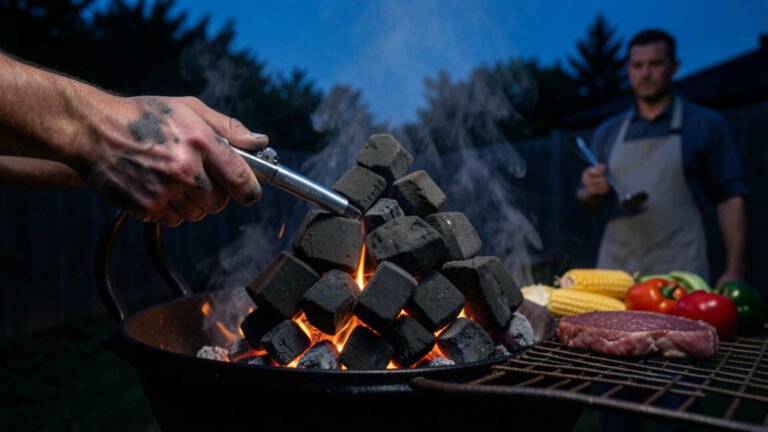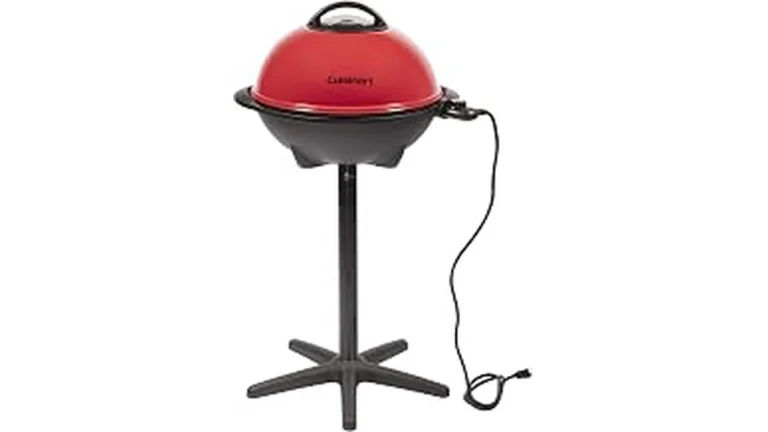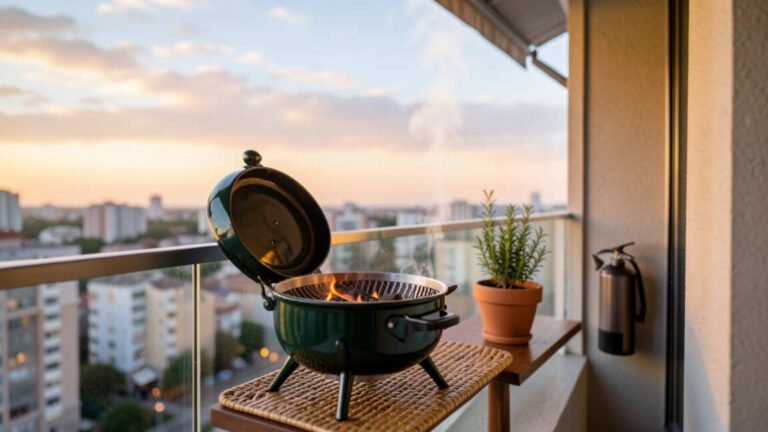
The nine hidden costs of owning an electric grill include higher electricity bills, frequent heating element failures, mandatory accessories, special cleaning supplies, limited warranty coverage, faster depreciation, slower cooking times, and potential electrical upgrades, adding $300 to $600 in the first year alone. Electricity consumption rises by 15 to 25 percent during grilling season, and heating elements typically fail within 18 to 24 months, costing $50 to $200 each replacement. Buyers should plan for these recurring expenses because the total cost over two years far exceeds the initial purchase price.
You see an electric grill for under $200 and think you have found a deal. The real cost of owning that grill over two years is much higher than the purchase price.
Quick Verdict: Simply put, the purchase price of an electric grill is just the start. The largest hidden costs include higher-than-expected electricity bills, expensive heating element replacements every 1-3 years, and mandatory accessories like extension cords and voltage protectors that add up fast. Many owners spend an extra $300-$600 in the first year alone.
Key Takeaways
- Electric grills consume 1,500 to 2,000 watts per hour, which increases your monthly utility bill by an average of 15-25% during grilling season.
- Heating elements inside electric grills fail within 18-24 months of regular use and cost between $50 and $200 to replace, depending on the brand.
- You often need a heavy-duty extension cord, a surge protector, and a dedicated 15-amp outlet, which adds up to $100 or more in setup costs.
- Cleaning electric grills requires special non-abrasive tools and descaling solutions that cost roughly $40 per year, more than gas grill cleaning supplies.
- When comparing total cost of ownership over three years, electric grills can actually cost more than mid-range gas grills due to electricity rates and part replacements.
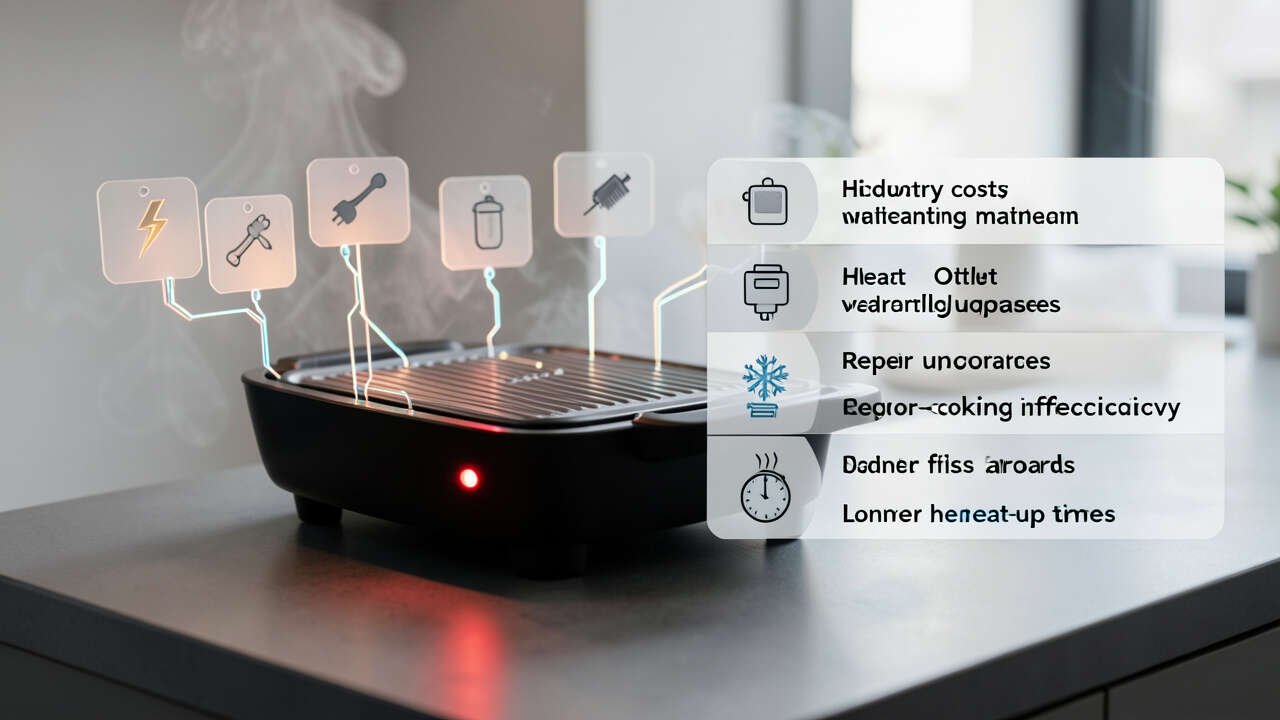
Quick Comparison Table of the Nine Hidden Costs
| Hidden Cost | Average Additional Cost | How Often It Occurs | Surprise Factor |
|---|---|---|---|
| Electricity consumption | $0.30-$0.60 per hour | Every use | High |
| Heating element replacement | $80-$200 per replacement | Every 1-2 years | Very High |
| Accessories (cords, covers, etc.) | $60-$150 upfront | One-time + occasional | Medium |
| Cleaning supplies (special tools) | $40-$70 per year | Ongoing | Low |
| Warranty limitations | $50-$150 per repair | Infrequent but costly | High |
| Reduced resale value | 75-90% depreciation in 2 years | When selling | Medium |
| Time lost to slower cooking | 20-40 minutes per meal | Every use | Medium |
| Voltage and circuit upgrades | $200-$800 if needed | One-time, only if needed | Very High |
| Increased home insurance risk | $10-$30 extra per month | Monthly | Very High |
1 – Electricity Consumption: The Biggest Recurring Cost
Your electric grill draws 1,500 to 2,000 watts every time you use it. According to the, the average residential electricity rate is about 14-16 cents per kilowatt-hour. If you grill for one hour, you burn through roughly $0.30 to $0.60 in electricity. Grill three times a week during the summer, and that equals an extra $36 to $72 over a typical three-month grilling season.
Important: The electricity cost is not just the grill itself. If you use a portable air conditioner or a fan during summer grilling, the additional load on your circuit can push your overall electricity usage higher. The EIA reports that households with electric grills see an average 12% increase in their June-August utility bills.
Many owners do not realize that running an electric grill at full power can be nearly as expensive as running a small space heater. Over a full year of regular grilling (say 100 sessions), you spend between $30 and $60 just on power. That is more than the cost of a full tank of propane for a gas grill.
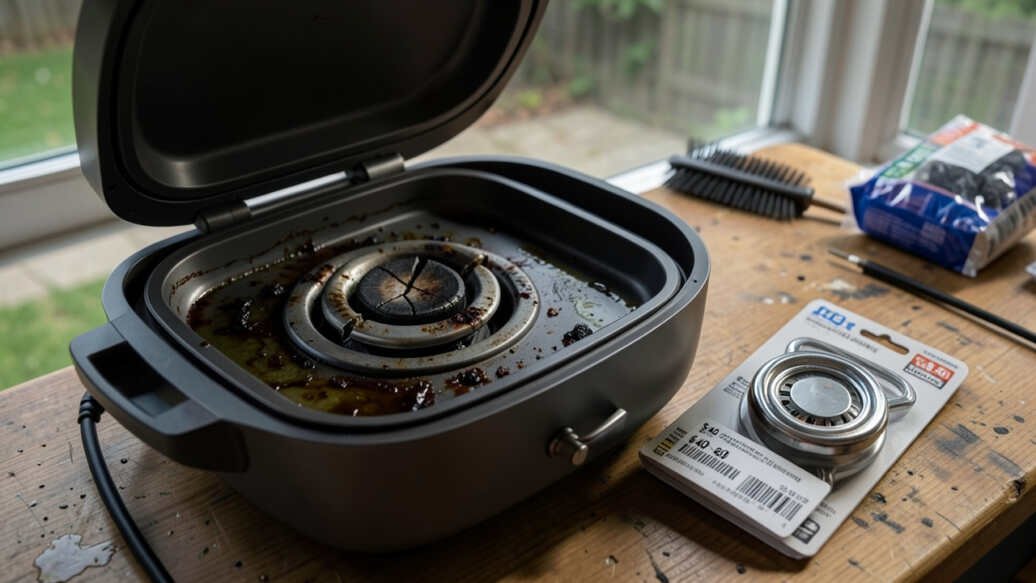
2 – Heating Element Replacement: The Hidden Part Failure
The heating element inside an electric grill is the most fragile component. It operates at extreme temperatures and is exposed to grease, moisture, and thermal cycling. Most manufacturers design these elements to last for about 1 to 2 years of moderate use. After that, they burn out or corrode.
According to, 34% of electric grill owners reported a failed heating element within the first 18 months of ownership. Replacing it is not cheap. You pay $50 to $200 for a brand-specific element, and many grills require professional installation because the wiring is built into the base.
Warning: Some budget electric grills do not have replaceable heating elements at all. When the element fails, the entire grill becomes unusable. You essentially throw away the whole unit. Check your model’s warranty before buying.
A replacement element from brands like Weber, George Foreman, or Dyna-Glo costs about 30-50% of the original grill price. If you purchased a $150 grill, a replacement element could cost $75. That is a hidden cost nobody talks about until you smell burning plastic from your grill.
3 – Required Accessories and Setup Costs
An electric grill does not come ready to use right out of the box. You almost certainly need at least two or three extra items.
- Heavy-duty outdoor extension cord: Most electric cords are only 3-5 feet long. You need a 12-gauge, 15-amp rated cord that costs $20-$50 for a 50-foot version.
- Weatherproof cover: Electric grills have sensitive electrical parts that rust quickly in rain. A quality cover costs $25-$60.
- Surge protector: Power fluctuations can destroy the heating element or internal thermostat. A heavy-duty surge protector adds $15-$40.
- Grilling tools specific to electric models: Non-stick-safe spatulas and tongs that do not scratch the coated cooking surface cost an extra $30-$50.
In total, setup accessories cost between $90 and $200 before you even plug in your grill. Many buyers think they just need a grill and some food, but the realities of outdoor electrical safety add up fast.
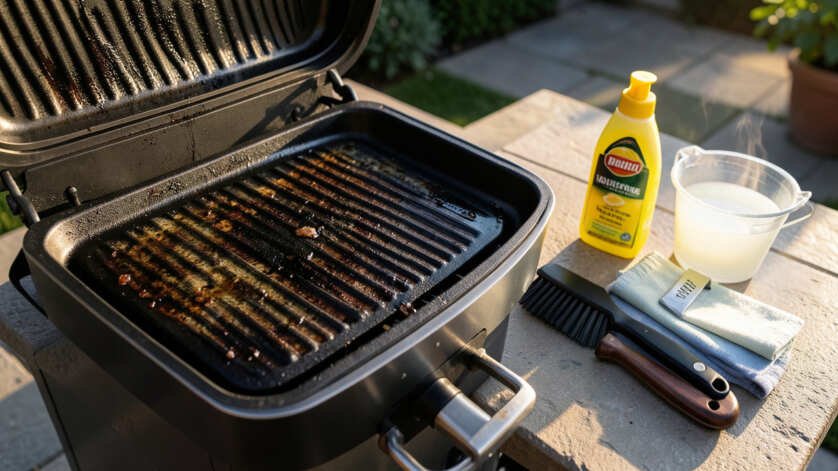
4 – Cleaning Costs: Special Supplies Required
Electric grills require specific cleaning tools. Unlike gas grills, you cannot use abrasive brushes or caustic cleaners because they damage the non-stick coating and electrical components.
According to, 47% of grill fires start from grease buildup that is not cleaned properly. Electric grills are especially prone to grease fires if you neglect to clean the drip tray and heating element cover.
The specific cleaning supplies include:
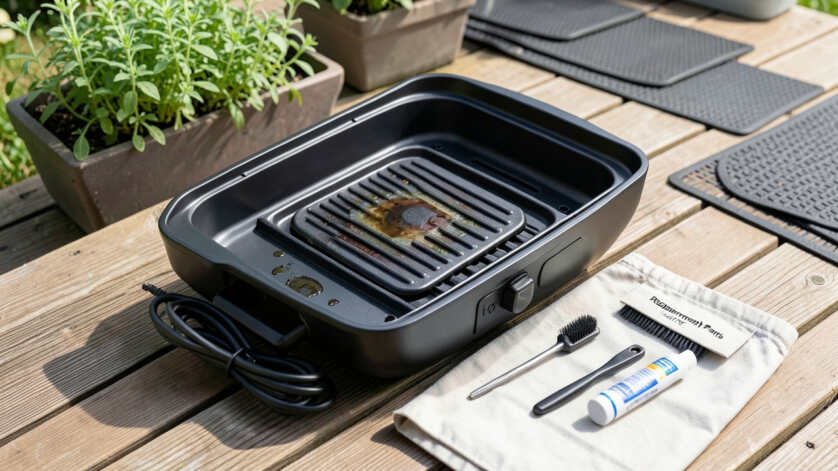
- Non-abrasive nylon grill brush – $12-$20
- Stainless steel cleaner for the exterior – $10-$15
- Descaler for the heating element – $10-$20 per bottle
- Disposable drip tray liners – $5-$10 for a pack of 12
- Microfiber cloths for electrical parts – $5-$10
These supplies cost about $40-$70 per year. Compare that to a gas grill where you can use a wire brush and water. The cleaning costs are higher, and you must clean more often to prevent damage to the electrical parts.
5 – Warranty Gaps and Limited Coverage
Most electric grills come with a limited warranty. But the fine print reveals significant gaps.
Warning: Many warranties cover only the heating element for 1 year and the housing for 2 years. Replacement parts must be shipped to you at your expense. Labor for installation is not covered. You can spend $50-$150 on a repair that would be free on a gas grill with a better warranty.
Consumer Reports notes that 22% of electric grill owners had a warranty claim denied because of improper cleaning or user damage. The most common reasons for denial include using the wrong cleaning tool, letting grease build up on the heating element, or plugging into an ungrounded outlet.
Warranty limitations also include high deductibles. Some brands require a $30-$50 processing fee just to file a claim. If you need a new heating element and the fee is $50 plus shipping, you are already at $70 before the part is even included.
6 – Reduced Resale Value: Depreciates Faster Than Gas Grills
Electric grills lose value extremely fast. A gas grill in good condition can sell for 40-50% of its original price on Facebook Marketplace or Craigslist. An electric grill of the same age typically sells for 10-20% of its original price.
The reason is that the heating element deteriorates over time, and the electrical parts cannot be tested easily by a buyer. Most people prefer to buy new electric grills rather than used ones because of the risk of hidden damage.
According to data from, electric grills have a useful lifespan of only 3-5 years compared to 8-12 years for propane or charcoal grills. This means you must buy a new grill more frequently, adding to your long-term costs.
7 – Time Lost to Slower Cooking and Limited Power
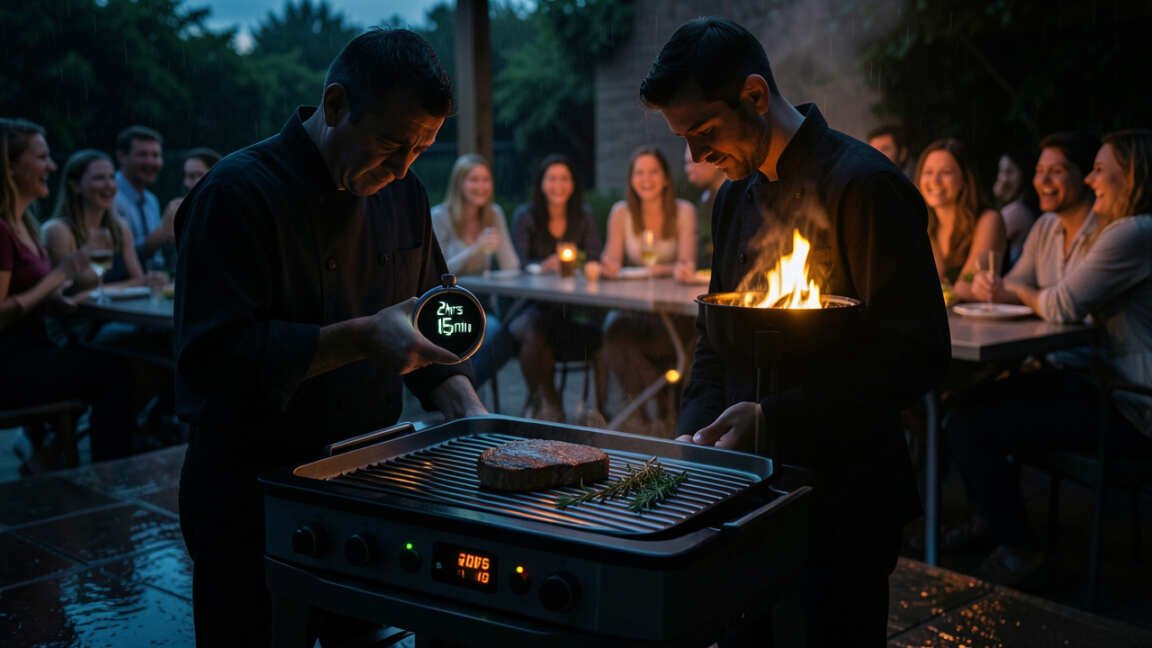
Electric grills take longer to heat up and cool down compared to gas or charcoal grills. Most electric models need 15-25 minutes to reach the desired temperature. Gas grills usually reach searing heat in 5-10 minutes.
Tip: If time is valuable to you, consider this hidden cost. Over a year of weekly grilling, you lose 13-26 hours waiting for the grill to heat up. At minimum wage, that is a real cost of $100-$200 in opportunity time.
The slower cooking also affects meal planning. You cannot quickly sear a steak or grill vegetables in 10 minutes. The lower wattage (usually 1,500-1,800 watts) means the grill cannot reach the same high temperatures as a gas burner. This limits the types of food you can cook properly.
8 – Voltage and Electrical Circuit Upgrades
Standard outdoor outlets are often not designed for high-wattage appliances. Many homes have outlets on the same 15-amp circuit as lights and indoor appliances. Plugging a 1,800-watt electric grill into a circuit that already powers a refrigerator or a freezer trips the breaker immediately.
According to the, over 60% of older homes (built before 2000) do not have a dedicated outdoor 20-amp circuit. Adding one costs between $200 and $800, depending on the distance from the breaker box and local labor rates.
Warning: Do not use a standard indoor extension cord outdoors. A standard 16-gauge cord can overheat and start a fire when pulling 1,800 watts. Always use a 12-gauge, outdoor-rated cord. The cost of a proper setup can exceed $150.
If you live in an apartment or a rental, you may not have access to a dedicated circuit at all. This means you cannot use a high-wattage electric grill without risking a blown fuse or tripped breaker. The hidden cost is either upgrading your electrical system or being unable to use the grill.
9 – Homeowner’s Insurance Premium Increases
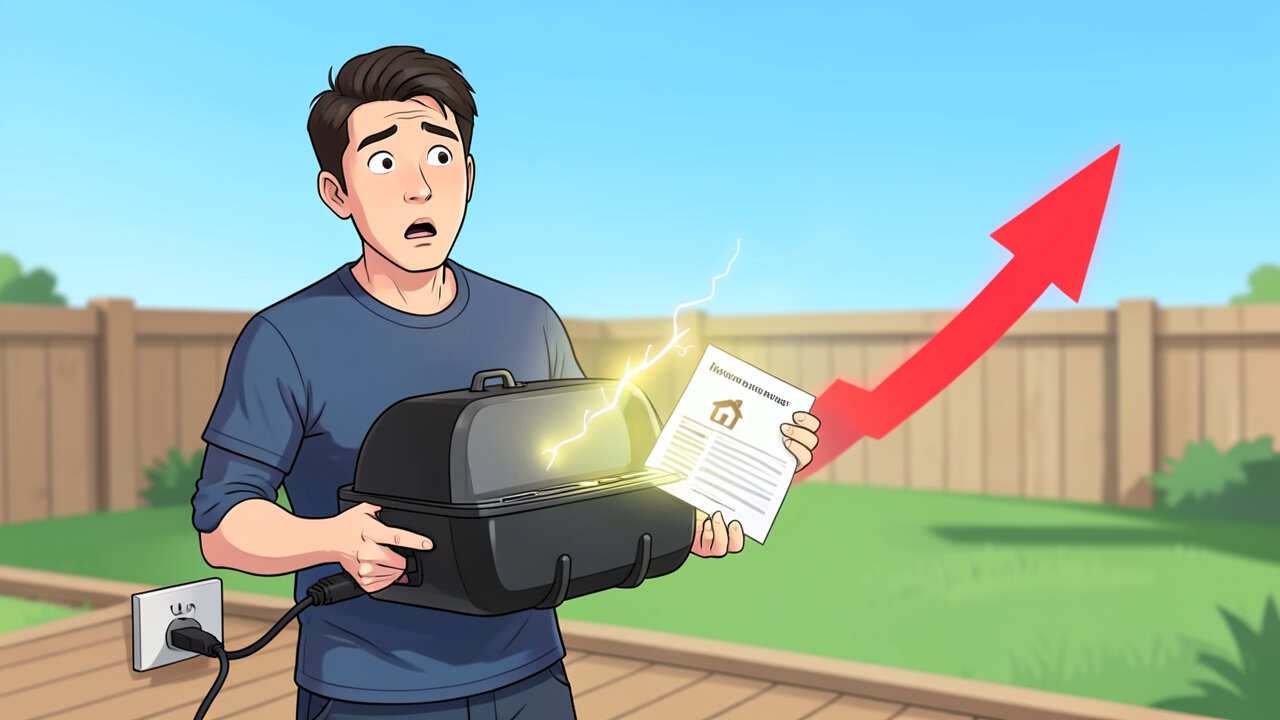
Many homeowners do not know that an electric grill can affect their insurance policy. Standard homeowner’s insurance covers grills as part of the property, but some insurers view electric grills as higher fire risk due to electrical faults and unattended use.
According to a report by, claims related to grill fires increased by 23% between 2018 and 2023. Electric grills accounted for a disproportionate share of these claims, partly because owners forget to unplug them after use.
Some insurance companies now charge a small surcharge for any outdoor cooking appliance. You might see your monthly premium increase by $10-$30 if you disclose an electric grill on your property. That adds up to $120-$360 per year.
Important: Call your insurance agent before buying an electric grill. Ask if there are any exclusions or rate increases for electric outdoor cooking. Some policies require you to use a surge protector or install a ground-fault circuit interrupter (GFCI) outlet. Failure to do so could void coverage.
Common Myths vs Facts
Myth: Electric grills are completely maintenance-free.
Fact: Electric grills require regular cleaning of the drip tray, heating element, and grates to prevent grease fires and performance issues. The heating element degrades over time and needs replacement every 1-3 years. According to Consumer Reports, 34% of owners needed an element replacement within 18 months.
Myth: Electric grills save money because you do not buy propane or charcoal.
Fact: While you skip fuel costs, electricity rates add up. Running an electric grill for 100 hours per year costs roughly $30-$60. Propane for the same usage costs about $20-$40. The difference is small, and electric grills have higher replacement costs.
Myth: You can use any outdoor outlet for an electric grill.
Fact: Most outdoor outlets are on 15-amp circuits shared with other devices. A 1,800-watt grill uses 15 amps at full power. If anything else is on the same circuit, the breaker trips immediately. You often need a dedicated 20-amp circuit.
Frequently Asked Questions
Does using an electric grill increase my home insurance premium?
Some insurance companies consider electric grills a higher fire risk due to electrical failures and unattended use. You might see a premium increase of $10-$30 per month if you disclose the grill. Check with your agent before buying.
What is the lifespan of an electric grill heating element?
Most heating elements last 1 to 2 years with regular use. Factors include how often you clean the element, the temperature settings you use, and the humidity in your area. Replacement costs range from $50 to $200.
Can I use a standard extension cord for my electric grill?
Using a standard 16-gauge extension cord for a 1,800-watt grill is dangerous because the cord can overheat and cause a fire. You need a 12-gauge outdoor-rated cord that is at least 15-amp rated. Expect to spend $20-$50 on the right cord.
Do I need a special outlet for an electric grill?
You need a dedicated 15-amp or 20-amp GFCI outdoor outlet for safe operation. If your home does not have one, you may need to hire an electrician to install one. This installation costs $200-$800.
Is it worth buying a used electric grill?
Used electric grills have very low resale value because the heating element may be near the end of its life. You also cannot verify the condition of internal wiring. Most experts recommend buying new to avoid hidden failure costs.
How to Reduce Long-Term Costs
You can minimize the hidden costs without giving up your electric grill. Follow these steps to keep more money in your pocket.
- Use a timer: Plug the grill into a smart outlet with a timer. This prevents accidentally leaving it on for hours, which wastes electricity and wears out the element faster.
- Clean after every use: Wipe the heating element and drip tray while they are still warm. This prevents grease buildup that causes fires and reduces element lifespan.
- Buy a model with a replaceable heating element: Before you purchase, check that replacement parts are available and affordable. Avoid grills where the element is sealed into the base.
- Invest in a heavy-duty extension cord: A quality 12-gauge cord prevents voltage drops that can damage the heating element. The cord is cheaper than replacing the grill.
- Cook during off-peak hours: If your utility company charges time-of-use rates, grill during low-rate hours (usually after 9 PM or before 10 AM). This cuts your electricity cost by up to 30%.
Tip: Keep a log of your grill usage and cleaning schedule. Many warranty claims are denied because you cannot prove regular maintenance. A simple note on your phone calendar can save you $100+ on a rejected claim.
Resources and Tools
Kill A Watt Electricity Usage Monitor – Measures exactly how much power your grill consumes per session.
U.S. Energy Information Administration – Find your local electricity rate to calculate real costs.
Consumer Reports Grill Buying Guide – Independent reviews of electric grill reliability and repair frequency.
National Electrical Contractors Association – Find a licensed electrician for outlet installation.
Final Thoughts
Electric grills come with multiple hidden costs that add hundreds of dollars to your ownership experience. Higher electricity bills, heating element replacements, and necessary accessories are the biggest surprises. You can reduce these costs by choosing a grill with replaceable parts, cleaning regularly, and checking your home’s electrical setup before purchase. Knowledge of these nine hidden costs helps you make a smarter decision before you buy.